



Table of Contents
Author | Lucía Burbano
Energy is essential in managing cities, from infrastructure, telecommunications, transport and practically everything imaginable.
Cities, as with practically the entire global economy, still depend, to a large extent, on fossil fuels in their energy consumption. Cities use around 78% of the world’s energy and are accountable for more than 60% of global CO2 emissions according to the United Nations.
In 2050, around 70% of the world’s population will live in urban areas compared with 57% today. Cities are, therefore, our future and the board on which the transition towards net zero energy will be developed.
Energy wastage in cities
With the increasing decline of industrial models, the greatest consumption and energy usage in cities is, primarily, through the maintenance and operation of built-up infrastructure.
There are other sectors that also use a considerable amount of energy in cities, and which are as follows:
Public lighting
Light pollution is threatening to do away with darkness and also has a significant impact on municipal budgets. Spain, for example, has nine million outdoor lights, which use up around 5,296 GWh of electricity each year, around 2% of the country’s energy consumption.
Public transport
Globally, the transport sector accounts for between 25% and 38% of energy use, with the exception of Singapore, which has managed to make urban mobility more efficient from an energy point of view. Transport is the highest consumer of energy in cities such as Mexico City , Hong Kong and Cape Town.
Technologies to the rescue

There are new and promising technologies for managing energy consumption and expenditure in cities in an efficient and sustainable manner.
Smart energy grids
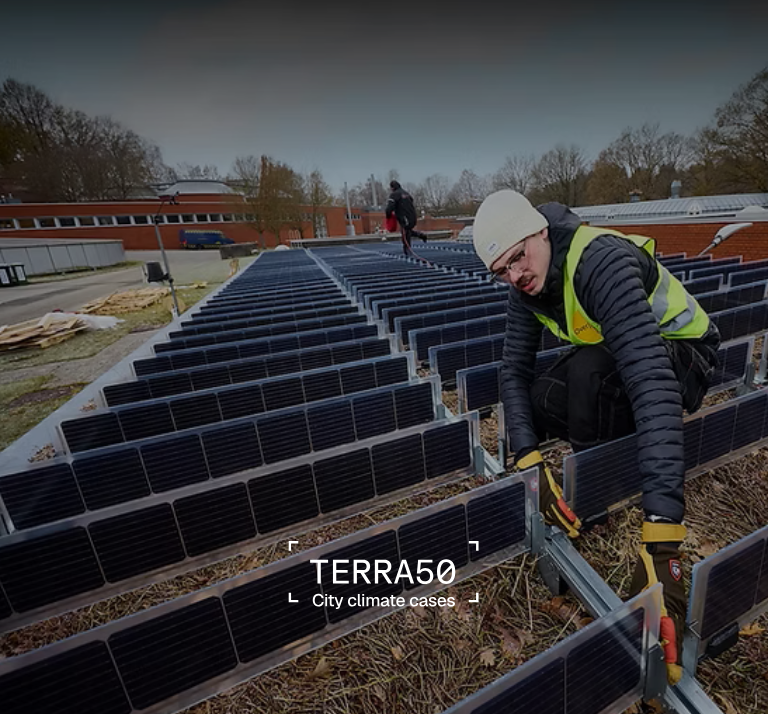
The sophistication, lower cost and competitiveness of renewable energies, together with the deployment of 5G technology and the falling costs of enabling technology such as the Internet of Things or smart metering, will boost the expansion of smart energy grids. These enable energy demand to be regulated, incidents to be detected and they transform users into not just consumers but producers too.
Green hydrogen
Green hydrogen has a strong potential, particularly in transport, given its lower carbon footprint compared to existing energy supplies. Some green hydrogen projects are already underway. In South Korea, a fuel cell power plant in Incheon is the first large-scale hydrogen power plant (78 megawatts) that supplies 250,000 homes and heats a further 44,000.
In the Lower Saxony region of Germany, hydrogen trains provided by the company Alstom will replace 14 diesel-powered trains
Artificial intelligence
With the help of AI software, decentralized energy sources can send any excess electricity they produce to the grid. It also conducts preventive maintenance tasks to prevent faults. Lastly, the growing installation of smart meters is generating data, which AI algorithms can use to predict demand and grid capacity.
Legal boost
It is not technology per se, but without government or legislative support to promote model changes, everything is more difficult. In the case of Mexico, the country has set a target for 45% of its energy to come from renewable sources by 2024. In 2022, the government of Mexico City installed solar panels with a generation capacity of 18 MW to create the world’s biggest urban solar farm. The project is financed by a national fund for the energy transition.
Photographs | Unsplash/Andrey Metelev, Unsplash/Jeroen van de Water