


Table of Contents

City Forest Credits has been listed in Terra50, a new global, pioneering initiative spotlighting the 50 most impactful solutions addressing today’s most pressing climate challenges in cities. This article was written by Ana Villagordo Vegara, Project Manager and Explorer at Terra50. Click here for more details on City Forest Credits.
How much is a tree worth? We can calculate the carbon it captures, but can we measure the rainwater it intercepts, the pollutants it removes from the air, or the energy it saves when its shade helps cool a building? City Forest Credits starts from an interesting idea: if we can measure these benefits, perhaps we can also turn them into a new way of financing urban forests.
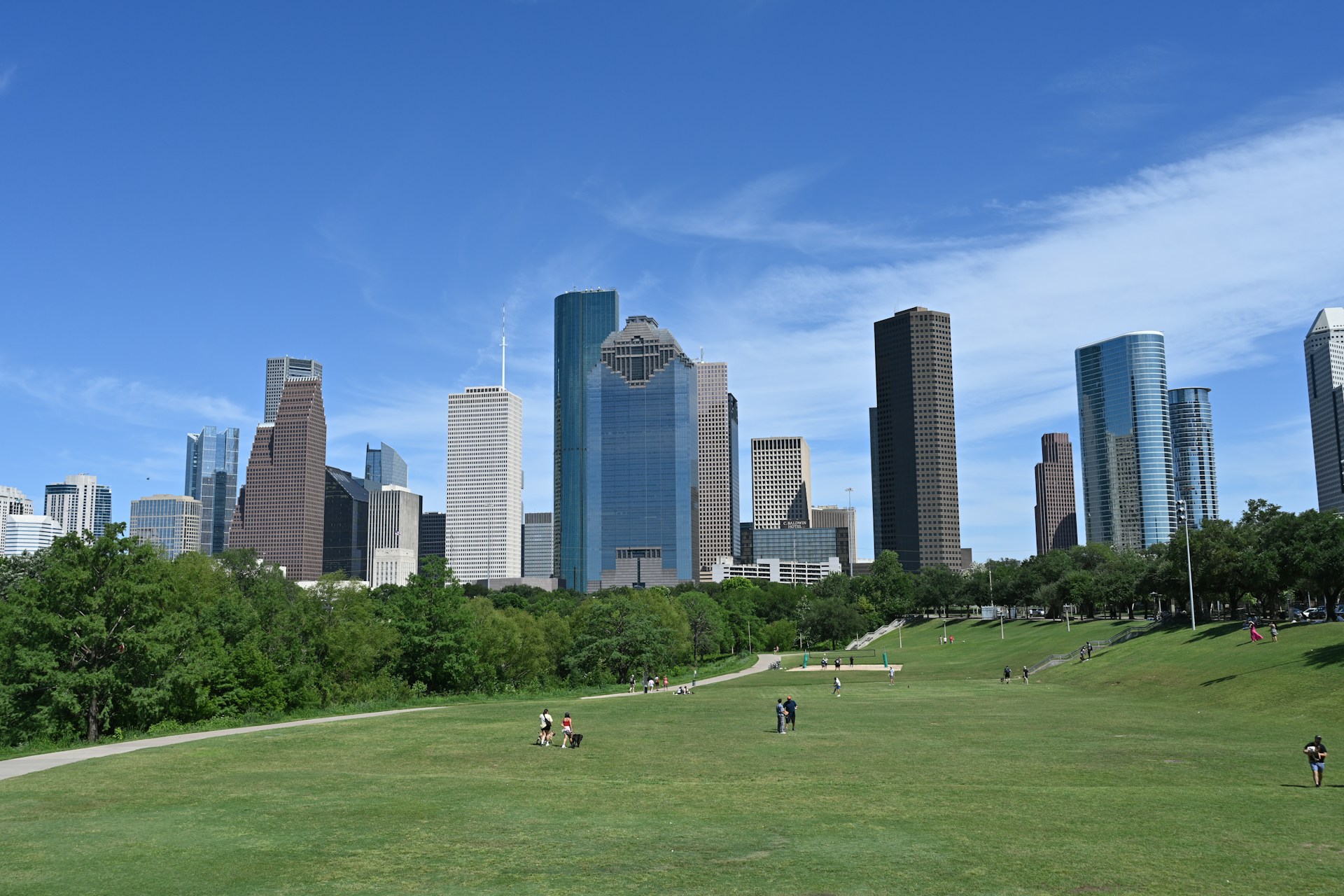
Planting trees has become one of the most visible ways in which cities are responding to climate change. We need them to capture carbon, but also to reduce the urban heat island effect, manage stormwater more effectively, improve air quality, support biodiversity and make streets healthier places to live.
The problem is that planting trees requires money and resources such as water. Maintaining them for decades requires even more. The benefits of urban trees are multiple and well documented, but many of them do not translate directly into municipal budgets. It is relatively easy to calculate how much it costs to plant a tree. It is much harder to incorporate into the same economic equation the value of the shade it will provide over the next thirty years, the water it will help retain or the pollutants it will remove from the atmosphere.
As is so often the case, this requires a medium- to long-term perspective that recognises the full value of what urban greenery can contribute to improving quality of life in cities.
City Forest Credits attempts to connect all these aspects through a carbon credit system specifically designed for urban forests.
When a tree becomes climate infrastructure
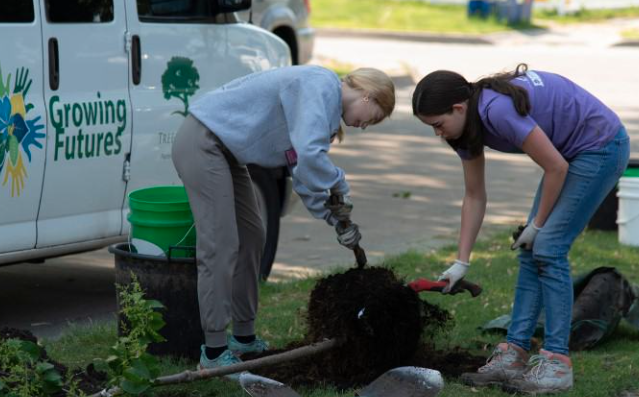
City Forest Credits is a US-based nonprofit organisation that operates as a carbon registry dedicated exclusively to urban forests. Its system enables local governments, nonprofit organisations and other operators to develop tree-planting or forest-preservation projects within urban and metropolitan areas and generate verified carbon credits from them.
Each City Forest Carbon+ Credit represents one metric tonne of CO₂ equivalent. But the system seeks to show that the value of that tree does not end there. Projects also quantify other ecosystem services associated with trees, such as stormwater interception, improved air quality and energy savings resulting from reduced heating and cooling needs. In other words, carbon becomes the mechanism that generates funding, but what is being financed is infrastructure that simultaneously provides many other services to the city.
This is probably one of the most interesting features of the model. A tree is no longer counted simply as a tree planted, but considered as climate infrastructure whose benefits can be measured over time. It is about moving away from seeing climate solutions as isolated, disconnected actions. Planting trees makes sense when it is accompanied by other measures and assessed as part of a broader system.
One of the questions that often arises when discussing tree-planting programmes is what happens after the initial photo opportunity. How many of the trees planted will still be alive ten, twenty or thirty years later? Who will manage them or monitor their condition? City Forest Credits attempts to incorporate this long-term dimension into the system.
Projects fall into two categories. Planting projects generate credits from new trees, while preservation projects protect existing urban forests that may be threatened by development or deforestation. The former require 26-year commitments, while preservation projects establish commitments of 40 or 100 years. Projects must meet additionality, monitoring and permanence requirements, and credits are subject to independent verification processes. The City Forest Credits standard is also endorsed by the International Carbon Reduction and Offset Accreditation, ICROA.
This introduces an important idea: the aim is not simply to pay for planting a tree, but to ensure that the tree or forest continues to provide environmental services for decades. In some cases, the mechanism is specifically designed to prevent an existing urban forest from disappearing.
In Atlanta, for example, the Lake Charlotte Nature Preserve project protects 196 acres of forest within the city. City Forest Credits has issued 36,265 credits for the project and estimates that the ecosystem services associated with preserving the site represent more than $100,000 per year in avoided costs, or more than $4 million over forty years.
In this case, the potential revenue from the credits does not finance the creation of a new green space, but the maintenance and protection of an existing forest that could otherwise face development pressure.
Putting a price on what has traditionally been left out of the accounts
Another project helps illustrate this logic. At the Buena Vista Heights Conservation Area, near Pittsburgh, the protection of 124 acres of forest generates benefits related to air and water quality, stormwater management and energy savings. City Forest Credits estimates these services at around $288,000 per year in avoided costs.
The figure is interesting not because it allows us to claim that the forest is “worth” exactly that amount, but because it makes visible services that are usually left out of the accounts. Rainfall intercepted by trees can reduce pressure on drainage systems. Shade can reduce cooling needs. Vegetation can remove air pollutants. And preserving a forest can avoid emissions that would occur if the land were developed. When these benefits are quantified, trees stop being seen solely as a cost associated with maintaining parks and gardens and can also begin to be understood as assets that provide services to the city.
Registered projects can sell the credits they generate to companies participating in the voluntary carbon market. City Forest Credits does not sell these credits directly, but administers the protocols, registers projects, oversees verification requirements, and issues and tracks credits through its registry.
According to the organisation, credits from its projects have typically sold for between $22 and $45 per metric tonne of CO₂ equivalent. Unlike many offset projects located far from where the purchasing company operates, there is also an explicit emphasis on proximity: a company can invest in trees and forests in the same region where its employees, customers or communities live.
This makes it possible to direct private climate finance towards urban green infrastructure that might otherwise depend primarily on public budgets, grants or the resources of conservation organisations.
Carbon credits are not without controversy
The voluntary carbon market has come under increasing scrutiny in recent years. One of the central issues is additionality: how can we know that a reduction in emissions or carbon sequestration would not have happened anyway without the money generated by the credits? There is also debate around the permanence of stored carbon, the quality of methodologies, the risk of double counting and the way companies use offsets.
This debate is particularly relevant when we are talking about trees. A tree can die, burn or disappear decades after generating a credit. City Forest Credits attempts to address these risks through additionality and permanence requirements, long-term monitoring commitments, third-party verification and a public registry of issued credits. In fact, in 2026 the organisation revised its preservation protocol again to strengthen, among other aspects, its additionality and monitoring requirements.
This does not resolve the broader debate about the extent to which offsets should form part of corporate climate strategies. But the case raises a different question that is worth exploring: can we use some of the mechanisms of carbon markets to direct more funding towards the trees and forests that cities need?
From carbon to local benefits
Perhaps the most interesting aspect of City Forest Credits is not, in fact, the carbon. It is everything that becomes visible when we try to measure what a tree contributes to a city.
A tonne of CO₂ is the same regardless of where it is captured. But a tree planted in a neighbourhood with limited vegetation can also provide shade during a heatwave, retain water during a storm, reduce pollutants, create habitat and improve everyday access to nature. This local dimension is difficult to incorporate into conventional carbon markets, but it is essential from an urban perspective. This is why City Forest Credits refers to Carbon+ Credits: carbon provides a verifiable and tradable unit, while the “+” seeks to make visible the additional benefits generated by the project in the place where it is located.
And this opens up a broader reflection that goes beyond this particular case. For a long time, cities have treated trees as an element of the urban landscape that needs to be planted and maintained. In the face of climate change, we increasingly understand them as essential infrastructure for adapting to heat, managing water, improving health and making cities more liveable.
If trees are climate infrastructure, the question is no longer simply how many we need. It is also how we finance, measure and guarantee the benefits they will provide over the coming decades.
»Click here for more details on City Forest Credits.
»The images in this article were provided by City Forest Credits.