



Table of Contents
Author | Elvira Esparza
Finding solutions to combat rising urban temperatures, which continue to increase each year as a result of climate change, has become a priority. Heat-related deaths have prompted authorities to launch initiatives aimed at tackling increasingly frequent heat waves. Paris has led the way with the construction of a centralized district cooling system, which it plans to expand throughout the city.
Due to its urban layout, Paris has experienced the effects of climate change more intensely than many other cities. Its high population density contributes to the formation of urban heat islands as temperatures rise, creating an average annual temperature difference of around 2.5°C between Paris and the surrounding rural areas.
What is Paris’s district cooling system?
Despite the high summer temperatures in Paris, residential air conditioning is relatively uncommon. It is estimated that only 25% of homes are equipped with air conditioning. Public buildings are also not typically air conditioned, even though extreme heat has resulted in a significant number of deaths during the heat waves experienced in recent years.
However, Paris is a pioneer in Europe in the use of an eco-friendly underground cooling system that is closely linked to the Seine River. The system, which began to be installed in the 1990s, consists of a network of underground pipes that circulate chilled water to absorb heat from buildings before returning it to the river.
The district cooling network consists of two separate pipelines. One supplies chilled water, while the other returns warmed water to the production plants. The water, maintained at a temperature of between 2 and 4°C, flows through the pipes to thermal exchange stations located throughout the city. Each building has its own substation that adjusts the water temperature to meet its cooling needs, transferring heat from the building to the water. The water then reaches a temperature of between 12 and 14°C before returning to the production and storage plants to be cooled again.
Water from the Seine River also plays a key role in the process. Maintaining a temperature of between 15 and 20°C, the river acts as a heat sink, although the water circulating through the pipes never mixes with the river water. Because the Seine remains relatively cool, the system can chill the water without consuming electricity.
To meet periods of peak cooling demand, the system can also store chilled water overnight, when electricity is less expensive. The stored cooling is then released during the hottest hours of the day, helping to reduce operating costs.
How did the Paris project begin?
In 1991, the City of Paris awarded a contract to Climespace, a subsidiary of Engie, to develop the city’s district cooling system. Twenty years later, Fraicheur de París took over the operation of the network. The project is a public private partnership, with the City of Paris responsible for planning the network’s expansion and integrating it into public and private buildings.
The network currently spans 120 km, and Paris authorities aim to expand it to 250 km and connect 3,000 buildings across the city by 2042, making it the largest district cooling network in the world.
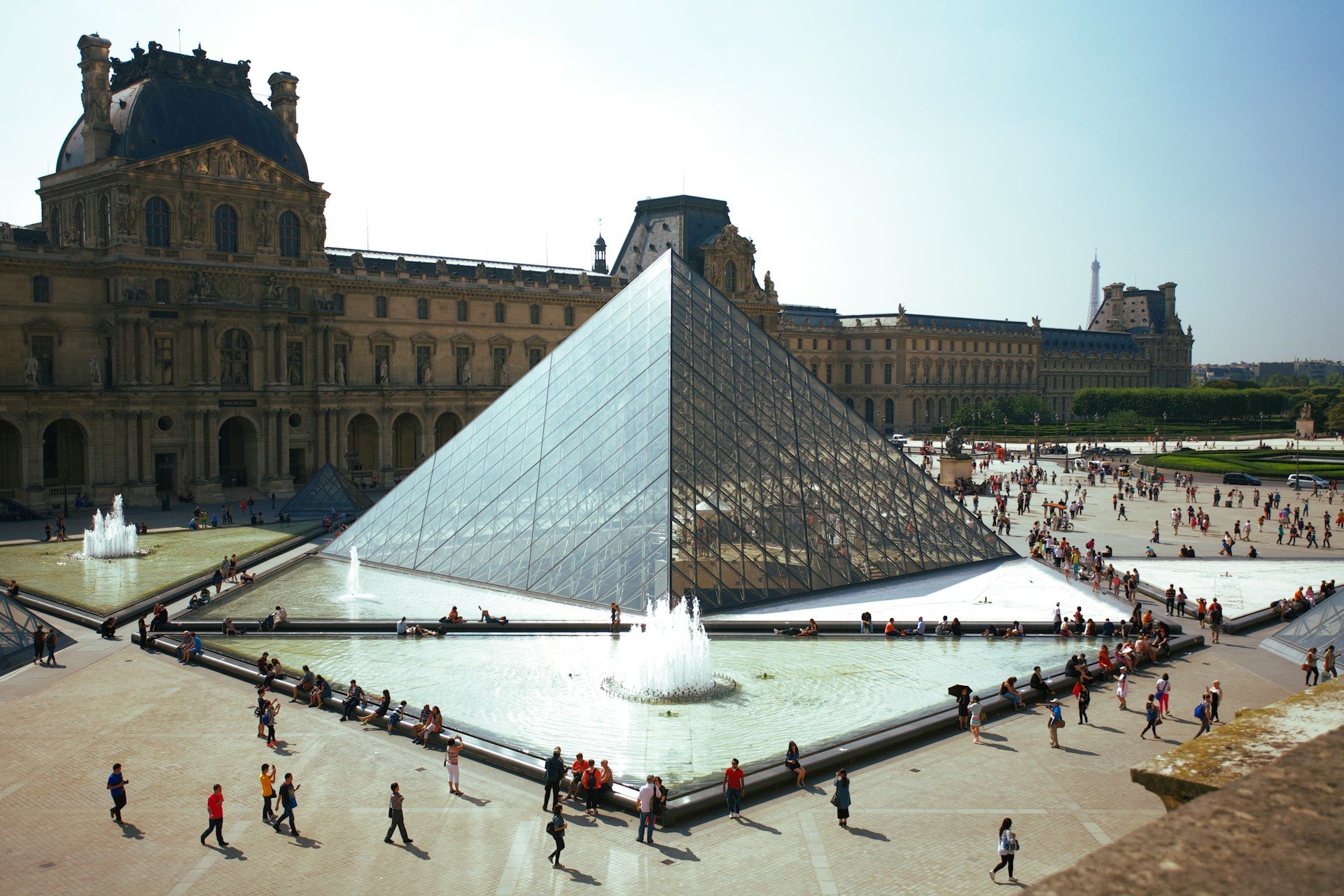
Today, the system cools iconic buildings such as the Louvre Museum, the Bourbon Palace, the Quai Branly Museum, and the National Assembly. The next phase of expansion aims to extend the network to hospitals, schools, daycare centers, nursing homes, and metro stations.
What are the benefits of this cooling system?
The main advantage of this system is its sustainability. It provides a cleaner, more efficient alternative to individual air conditioning units installed in homes, which are not only more polluting but also require more space.
Its benefits are reflected in lower urban temperatures, reduced emissions, and improved energy efficiency.
- Helps lower urban temperatures. It is estimated that the system reduces the average temperature in Paris by about 1°C. This is particularly significant given that temperatures in urban heat islands can be between 3 and 5°C higher than in surrounding rural areas.
- Reduces CO₂ emissions. By eliminating the need for large numbers of individual air conditioning units, which release heat into the surrounding environment, the system reduces both the emissions generated by these units and their contribution to the urban heat island effect.
- Improves energy efficiency. Although the system requires electricity to operate its production plants, it has achieved significant energy savings. The entire district cooling network has been powered by 100% renewable electricity since 2013 and has been carbon neutral since 2018.
These benefits translate into energy efficiency exceeding 100%, a 35% reduction in electricity consumption, a 90% reduction in refrigerant emissions, and a 50% reduction in CO₂ emissions.
Investment remains a challenge
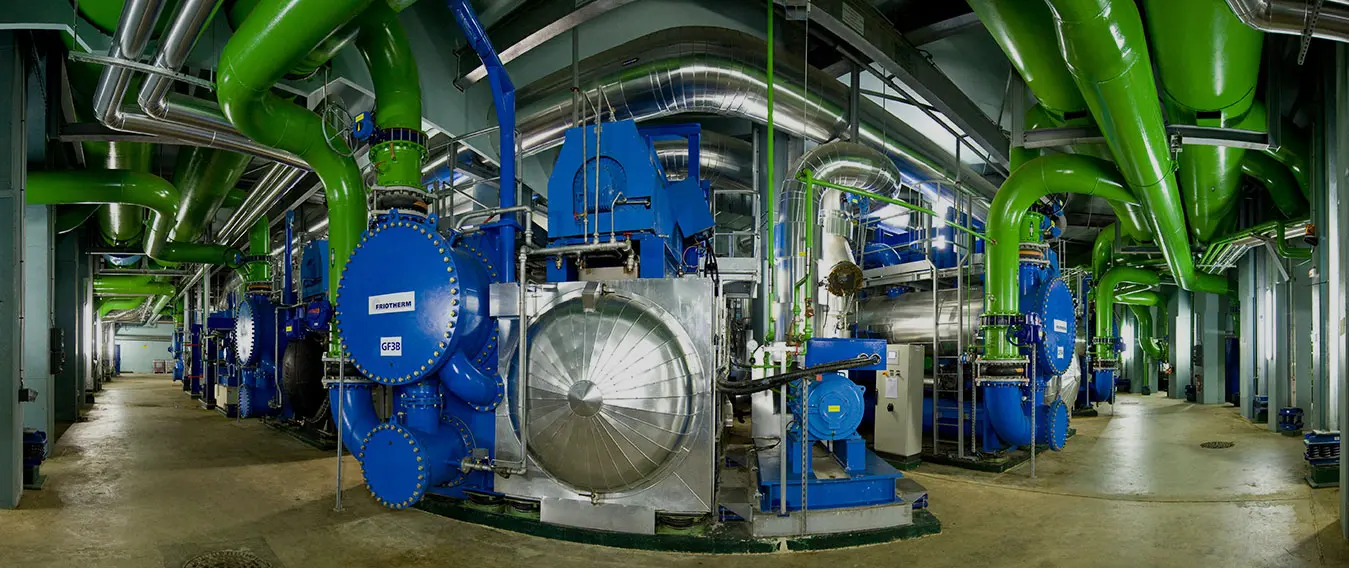
However, expanding this cooling system to residential buildings presents a major challenge because of the significant upfront investment required. The good news is that this investment is expected to pay for itself within about ten years.
In addition, excavating tunnels to install the pipeline network is complicated by the large number of archaeological remains beneath the streets of the French capital.
Are there other district cooling systems in Europe?
Paris is not the only European capital with a district cooling system designed to combat rising temperatures. According to a report by the European association Euroheat & Power, there are more than 200 district cooling networks, operating across Europe, primarily in Sweden and France.
Sweden, Finland, and Denmark have district cooling networks, or microgrids, that use seawater or lake water as their cooling source. Unlike these systems, Paris relies on water from an urban river, which presents additional technical challenges because of its potential impact on water quality.
In Spain, Barcelona has a centralized energy network that supplies district cooling, heating, and hot water to buildings. Barcelona’s network pioneered the recovery of waste cooling from the liquefied natural gas terminal at the Port of Barcelona.
Designed to reduce high urban temperatures during the warmer months, these systems all share two key characteristics: they are both sustainable and energy efficient. They offer an alternative to individual air conditioning units, which generate more pollution and contribute to the formation of urban heat islands.
Images | Jim Tran, Daniele D’Andreti, Engie