



Table of Contents
Author | Lucía Burbano
In 2024, Tallinn inaugurated the Lilleküla Circular Economy Center, its first pilot facility designed to replace landfills and implement a citywide strategy focused on recycling, reuse, and repair. The Lasnamäe Circular Economy Center, inaugurated in April 2026, adds another facility, doubling down on Tallinn’s commitment to advancing its comprehensive strategy to complete its transition to a true circular economy by 2035 and move closer to climate neutrality.
Features of the Lasnamäe Circular Economy Center
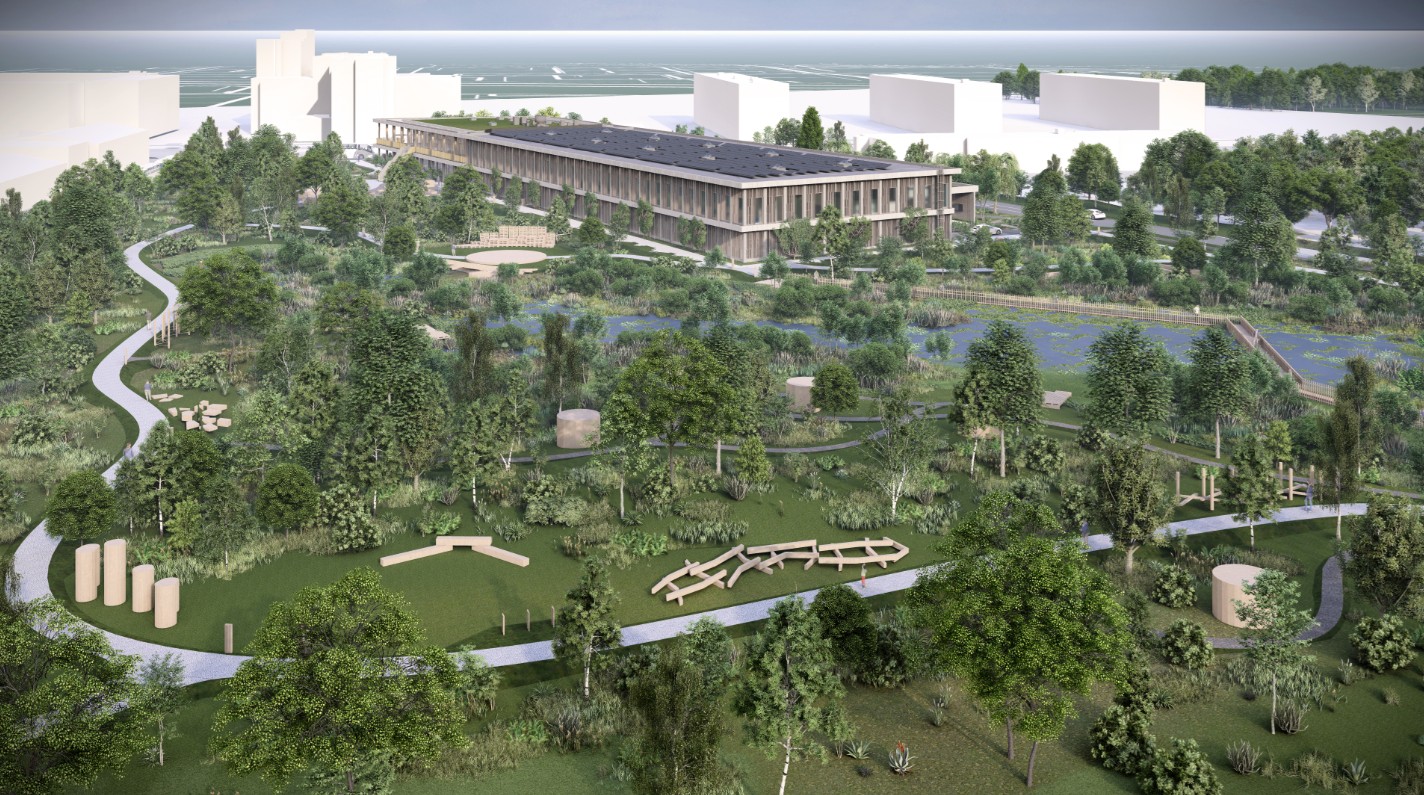
With an investment of around 8 million euros, Lasnamäe manages the waste generated by approximately 120,000 people, dividing its functions into:
Waste management center
- Selective collection of multiple waste streams.
- Drop off point for bulky household waste.
- Handling of hazardous and recyclable materials.
Repair and reuse training
- Organization of workshops to repair furniture.
- Restoration of small objects.
Educational and community space
- Environmental education sessions, workshops, and lectures are offered to all audiences.
- School visits are also planned.
Circular economy services
- A shop where items recovered by the center are sold.
- A café that serves a social and community function.
- Promotion of circular business models.
Public park
- The project includes 2.5 hectares of green public space built on a previously degraded and unused site.
- It incorporates reused materials such as benches, structures, and landscape elements.
- Designed with minimal intervention to preserve biodiversity.
The Lasnamäe center is notably more ambitious than the Lilleküla facility, as it integrates workshops, educational classrooms, and a public space that represents the regeneration of the Lasnamäe district, the most densely populated area of the Estonian capital.
Exemplary architecture
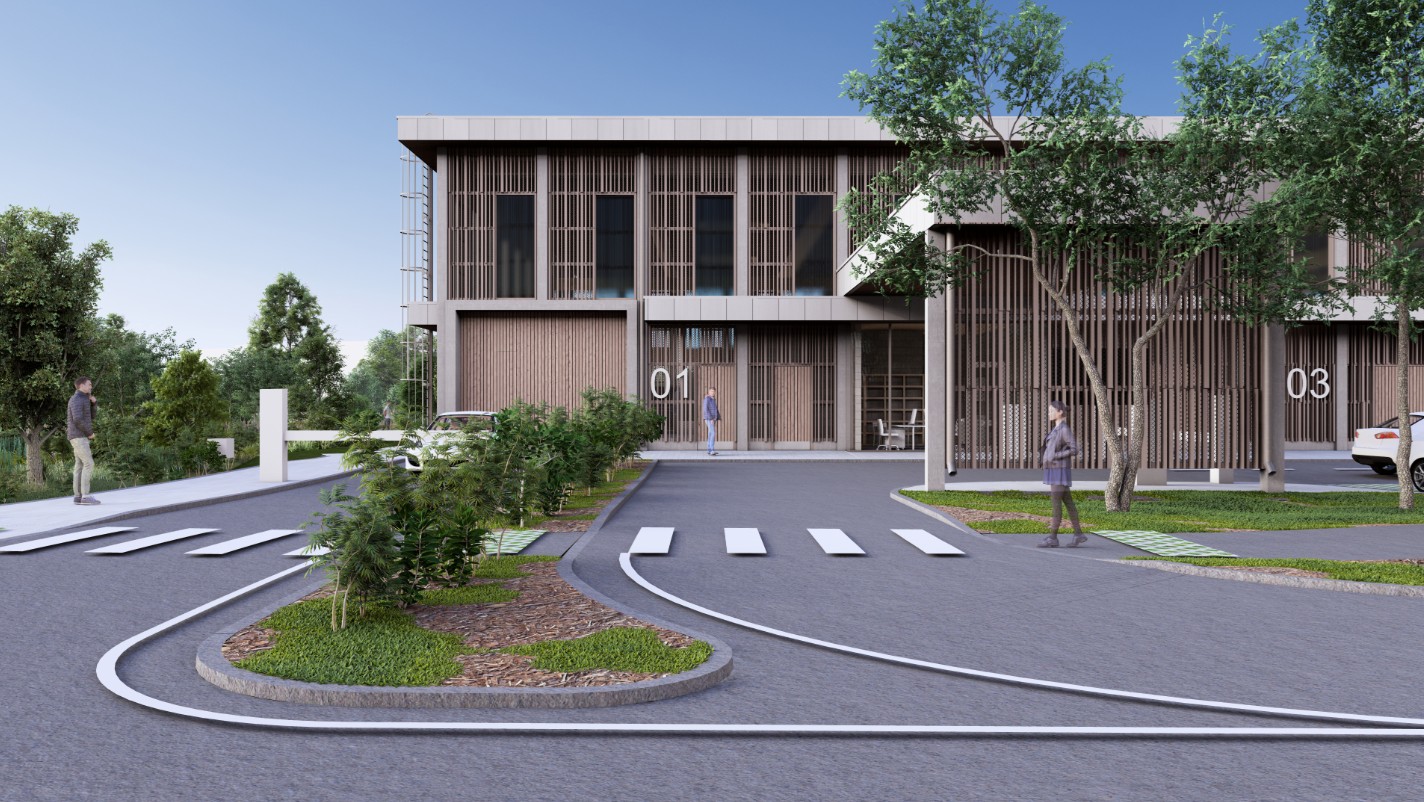
Beyond the recycling and reuse activities that take place inside, the architecture of the Lasnamäe Circular Economy Center is an exercise in consistency, as it applies different sustainable construction and circular economy strategies:
Reused and recycled materials
For its construction, the Lasnamäe Circular Economy Center incorporates recovered materials, including wood for façades and structural elements, as well as bricks and concrete, and also repurposes furniture and interior fittings.
Low carbon design
Materials with low embodied carbon emissions were prioritized, and passive design and energy efficiency principles were applied. For example, low energy consumption was a key criterion in material selection.
Digital construction (BIM)
The use of Building Information Modeling (BIM) enabled material tracking and reduced waste throughout the entire life cycle.
Design for disassembly
The furniture and different components were designed to be repaired, disassembled, and reused, reducing waste generation in the event of future demolition.
Transparency
According to the tender requirements, all candidates had to meet strict environmental criteria, making sustainability a mandatory baseline requirement rather than an extra scoring factor.
Minimizing environmental impact
The architectural project prioritized reducing construction waste, lowering embodied carbon, increasing the reuse of materials in supply chains, and improving the life cycle efficiency of public infrastructure.
Tallinn Circular Economy Centers Program
Tallinn is systematically transforming its waste infrastructure into a network of circular economy centers, one for each of its eight districts. This is a citywide structural reform aimed at replacing traditional landfills to meet the city’s environmental targets.
The two centers built to date, Lilleküla and Lasnamäe, are part of the Tallinn Waste Plan 2022 2026, which, aligned with the Tallinn 2035 strategy, includes plans to build another center in Haabersti and convert the obsolete landfills of Pääsküla, Rahumäe, Paljassaare, and Pärnamäe.
The plan is based on the following pillars:
- Waste prevention.
- Increased separate collection and recycling.
- Improved efficiency of the waste management system.
- Transition to a circular economy.
- Public awareness and engagement.
The Circular Economy Center: the flagship project of the Lasnamäe district
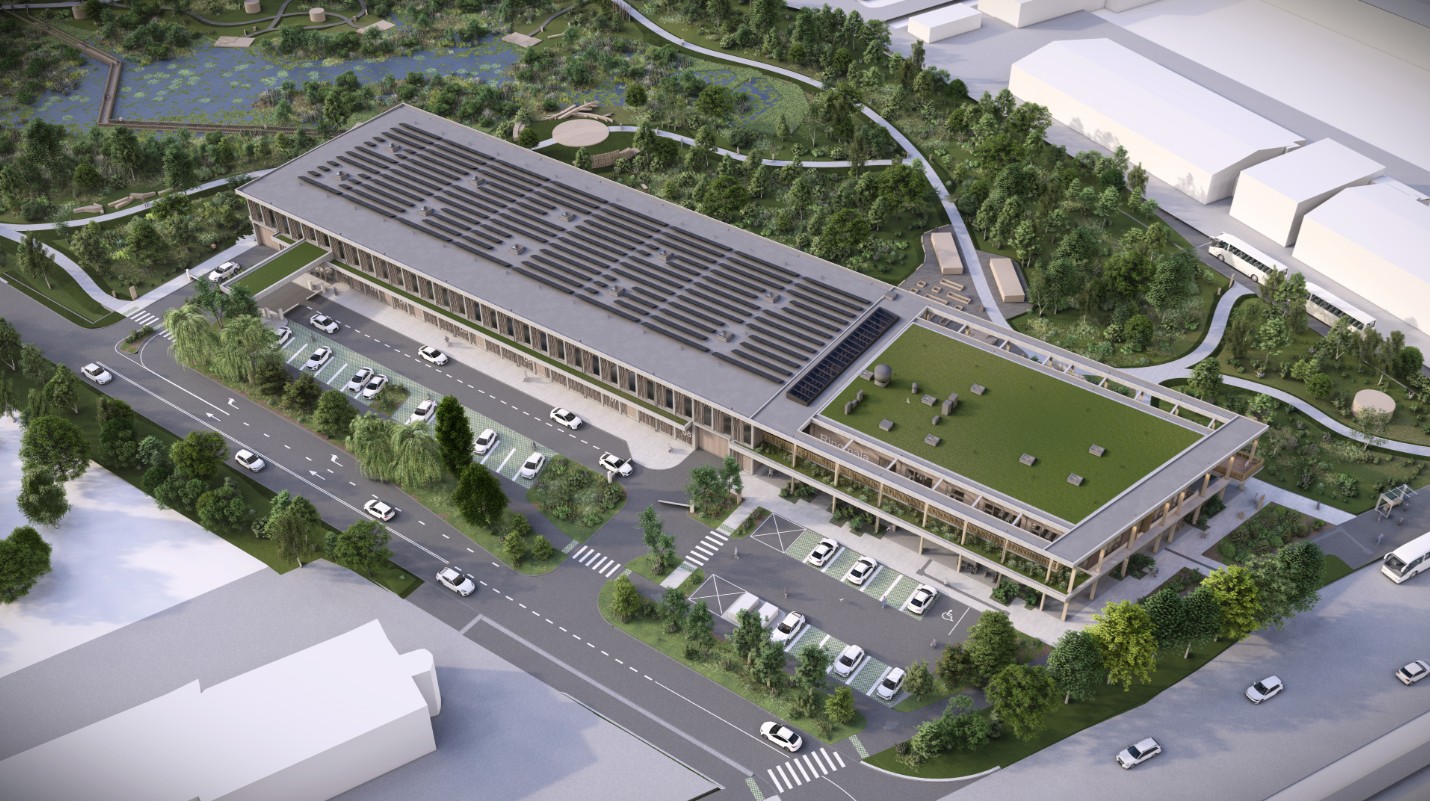
The new Circular Economy Center is located in Lasnamäe, in eastern Tallinn, one of the largest and most densely populated districts of the city: 116,648 residents representing 26% of the total population in an area that stretches from the edge of central Tallinn to the industrial and residential zones in the east. Its architecture is characterized by large Soviet era apartment blocks.
In recent years, several urban projects have been launched, including investments in infrastructure such as the circular economy center, green spaces, improved public transport services and bike lanes to reduce reliance on private cars in a district designed for high density mobility.
Frequently asked questions about the Lasnamäe Circular Economy Center
- What is the Lasnamäe Circular Economy Center?
It is a municipal facility in Tallinn that combines waste management, reuse, repair, and environmental education on urban waste in a single space.
- What is its role within Tallinn’s waste system?
It implements the circular economy to transform the urban waste management model.
- What is the Tallinn Waste Plan 2022–2026?
It is the municipal strategy to increase recycling and transform landfills into circular economy centers.
- What does the Lasnamäe center include?
It includes waste management, reuse areas and workshops, educational classrooms, and an integrated public park.
- What changes for residents with this system?
It makes it easier to separate waste, reuse, and repair products and objects instead of discarding them.
Photographs: Tallin City Council