Table of Contents

Kamikatsu Zero Waste Model has been listed in Terra50, a new global, pioneering initiative spotlighting the 50 most impactful solutions addressing today’s most pressing climate challenges in cities. This article was written by Ana Villagordo Vegara, Project Manager and Explorer at Terra50. Click here for more details on Kamikatsu Zero Waste Model.
Can a town recycle nearly 80% of its waste without relying on major technological infrastructure? For more than two decades, Kamikatsu has shown that part of the answer may lie in how citizen participation is designed rather than in technology itself. It is an example of how techno-optimism is not the only response to our problems and how, in many cases, what is really needed is to strengthen human relationships, active listening and, consequently, effective and meaningful citizen participation.
When Kamikatsu adopted Japan’s first Zero Waste Declaration in 2003, it took on a considerable challenge. This small town in Tokushima Prefecture needed to find an alternative to a waste management model based on incineration while, at the same time, radically changing how its residents separated, reused and understood the materials they discarded.
More than two decades later, the town, home to fewer than 1,300 people, maintains a recycling rate of around 80%, excluding organic waste, without relying on automated sorting plants or complex technological infrastructure. Its most important infrastructure is something quite different: a system designed around citizen participation.
Making the waste we generate visible is not pleasant, but it works
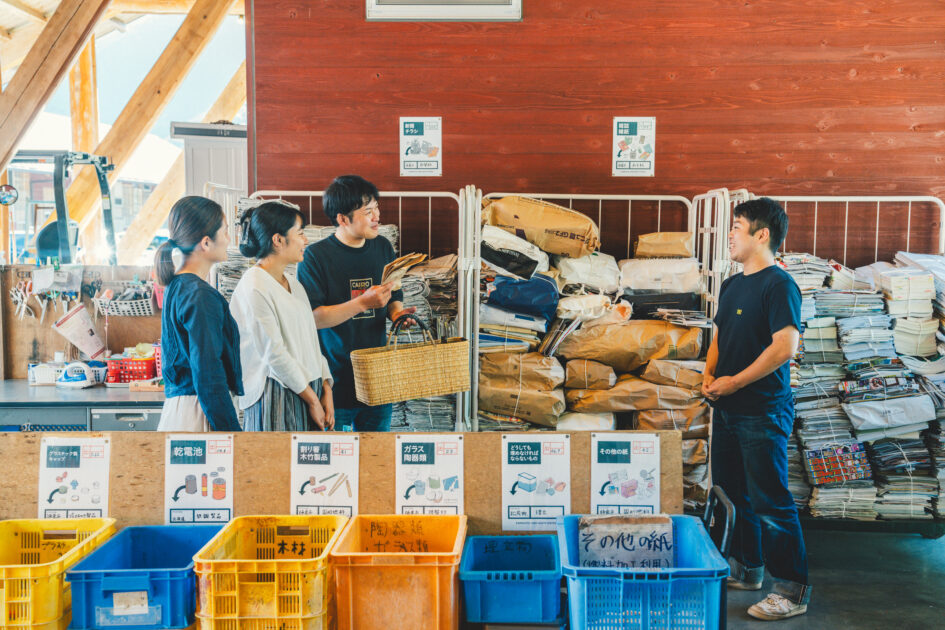
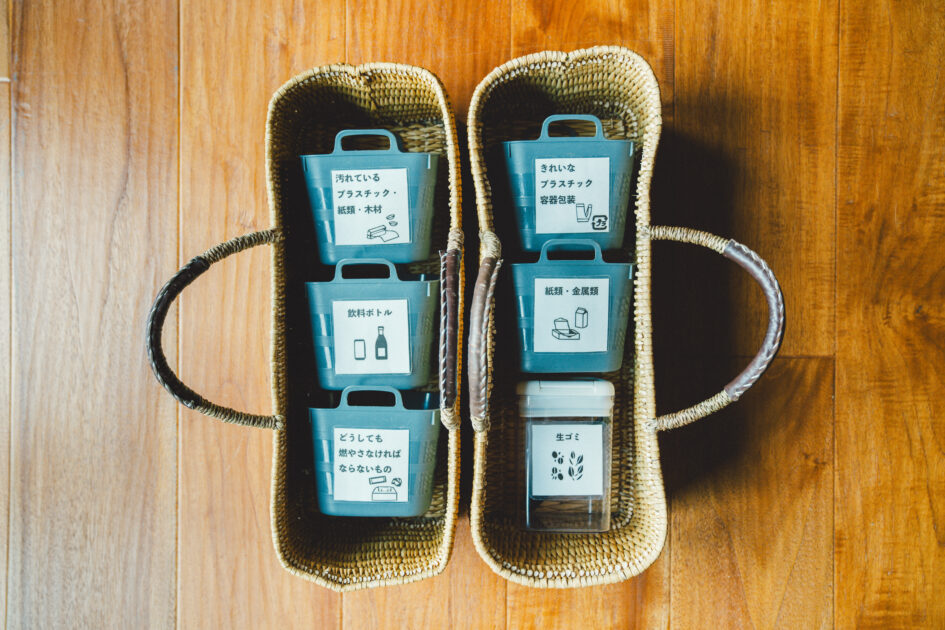
The system is demanding but apparently simple. Residents bring their waste to the Zero Waste Center, where they separate it into 14 categories and 44 different subcategories. Materials then follow specific routes according to their potential for reuse or recycling, while organic waste is largely composted at home and can be returned to local agricultural soils.
Unlike systems in which waste disappears from sight as soon as it enters a bin, Kamikatsu forces the process to remain visible, and that visibility is one of the keys to the model. Although the comparison only goes so far, there are some parallels with door-to-door collection systems used in certain towns and neighborhoods, where residents have to be aware of which waste fraction is collected each day. These systems also make waste visible in the streets, where bags waiting to be collected reveal the amount of waste our current system consumes and generates, particularly in bulkier fractions such as packaging.
In Kamikatsu, residents can also see what will happen to each material, how much it costs to process and, in some cases, how much revenue it generates when sold as a resource. Sorting waste therefore stops being an abstract gesture, because people can understand the environmental and economic consequences of the way they consume and discard products.
When transparency becomes waste policy
Many waste policies try to change citizen behavior through regulation, awareness campaigns or incentives. Kamikatsu incorporates that transformation into the way the system itself works, so information about materials, costs and results becomes part of everyday experience. It is a way of encouraging citizens to take shared responsibility without blaming them, simply by making the reality of the system visible.
Reuse is equally tangible. At the Kurukuru Shop, residents can leave objects they no longer need for other people to take free of charge, and more than seven tonnes of goods circulate through the shop every year, extending their useful life before they become waste. The system also generates an economic return. According to data provided by the project, the sale of recovered resources generates around JPY 1.8 million per year, which feeds into the Zero Waste Promotion Fund and can return to residents in the form of eco-products or shopping vouchers.
A civic facility called WHY: what could possibly go wrong?
When we start at the wrong end of a problem, the consequences are predictable. We become absorbed in discussing how to manage waste and what to do with it, while forgetting the most difficult and probably the most important part: why it is being generated in the first place.
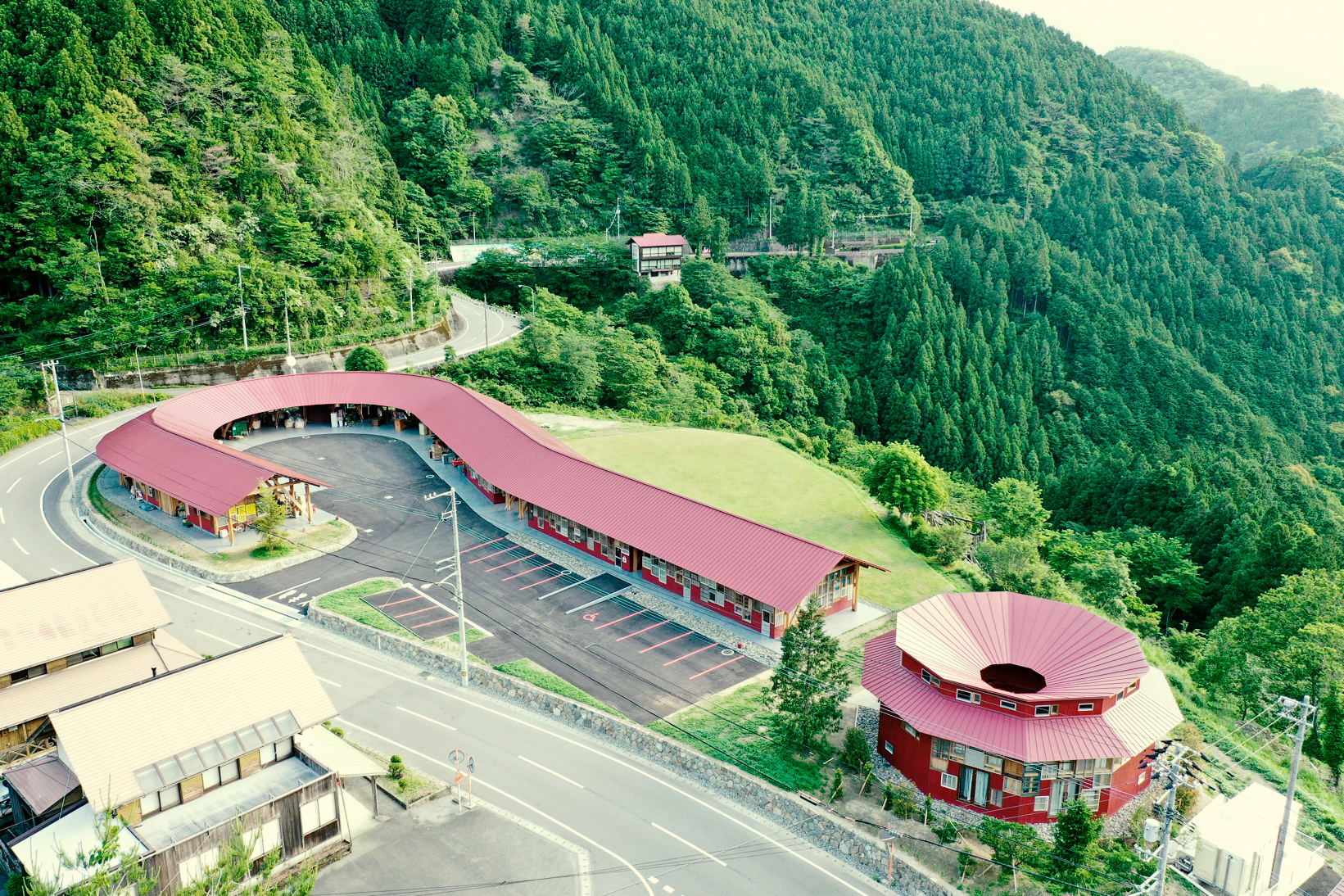
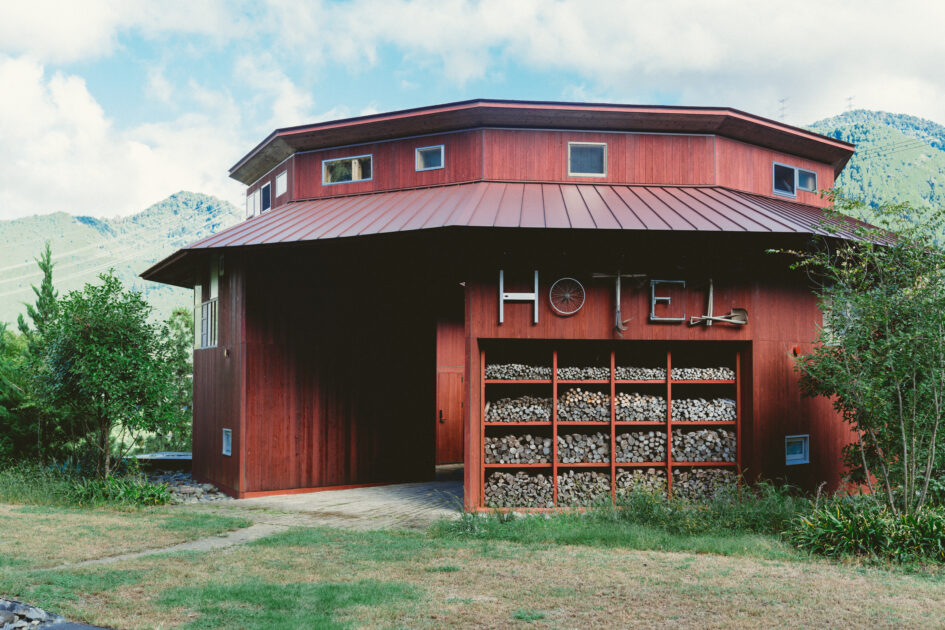
Kamikatsu seems to have understood this, and in 2020 the town opened the Zero Waste Center WHY, a civic facility designed by architect Hiroshi Nakamura. The center is part of the municipality’s broader Zero Waste initiative, developed since its 2003 declaration with the support of different partners. Among them is SPEC Inc., which has been involved in the development of the Zero Waste Center and continues to support its activities and outreach. The complex is not only called “WHY”; the building itself is shaped like a question mark. Its name and architecture therefore share the same intention: to encourage visitors to question why they buy, use and discard products in the way they do.
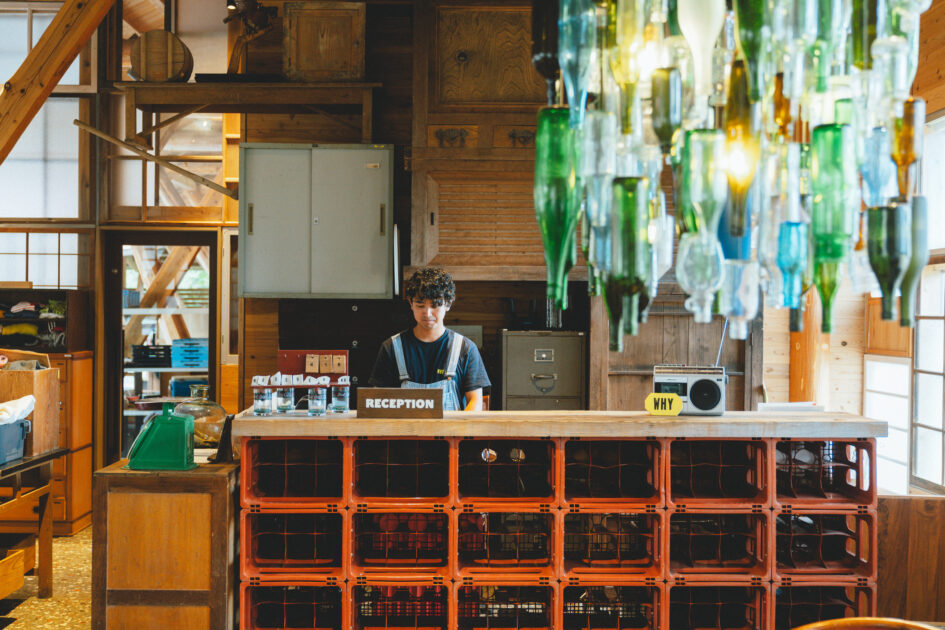
The building itself follows the principles it advocates. It was constructed largely from locally recovered materials, while its distinctive façade, known as Hope’s Lantern, incorporates around 700 donated windows recovered from buildings in the area, maintaining the coherence that characterizes the project.
The most interesting change, however, is not architectural. WHY transforms an infrastructure that is usually hidden on the edges of cities into a public place for learning, combining waste sorting, reuse, education, research and international communication within the same facility. It even includes HOTEL WHY, a small hotel where visitors can experience zero-waste practices during their stay. It may sound strange that managing one of the least desirable consequences of a poorly designed system could become an engaging experience, but that is precisely part of what makes WHY interesting.
Recycling a lot does not make generating waste a good thing
Making waste visible does not mean normalizing its generation, just as achieving very high recycling rates does not remove the first question any environmental waste policy should ask: can we avoid generating it in the first place? Kamikatsu has also had to confront this contradiction. During the early years, much of the effort focused on improving separation and preventing materials from ending up in incinerators or landfill. As the system matured, however, the town began to place greater emphasis on prevention, reuse and changes in consumption patterns.
The Kurukuru Shop keeps objects in circulation before they become waste, some local retailers have introduced package-free sales, reusable tableware and cloth-nappy schemes have been promoted, and Zero Waste certification also involves local businesses in reducing waste generation. The figures suggest that this effort goes beyond recycling, since current municipal waste generation stands at approximately 482 grams per person per day, compared with a Japanese average of 839 grams.
Kamikatsu has also discovered the limits of local action. Once most recyclable materials are being recovered, moving closer to zero waste requires action before products ever reach consumers, addressing packaging, product design, distribution systems and manufacturers’ decisions. A previous Tomorrow.City article on Kamikatsu already pointed towards this distinction, noting that one of the town’s most important achievements was not only increasing recycling, but reducing the need to recycle in the first place.
In this sense, perhaps one of Kamikatsu’s most interesting lessons is precisely that better sorting is only part of the journey. A zero-waste city also needs to produce, purchase and consume differently.
From Kamikatsu to Tokyo: a leap in scale
The fact that a model works in a town of fewer than 1,300 inhabitants does not necessarily mean it can be applied in the same way in a large city. Kamikatsu is, however, already showing that some of its principles can travel, regardless of the scale at which they are applied.
Japanese municipalities including Minamata, Miyama, Ooki and Ikaruga have developed zero-waste commitments following Kamikatsu’s experience, while the Kurukuru Shop concept has been replicated in communities in China and Indonesia. Perhaps the most interesting leap in scale is taking place in Tokyo, where Mitsubishi Estate is applying elements of the Kamikatsu methodology in Marunouchi, one of the city’s main business districts, with the aim of moving towards full resource recovery.
Kamikatsu has also become an international learning space for policymakers and environmental cooperation programs, while collaborating with companies such as Kao Corporation on research into materials that remain difficult to recycle.
From waste centers to resource centers
Kamikatsu is not the only place questioning what waste infrastructure should look like. Across different cities, another idea is beginning to emerge: transforming recycling centers, warehouses and treatment facilities into resource centers, where people do not simply go to dispose of things they no longer need, but can also repair, reuse, share, buy, learn or create.
One of the pioneering examples is REMIDA, the Creative Recycling Center in Reggio Emilia, established in 1996 and closely linked to the educational culture of this Italian city. REMIDA collects production offcuts, surpluses, unwanted stock and defective materials from companies and makes them available to schools, associations and cultural organizations.
Its value does not simply lie in replacing new materials with recovered ones. Paper, wood, plastics, metals, textiles, threads, ceramics and glass are classified and displayed in deliberately suggestive ways, transforming what industry considered waste into materials capable of generating questions, experimentation and creative processes. Waste therefore becomes an educational resource, and the model has since spread internationally through a network of REMIDA centers in Europe, Australia and South America.
Near Barcelona, Viladecans Repara operates within the municipal recycling center itself. Potentially reusable objects are recovered, while residents can take part in workshops and receive support to repair electrical appliances, bicycles, furniture or clothes. The facility also includes Els Encants de Viladecans, a second-hand shop, and a lending service for toys and educational materials for schools and organizations. Its management by the social enterprise Solidança adds a social dimension to the model by creating employment opportunities for people in vulnerable situations.
In nearby Mataró, the future Parc Circular Mataró-Maresme takes this idea even further. Its Espai Refer is explicitly conceived as a “civic center for waste prevention”, where people will be able to repair electronics, furniture, bicycles and textiles, use a Library of Things, borrow reusable tableware, buy second-hand products or participate in initiatives against food waste. The building itself also incorporates recovered materials and reversible, demountable construction systems.
This transformation is not limited to municipal waste infrastructure. In New York City, Materials for the Arts, run by the city’s Department of Cultural Affairs, collects materials and objects no longer needed by businesses and individuals and makes them available free of charge to public schools, cultural organizations and non-profits. Fabrics, furniture, lighting, art supplies, tools and audiovisual equipment can therefore become resources for a classroom, an exhibition, an artwork or a stage production instead of entering the waste stream. The program recovers an average of more than 680 tonnes of materials every year.
In Brussels, Rotor Deconstruction applies a similar logic to the construction sector by dismantling, preparing and putting back into circulation doors, lighting, tiles, sanitary fixtures, furniture and other components recovered from buildings. Its 14,000-square-meter site is evolving into a center dedicated not only to selling reclaimed materials, but also to repair, craftsmanship and urban production.
The scales and models are different, but they share the same change in perspective: the place where an object’s life once ended can become the place where its next life begins. WHY belongs to this new generation of infrastructure because its value is not only in helping Kamikatsu separate waste more effectively, but also in making materials visible, understandable and potentially reusable.
In these new facilities, citizens no longer go there simply to throw something away. They can repair, exchange, buy second-hand, share, learn or find materials with which to create something new. This shift moves the question from “How can we manage waste better?” towards a much more ambitious one: “How can we keep objects and materials in circulation so that they do not become waste in the first place?”
What can cities take from Kamikatsu?
Replicating Kamikatsu’s system literally in a city of several million inhabitants would be difficult, but the principles behind it are much more transferable: making material flows visible, explaining the costs of managing them, facilitating reuse, returning some of the recovered value to the community and designing facilities that help change behavior.
Kamikatsu therefore turns waste management into a question of civic design and governance, rather than technology alone. After more than two decades of maintaining a recycling rate close to 80%, the case suggests an important idea for cities seeking to accelerate the circular transition: the infrastructure needed to manage resources better does not always have to be more complex. Sometimes it needs to make the system easier to understand and easier to participate in, while making us more aware of our own responsibility and our role in the most important part of the process: reducing waste and preventing it from existing in the first place.
»Click here for more details on Kamikatsu Zero Waste Model.
»The images in this article were provided by Municipality of Kamikatsu.