


Table of Contents

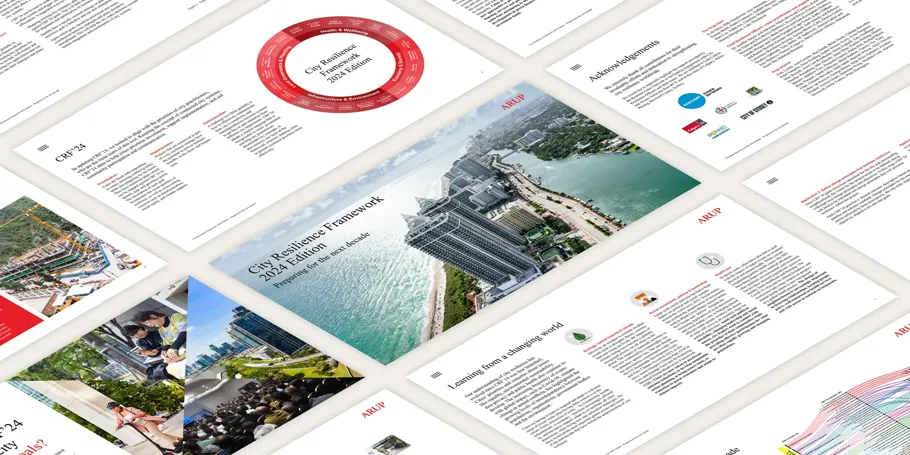
The City Resilience Framework (CRF) by Arup has been listed in Terra50, a new global, pioneering initiative spotlighting the 50 most impactful solutions addressing today’s most pressing climate challenges in cities. This article is written by Ana Villagordo Vegara, Project Manager and Explorer at Terra50. Click here for more details on the City Resilience Framework (CRF) by Arup.
When a city experiences a flood, a heatwave, an infrastructure failure or an economic crisis, the immediate question is often how long it will take to recover. But what if returning to the previous situation is not enough? The City Resilience Framework starts from a broader idea: resilience is not only the ability to withstand a shock, but also the capacity to adapt, transform and be better prepared for what comes next.
Climate change is forcing cities to prepare for increasingly frequent and interconnected disruptions. A heatwave affects public health, but also energy systems. A flood can disrupt mobility, damage homes and bring part of the economy to a standstill. A power outage can quickly become a problem for communications, transport or healthcare.
At the same time, cities face slower and less visible pressures: inequality, housing affordability, ageing infrastructure, environmental degradation or weaknesses in public services. These chronic stresses can determine how severely a crisis affects some communities more than others when it eventually occurs.
This is why urban resilience cannot be understood solely in terms of stronger infrastructure.
Developed by Arup with support from the Rockefeller Foundation, the City Resilience Framework (CRF) proposes looking at the city as a system in which infrastructure, institutions, communities, the economy and the environment are interconnected.
The question therefore changes. Instead of asking only how can we protect the city from the next crisis?, the framework raises a broader one: what makes a city capable of dealing with uncertainty?
A flood is never just about water
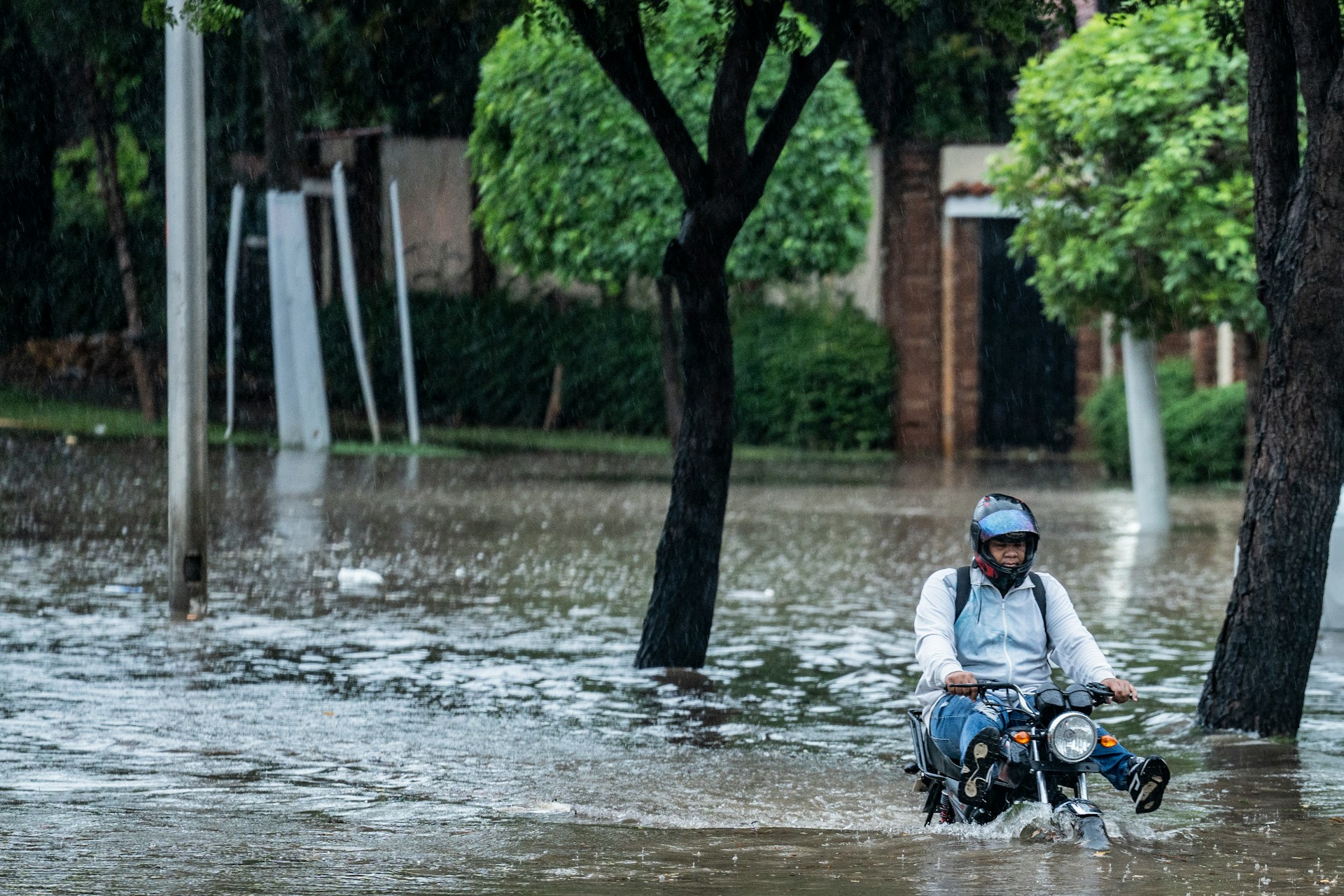
Imagine two neighbourhoods exposed to the same flood. They may experience the same amount of rainfall, but their capacity to respond can be completely different. One may have an effective drainage system, functioning public services, accessible healthcare, strong community networks and institutions capable of coordinating an emergency response. The other may combine poor housing conditions, vulnerable populations, inadequate transport connections and insufficient infrastructure.
The hazard may be similar. The consequences are not. This is one of the most interesting shifts in perspective introduced by the City Resilience Framework: resilience depends not only on the physical infrastructure that protects a city, but on how the urban system as a whole functions.
The original framework was developed from 2014 onwards and has been applied in more than 100 cities around the world. In 2024, Arup updated it to respond to the challenges cities face today. The new version is structured around four dimensions and 22 resilience goals, providing a way to consider social, institutional, environmental, economic and physical aspects of the city together.
It is therefore not a solution that directly builds a flood barrier, plants trees or renovates a building. It is a tool for understanding where vulnerabilities lie, how they are connected and where intervention may have the greatest value.
Measuring resilience without reducing it to a single number
How do we know whether a city is resilient? This is a much more complex question than calculating CO₂ emissions, temperature or energy consumption. Resilience depends on context and can hardly be reduced to a single indicator.
The City Resilience Framework does not establish a universal set of metrics that every city must meet. Instead, it provides a structure that allows each city to identify and monitor the indicators that make sense in its own context: access to services, emergency response and recovery times, air or water quality, exposure to climate risks, social vulnerability, institutional coordination or the performance of critical infrastructure, among many others.
This approach is complemented by seven qualities that should characterise resilient urban systems: reflective, robust, redundant, flexible, resourceful, inclusive and integrated.
Some of these ideas may sound abstract, but they have very practical implications. Redundancy, for example, means that a city does not depend on a single essential infrastructure or service. Flexibility allows responses to adapt when circumstances change. And inclusion requires us to ask who participates in decision-making and, above all, who is most exposed when something fails.
The framework therefore seeks to turn a very broad question, what is resilience?, into a much more operational one: how can we understand, measure and manage resilience in this particular city?
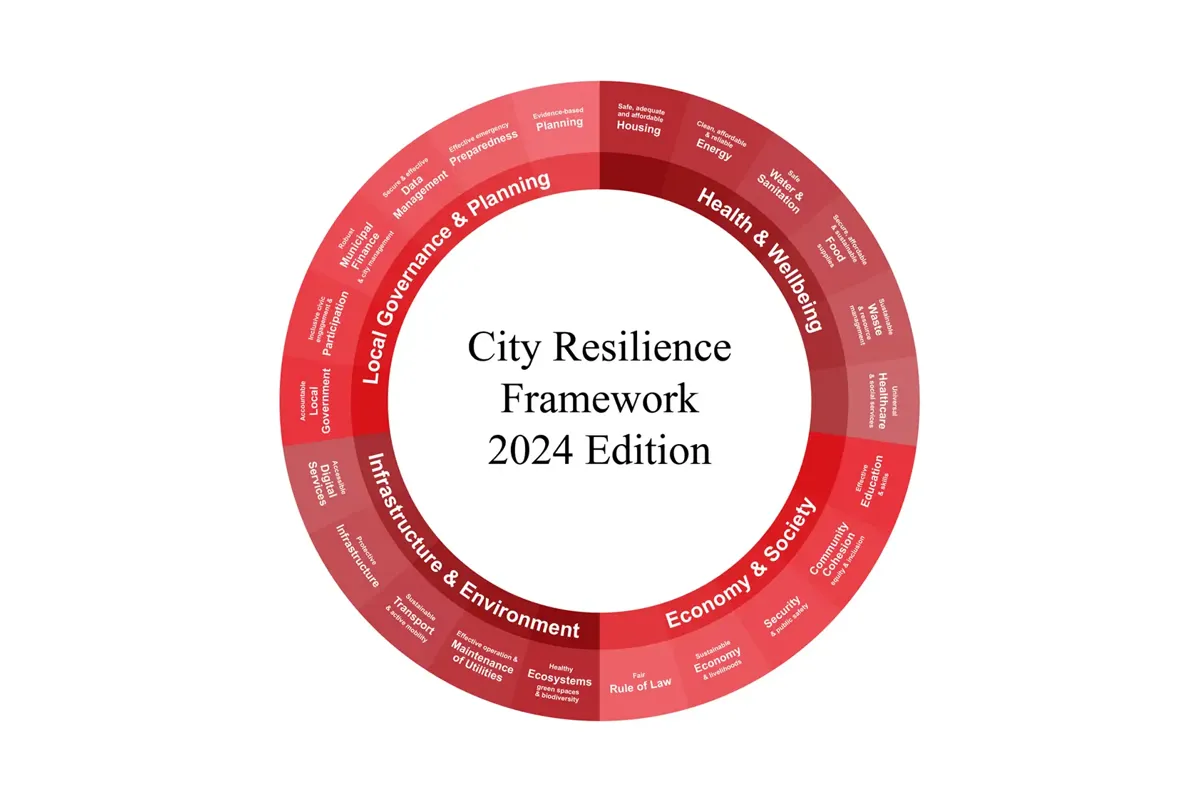
When problems do not respect municipal departments
There is another particularly interesting aspect of this systemic perspective. Public administrations tend to be organised into departments: urban planning, mobility, housing, health, environment, social services and emergency management. Urban problems, however, rarely respect these administrative boundaries.
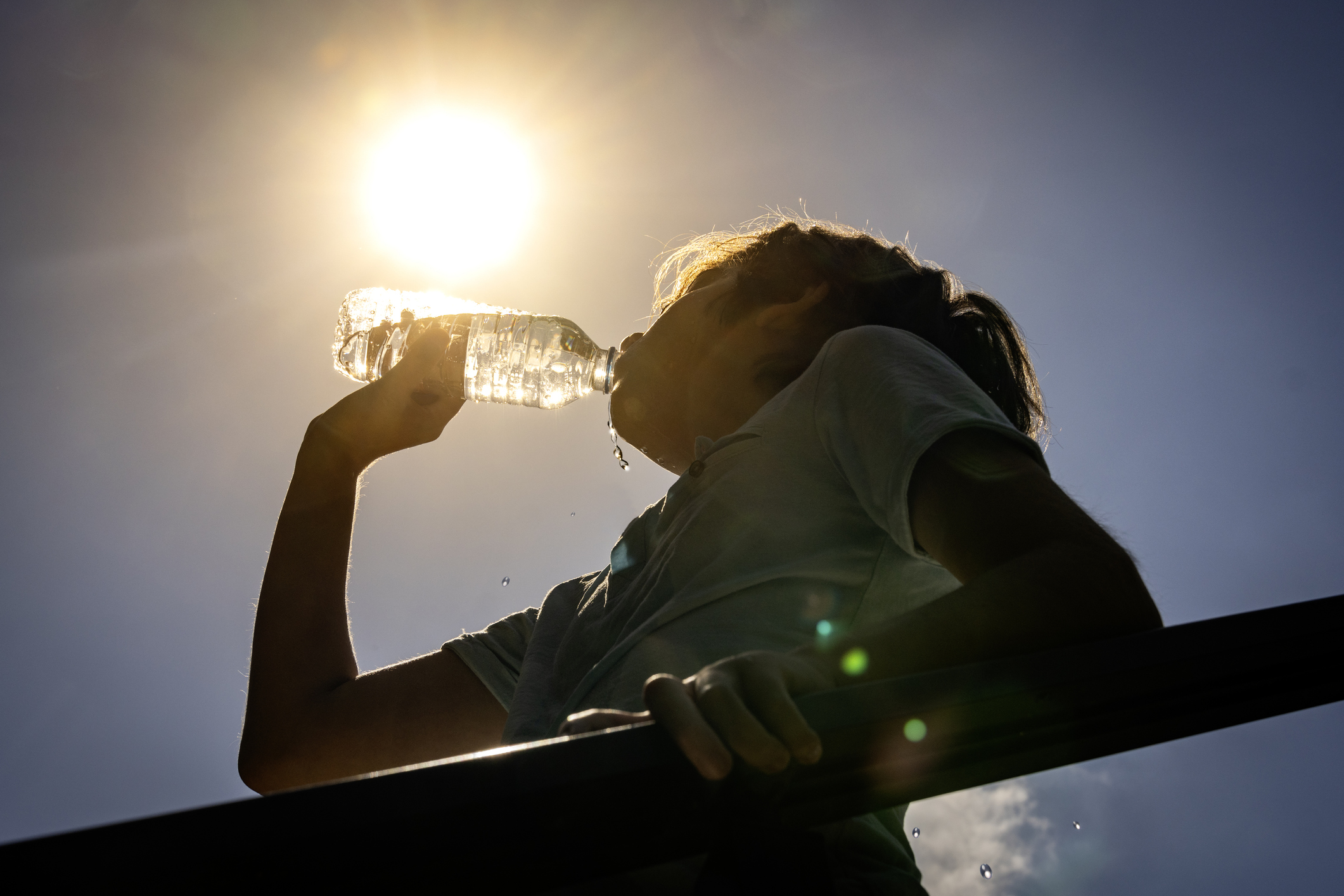
A heatwave is a good example. At first, it may appear to be a climate issue, but it affects health, housing, public space, schools, care homes, energy systems and working conditions. Being better prepared does not simply mean having an emergency plan in place when extreme temperatures arrive. It also means understanding which neighbourhoods have less vegetation, which homes have poorer thermal conditions, which people are most exposed or which public facilities can serve as climate shelters.
Thinking in terms of resilience therefore means connecting decisions that are often made separately. And this is where a methodology can have very real effects. The CRF has been used to guide planning and monitoring processes in more than 100 cities and has influenced the development of urban resilience strategies in very different contexts, including Durban, Santiago de Chile and Concepción.
Its influence spread particularly through the 100 Resilient Cities programme and subsequently through the Resilient Cities Network. Rather than exporting the same solution to all these cities, what is shared is a way of structuring questions, identifying vulnerabilities and setting priorities.
From withstanding shocks to transforming the city
For a long time, resilience has been closely associated with the idea of bouncing back: absorbing a shock and returning to normal as quickly as possible. But this idea has an obvious limitation. What happens when the situation before the crisis was already vulnerable, unequal or unsustainable?
Rebuilding exactly the same thing after a flood, cooling buildings that remain thermally inefficient after a heatwave, or restoring infrastructure without examining why it failed may simply reproduce the same vulnerabilities.
This is where another understanding of resilience emerges: not only bounce back, but bounce forward. Responding to a crisis can also be an opportunity to identify what was not working, adapt systems, address inequalities and prepare the city better for the next shock. This means recognising that resilience is not a state that a city achieves once and for all, but a capacity that needs to be continuously built and reassessed.
Perhaps this is one of the most interesting contributions of the City Resilience Framework. It does not propose a spectacular piece of infrastructure or a technology that can solve a climate problem on its own. It proposes something less visible but equally necessary: a way of understanding how problems are connected before deciding how we want to solve them.
Because a resilient city is not simply one that manages to function again after a crisis. It is one that uses what it has learned to be better prepared, less vulnerable and, when necessary, able to transform before the next crisis arrives.
»Click here for more details on the City Resilience Framework (CRF) by Arup.
»The images in this article were provided by Arup.