



Table of Contents
Author | Elvira Esparza
Smart urban infrastructure is the technological foundation of smart cities, ensuring sustainability, service efficiency, and improving citizens’ quality of life. These infrastructures incorporate sensors, data platforms, and automation to enable more efficient management of resources and services, but how will they evolve in the future?
What is a smart city infrastructure?
A smart urban infrastructure is a physical system that collects and analyzes data captured by sensors in real time to optimize urban resources and improve the efficiency, sustainability, productivity, and safety of services. In addition to collecting and analyzing data, it uses this information to improve how the system operates and adapt to the future needs of the city.
Smart infrastructure combines technologies such as IoT, AI, and big data to optimize the management and maintenance of urban, industrial, or energy infrastructure, such as roads, power grids, and sanitation systems.
Why infrastructure is the foundation of smart urban living
Infrastructure is considered the foundation of smart urban living because it is the physical and technological backbone on which all city services are built. Mobility, energy, sanitation, telecommunications, and security services operate through physical infrastructure which, in a smart city, is connected through sensors, data platforms, and communication networks to work in an integrated way.
Thanks to smart infrastructure, smart cities can make better use of resources and reduce waste, minimizing environmental impacts and increasing resilience to change.
Key areas of smart city infrastructure
The key areas covered by smart infrastructure are:
Mobility networks and intelligent transportat systems
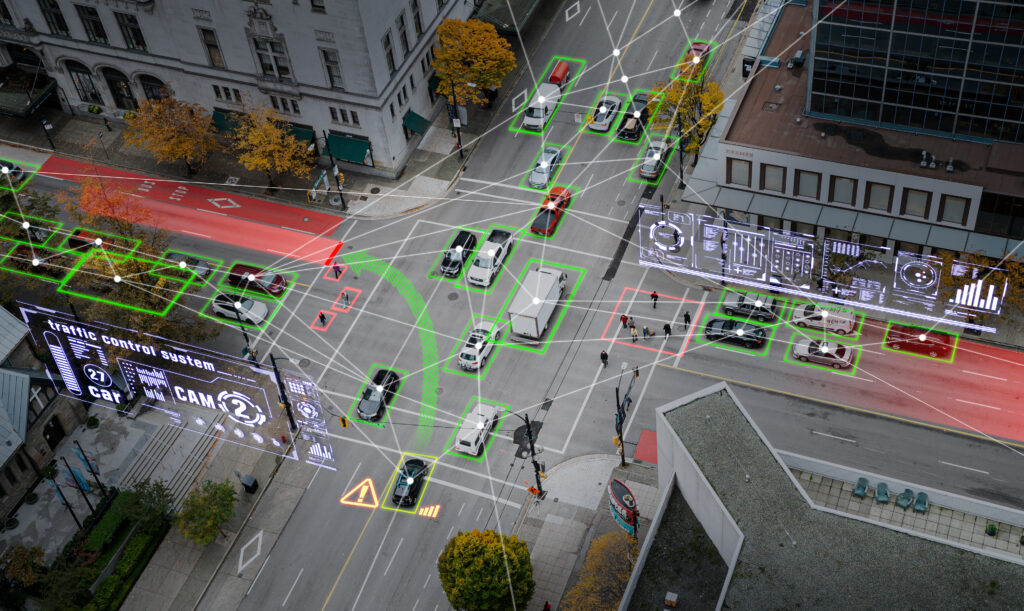
These networks use real time data to manage traffic. Smart traffic lights, for example, adjust their timing based on vehicle volume in order to prevent accidents and reduce pollution.
Energy grids, utilities and resilient infrastructure
Smart grids balance energy supply and demand, integrate renewable energy sources, monitor consumption, and detect inefficiencies. As a result, buildings equipped with smart sensors adjust energy use based on the time of day or weather conditions.
Water, waste and environmental monitoring systems
Water monitoring systems enable control of water supply and the detection of leaks to reduce losses and optimize consumption. Meanwhile, environmental monitoring systems make it possible to track pollution and respond automatically to pollution spikes or extreme weather events.
Digital governance, cybersecurity and public services
Governance translates into greater access to data and increased citizen participation in urban decision making, along with higher operational efficiency to prevent waste in public services.
How to Choose a Smart City Platform or Partner
When choosing a platform for a smart city, the following criteria should be considered:
Essential criteria: scalability, interoperability and long-term value
Scalability and flexibility: It is crucial to choose a platform that can adapt to the city’s current and future needs, as well as emerging technologies such as AI, machine learning, or 5G.
Interoperability: The platform must be capable of connecting different systems, such as traffic, energy, security, or waste management. It is important to consider the standards that ensure compatibility between these systems.
Long-term value: When selecting a platform, it is important to evaluate not just the technology itself, but also its potential to lower structural costs, enhance resilience, protect the environment, strengthen governance, and support the city’s long-term sustainability.
Common mistakes to avoid in infrastructure and platform projects
The most common mistakes are related to a lack of planning, because addressing issues only as they arise increases the risk of disruptions and hidden costs.
Having poor documentation due to not keeping it updated leads to errors and makes problem-solving difficult.
Neglecting cybersecurity, which is crucial when choosing a platform, can result in financial losses, legal penalties, and reputational damage.
Taking a short-term approach without considering scalability and technological evolution limits the ability to adapt in the future.
The Future of Smart City Infrastructure
Emerging trends: resilient grids, cloud platforms and urban digital twins
Resilient networks enable the handling of massive real-time data from millions of sensors and IoT devices deployed across cities. Trends point toward the expansion of 5G and the evolution toward 6G, private networks, collaborative ecosystems, and edge computing.
Cloud platforms will continue to be at the core of urban digital infrastructure. Key trends focus on multi-cloud and hybrid infrastructure, unified data platforms with AI and analytics, data governance, and digital sovereignty.
Urban digital twins will be used for the design, simulation, and predictive management of smart infrastructure.
By combining resilient networks for connectivity, cloud platforms for integration and analysis, and digital twins for simulation and intelligent management, smart infrastructure will be able to anticipate climatic, social, or technical events, respond in real time, and adapt to changes in demand.
Images | Choi Dongsu, Loveguli