


Table of Contents

Medellín’s Green Corridors has been listed in Terra50, a new global, pioneering initiative spotlighting the 50 most impactful solutions addressing today’s most pressing climate challenges in cities. This article is written by Ana Villagordo Vegara, Project Manager and Explorer at Terra50. Click here for more details on Medellín’s Green Corridors.
Transforming paved streets into green corridors, reducing urban temperatures and creating employment opportunities for vulnerable communities. Medellín has turned vegetation into climate adaptation infrastructure through a network of 30 corridors that has achieved temperature reductions of around 2°C. An initiative that demonstrates that the most transformative solutions are not always the most complex.
When asphalt becomes a climate problem
For decades, cities have gradually replaced natural ground with asphalt, concrete and buildings. These surfaces absorb heat during the day and release it slowly at night, contributing to an increasingly worrying phenomenon: the urban heat island effect.
In Medellín, Colombia’s second-largest city, rapid urban growth had progressively reduced vegetation and increased street temperatures. Air pollution, the fragmentation of natural spaces and inequalities in access to green areas added to the problem.
In 2016, the city government launched an initiative that challenged conventional thinking about urban infrastructure: instead of tackling heat exclusively through technological solutions, it proposed using nature itself as the city’s cooling system.
This was the beginning of Corredores Verdes (Green Corridors), a network connecting vegetated spaces and transforming roads, pavements and waterways into ecological infrastructure.

Thirty corridors functioning as a network
What makes the project distinctive is not simply that trees were planted, a common practice in many cities, but that vegetation was conceived as an interconnected system.
The network comprises 30 green corridors: 18 along urban roads and 12 along waterways, connecting parks, squares, streets and other natural spaces. Together, they cover more than 70 hectares and include approximately 20 kilometres of shaded pedestrian and cycling routes.
The design combines different layers of vegetation — trees, palms, shrubs and low-growing plants — to replicate some of the functions of a forest ecosystem. This diversity provides shade, creates habitats for wildlife and helps improve environmental quality.
Vegetation cools its surroundings through two main processes: it prevents solar radiation from directly heating paved surfaces and releases water vapour through evapotranspiration. It also helps capture some of the airborne pollutants.
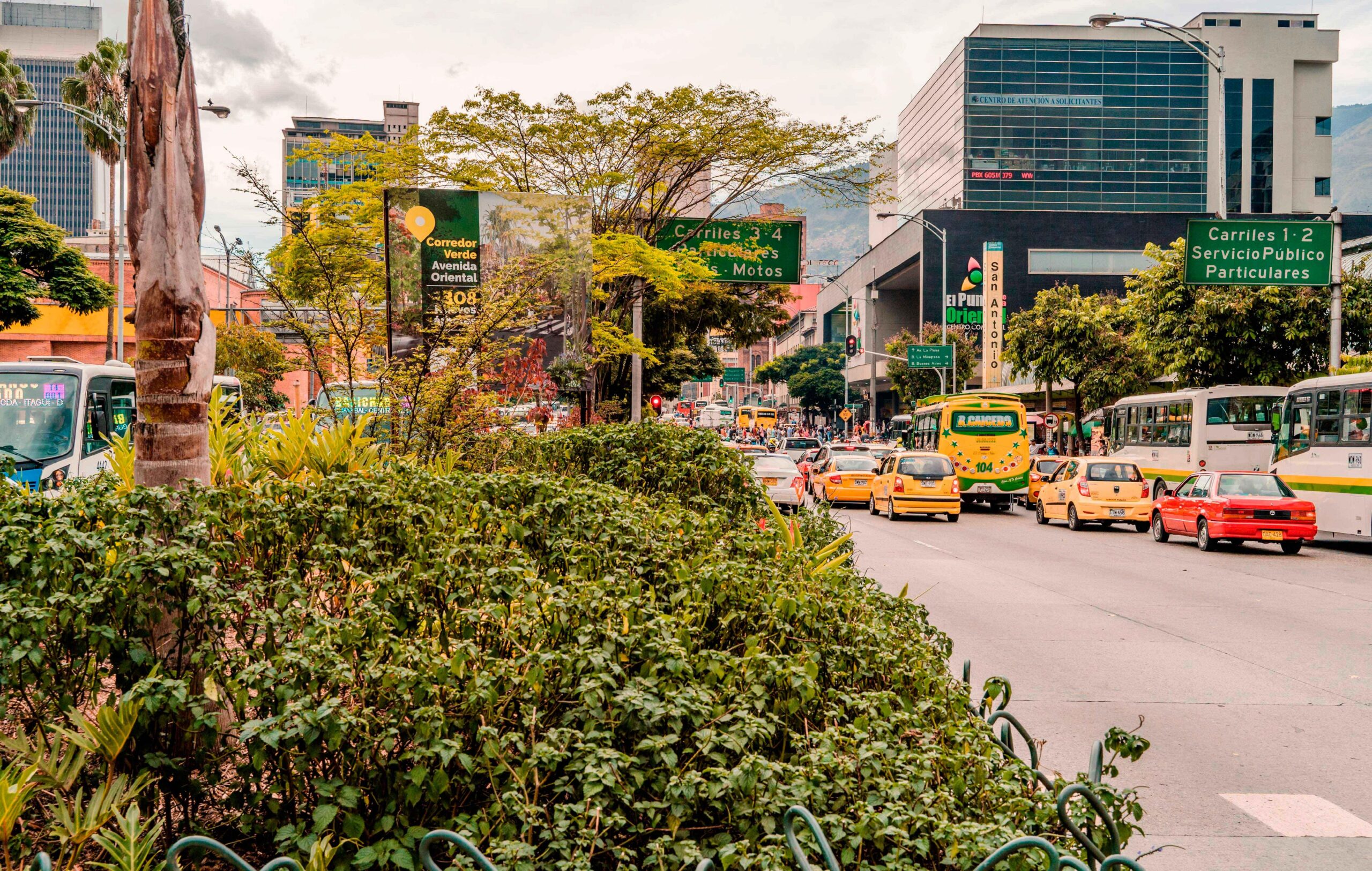
The transformation is particularly visible along Avenida Oriental, one of Medellín’s main thoroughfares, where areas previously dominated by traffic and paving have been converted into gardens and planted spaces.
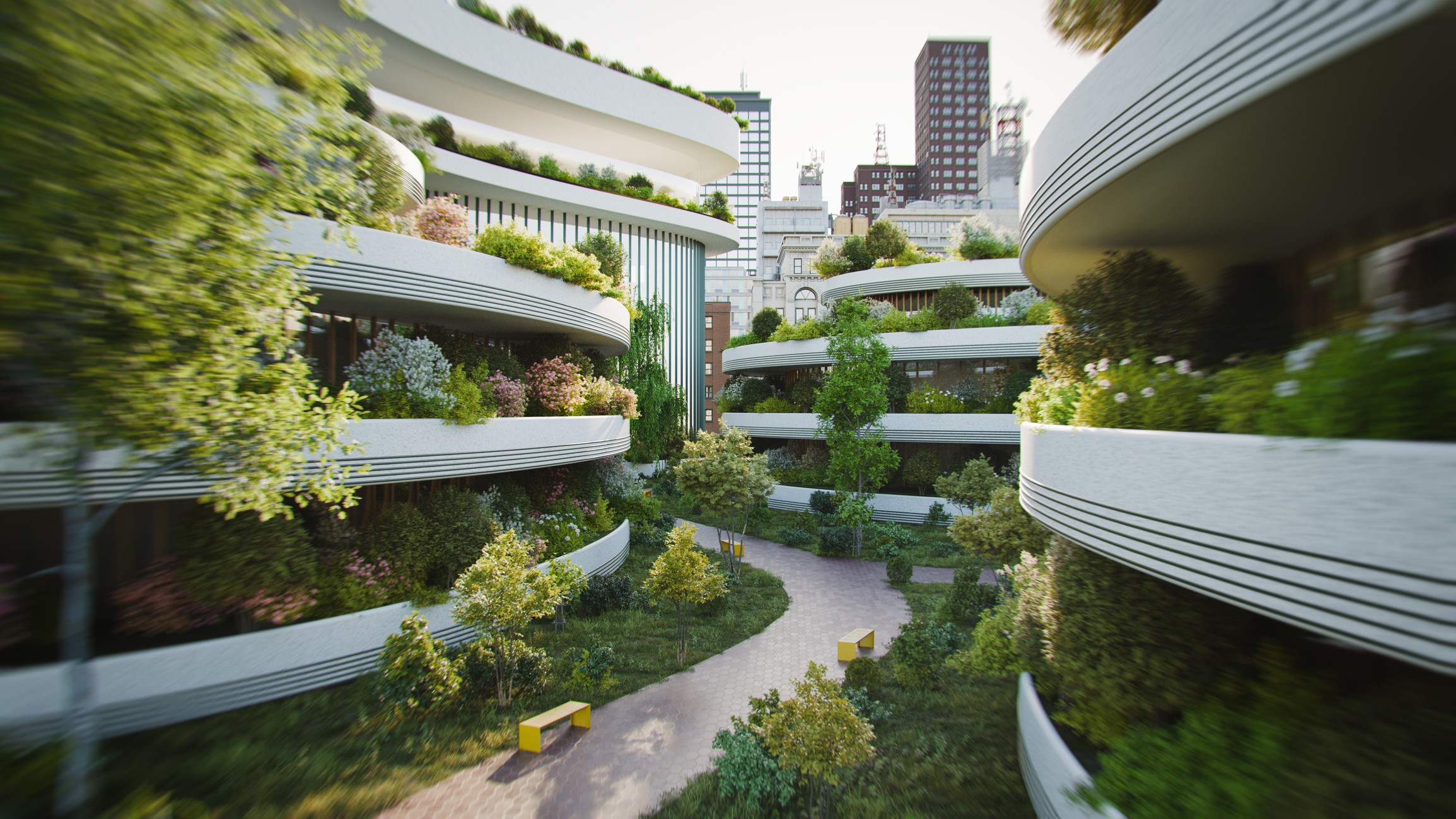
The programme has also extended to infrastructure such as bridges, metro stations and public buildings. One of its most visible examples is the vertical garden at City Hall, covering approximately 1,810 m² of vegetated surface.
The underlying idea is simple: stop treating urban greenery as a decorative feature and start managing it as essential infrastructure for the functioning of the city.
Two degrees cooler: when nature delivers measurable results
The initial results helped bring the project international recognition. According to published programme data, temperature reductions of approximately 2°C were recorded in the areas where interventions took place during the first three years. This is particularly significant because lower urban temperatures can improve thermal comfort, reduce exposure to heat and make public spaces more liveable.
However, it is important to distinguish between measured local temperature reductions and a uniform decrease across the entire city. The benefits depend on vegetation density, weather conditions, street configuration and the maturity of the trees.
The scale of the intervention is also significant. The programme began with approximately 120,000 plants and 12,500 trees, while figures reported up to 2021 indicated a cumulative total of nearly 2.5 million plants and 880,000 trees.
These results demonstrate the potential of a solution based on natural processes that, without requiring major technological developments, can simultaneously deliver benefits for climate adaptation, biodiversity, air quality and urban health.
Urban gardeners: green infrastructure that also creates opportunities
One of the most interesting aspects of Corredores Verdes is its social dimension. The initiative involved people from vulnerable and displaced communities, who received training to work in planting, caring for and maintaining green spaces.
The Joaquín Antonio Uribe Botanical Garden participated as a technical partner, providing botanical expertise and training, while Medellín’s Secretaría de Medio Ambiente (Department of Environment) led the programme.
This collaboration made it possible to connect climate adaptation with vocational training and green job creation. Residents also participated in prioritising interventions through the city’s participatory budgeting mechanisms.
This component is particularly important because green infrastructure does not function simply because it has been inaugurated. It requires ongoing maintenance, knowledge and commitment. Planting trees is relatively easy. Ensuring that they grow, survive and continue delivering benefits for decades is the real challenge.
That is why Medellín’s model goes beyond introducing vegetation: it also develops the human and institutional capacities needed to maintain it.
A replicable solution, but not a universal formula
The initiative has received international recognition, including the Ashden Award for Cooling by Nature and a C40 Bloomberg Philanthropies Award, and has become a reference for other cities seeking responses to rising temperatures.
Its potential for replication is high because it relies on relatively accessible resources and expertise: vegetation, public space, bioclimatic design principles and maintenance teams. According to published estimates, the initial implementation required an investment of approximately US$16.3 million, with annual maintenance costs of around US$625,000.
However, replicating the model does not mean reproducing exactly the same plant species or design. Each city needs to adapt interventions to its climate, water availability, street characteristics and the needs of its population. In Mediterranean cities, for example, selecting drought-resistant species and managing irrigation efficiently would be essential conditions.
Another risk that often accompanies environmental improvements in neighbourhoods must also be considered: green gentrification. Creating higher-quality public spaces can increase property values and ultimately place financial pressure on the very communities the improvements were intended to benefit. Urban renaturalisation must therefore be accompanied by policies that ensure equitable access to its benefits and prevent new forms of exclusion.
What if we stopped treating nature as an optional addition to the city?
Medellín’s experience challenges a deeply rooted idea in urban planning: that infrastructure essentially consists of concrete, steel and asphalt, while vegetation is a secondary element added wherever space remains.
Corredores Verdes proposes exactly the opposite. Nature is infrastructure too. It can regulate temperatures, improve air quality, facilitate mobility, support biodiversity and create social opportunities.
Its transformative potential lies not only in reducing temperatures along certain streets, but in connecting objectives that are often addressed separately: climate adaptation, public space, mobility, biodiversity, employment and citizen participation.
And this offers one of the most valuable lessons for other cities: tackling a climate challenge does not always require inventing a new technology. Sometimes, innovation means redefining the role of something we already know and placing it at the heart of urban decision-making.
Medellín did not invent trees. But it has demonstrated that when they are planted strategically, connected and cared for, they can become one of the most powerful tools for transforming a city.
References
- Alcaldía de Medellín — Corredores y muros verdes
- C40 Knowledge Hub — Medellín’s interconnected green corridors
- Ashden — Growing a cooler city
- World Economic Forum — Nature-based solutions to extreme heat
- Reasons to be Cheerful — How a Colombian City Cooled Dramatically in Just Three Years
»Click here for more details on Medellín’s Green Corridors.
»The images in this article were provided by Alcaldía de Medellín.