



Table of Contents
Autor | M. Martínez Euklidiadas
Through tactical urbanism strategies, the millenary city of Athens is creating little urban parks known as pocket parks. Despite its dense layout and clear lack of space, the city council has found the solution to include more green areas in the city: small gardens in previously unkempt corners of the city, which even seek to reduce local crime.
What are pocket parks?
Pocket parks are little garden areas in previously decayed urban spaces, "little green spaces created in forgotten vacant lots" according to researchers. The aim is to find a tactical-economic urbanism solution that is easy to implement and execute, and which changes the use of space- with varied objectives.
One of the most interesting objectives in the Athens case is the aim to combat crime within some of the poorest neighborhoods. The multiple crises that the country and the city has experienced has even led tourists to ask "Is Athens safe?" As in most European cities, the answer is "definitely" since much of the bad press the city has received refers to the 2007-2009 period and its economic crisis, however some very specific areas are still troublesome.
The reason behind the pocket parks of Athens
The existing metropolis of Athens was founded in the 16th century BC, with a history spanning almost four thousand years, and it is therefore one of the oldest cities in the world.
With a population of one and a half million and a density of over 19,000 people per square kilometer, its informal growth has provided it with a millenary resilience, but also difficulties in terms of fulfilling some minimum health, public hygiene or environmental standards.
Luckily for Athens, this city does not follow the urban planning manifesto of the Charter of Athens and it maintains a compact layout in keeping with its traditional configuration. The problem, of course, is how to introduce parks into a city that is now full of people. How to integrate nature into an apparently replete city.
The public-private model of the pocket parks of Athens
The solution for Athens has been to follow the pocket park model, which emerged during the reconstruction of Europe after World War II to improve the quality of life of residents, paid for with private money from companies within the city.
The ‘Adopt your city‘ program allows companies, associations or citizens to take on the cost of urban improvements, when municipal budgets are tight.
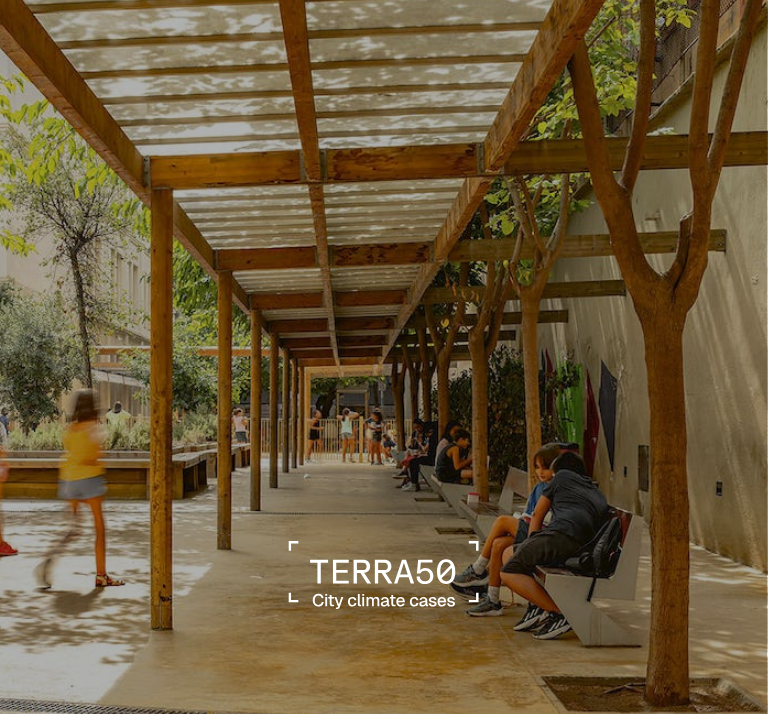
In 2020, Kypseli, the 6th district of Athens, saw how the consulting firm Deloitte supported the creation of a small green space for residents. The objective was not a project with the monumental character or amazement often sought with public parks: it is a small asphalt path surrounded by local vegetation and a couple of trees providing shade next to benches.
After Kypseli came Sepolia, Packrati, Kolonos, Kerameikos, Petralona, Agios Artemios, Patisia and finally Neos Kosmos in 2022, the ninth and last pocket park to be created, this time with the help of Organization Earth, which had been recovering spaces for years.
The benefits of pocket parks
The primary objectives of pocket park projects include giving citizens access to green areas, adapted to the specific urban circumstances of the Greek capital, and also to provide shade during increasingly frequent heat episodes. There are also other objectives such as reducing crime by attracting more citizens onto the streets or tackling loneliness, particularly among the older population.
Today, these small green spaces are used by all ages and social positions, and have become safe spaces that have improved residents’ quality of life, who can now enjoy localized cooler spaces, benches and greater urban biodiversity next to their homes.
Image | Amir Ahmadi