


Table of Contents

Citylogin has been listed in Terra50, a new global, pioneering initiative spotlighting the 50 most impactful solutions addressing today’s most pressing climate challenges in cities. This article is written by Ana Villagordo Vegara, Project Manager and Explorer at Terra50. Click here for more details on Citylogin.
We are buying more and more products online and expecting them to arrive faster than ever. But behind every parcel delivered to our doorstep lies a network of vehicles, warehouses, couriers and journeys that we rarely see. In cities, this activity takes up increasing amounts of space and generates emissions, noise and congestion. What if, instead of continuing to multiply delivery vehicles, we completely rethought how goods are distributed? In Madrid, Citylogin is exploring an alternative based on a network of small urban logistics hubs, electric vehicles, cargo bikes and digital tools that make deliveries more efficient.
Cities have undergone profound transformations in recent decades. We have rethought how people move, expanded public transport networks, created cycle lanes and introduced low-emission zones. But there is one form of mobility that is often left out of this debate: the movement of goods.
Every day, thousands of parcels need to reach shops, offices and homes. The growth of e-commerce and on-demand delivery services has multiplied the journeys associated with this activity, particularly in the densest urban centres. The result is growing competition for a very limited resource: public space. Vans travelling along the same streets, vehicles searching for loading and unloading areas, couriers working to meet increasingly tight deadlines, and residents living with traffic and noise.
The usual response has been to make deliveries more efficient, replace combustion-engine vehicles with electric alternatives, or regulate delivery times and distribution zones. But Citylogin raises a more structural question: what if the problem is not just which vehicles we use for deliveries, but how we organise the city’s entire logistics network?
From large distribution routes to capillary logistics
The traditional urban distribution model largely relies on large logistics centres located on the outskirts of cities. From these facilities, vehicles transport goods to different neighbourhoods, often following routes that overlap with those of other operators. This means that several companies may send vehicles down the same streets to deliver parcels to destinations that are very close to one another. Each operator optimises its own activity, but the system as a whole does not necessarily operate in the most efficient way.
Citylogin’s approach is based on the concept of capillary logistics. The idea draws inspiration from biological capillary systems, which distribute resources through highly branched networks until they reach the points where they are needed.
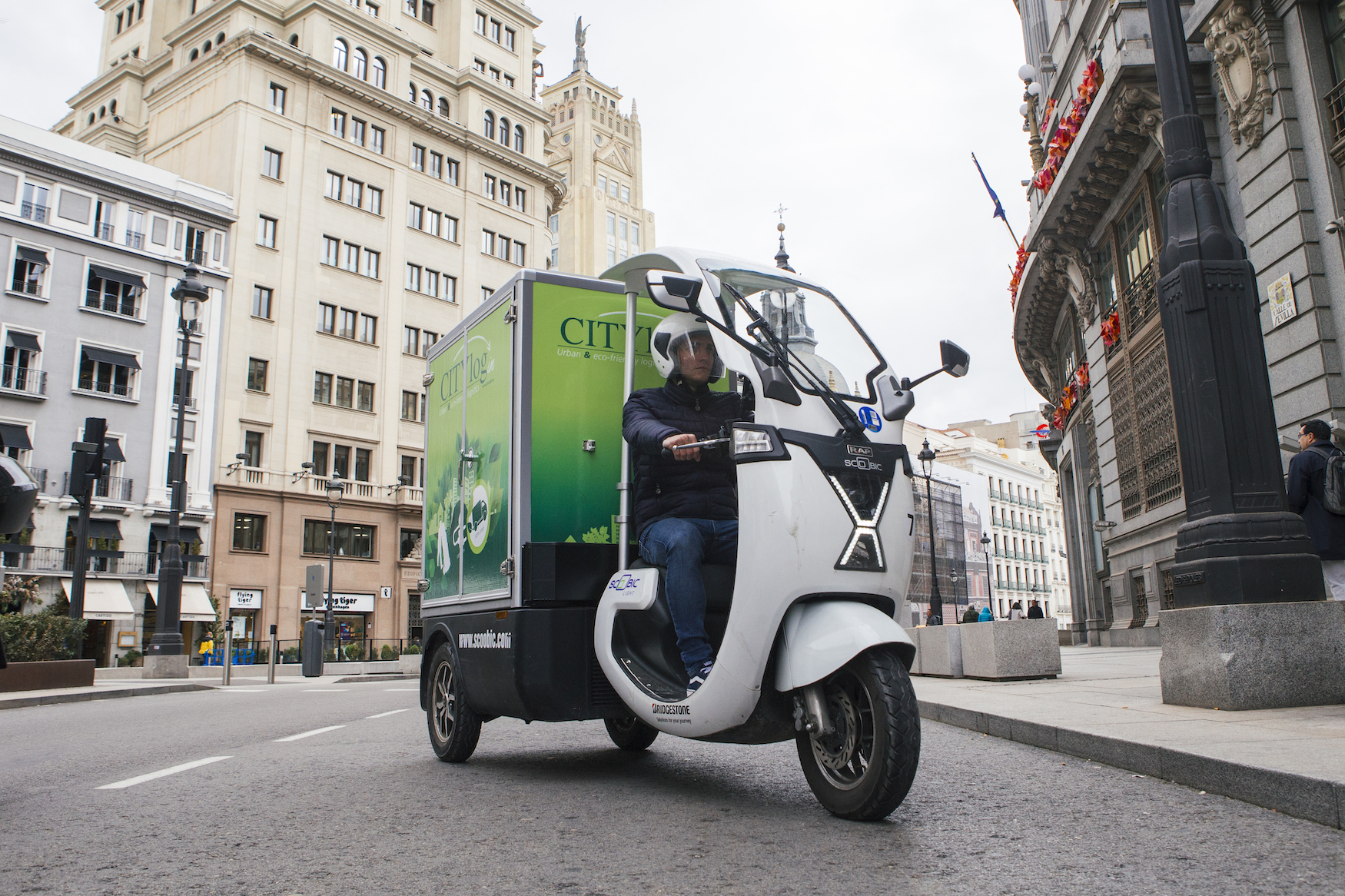
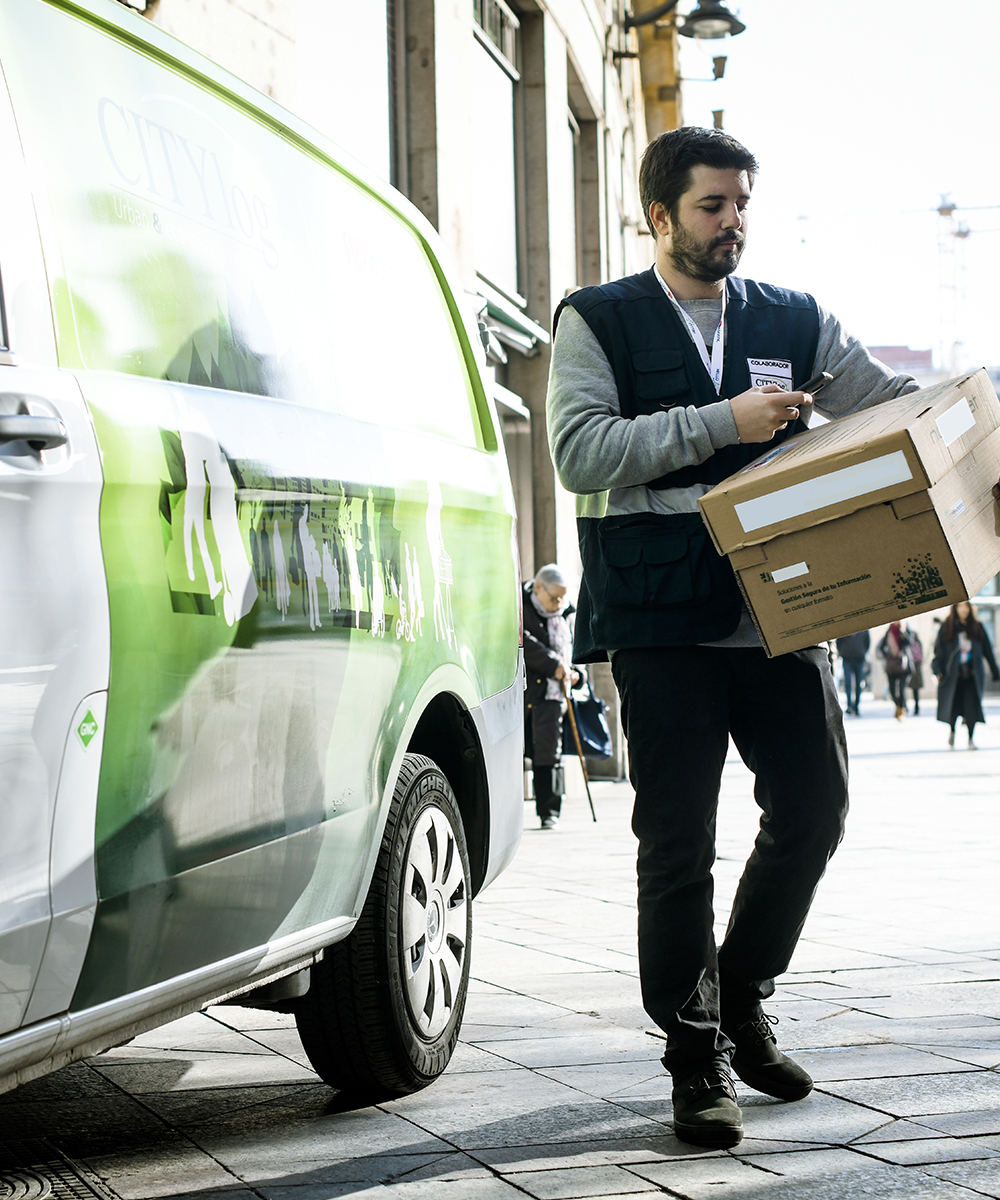
Applied to cities, this means replacing some of the large direct distribution flows with a network of microhubs, small logistics centres located close to delivery areas. Goods arrive at these intermediate points, where they are reorganised and consolidated before completing the final stage of their journey using smaller, low-emission vehicles, such as cargo bikes or electric vans.
This shift is important because it addresses two problems simultaneously: the types of vehicles circulating through the city and the number of journeys required to distribute goods. It is not just about electrifying deliveries, but about eliminating some of the journeys we currently make unnecessarily. Above all, it means recognising that logistics also needs its own urban infrastructure, just as public transport, cycling and walking do.
A logistics hub beneath Plaza Mayor
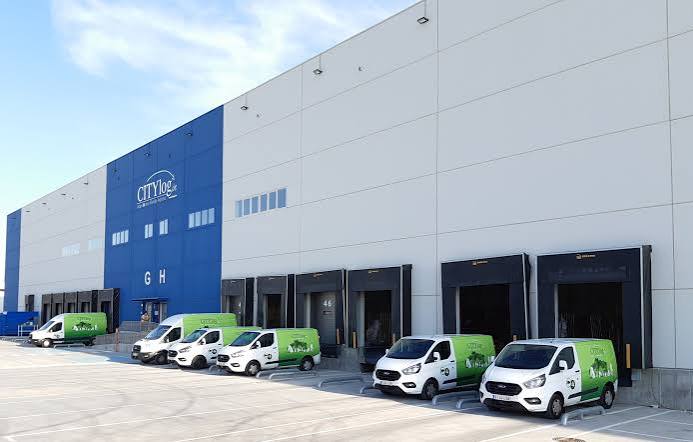
One of the most interesting examples of this model can be found in the underground car park beneath Plaza Mayor in Madrid. As part of the European LEAD project, Citylogin has participated in developing an underground logistics microhub that makes use of existing infrastructure to reorganise deliveries in the surrounding area.
Rather than allocating additional urban land to logistics facilities, the initiative makes use of space within an existing underground car park. This decision raises a particularly relevant question for cities: how can we accommodate new urban functions without continuing to consume space?
The microhub allows goods to be consolidated and redistributed using electric vehicles, reducing the need for multiple conventional vehicles to access delivery areas directly. But the project incorporates another innovative element: a digital twin, a virtual representation of the logistics system that makes it possible to simulate its operation and analyse different distribution scenarios.
This tool allows routes, freight flows and operational decisions to be studied before they are implemented on the ground. According to the results reported by the project, the use of the digital twin achieved a 21% reduction in kilometres travelled per route. This is a significant figure because it shows that part of the decarbonisation of logistics does not depend exclusively on changing vehicle technology, but on improving how journeys are organised.
The initiative received the Urban Logistic Pioneer Award from ALICE in October 2025, recognising its fully electric underground microhub model and the optimisation results achieved.
Sharing information to avoid duplicating efforts
Another issue addressed by Citylogin is the fragmentation of the logistics sector. Cities do not have a single delivery system, but multiple companies, platforms and operators working with their own technologies, routes and information systems.
This diversity is inherent to economic activity, but it can also create inefficiencies. A lack of interoperability makes it difficult to share infrastructure, coordinate deliveries or make better use of vehicle capacity.
To address this challenge, Citylogin has participated in several European projects exploring new forms of cooperation. The Microhubs 4.0 project, developed with CITET and other stakeholders, focuses on creating a network of interoperable microhubs capable of working with different technologies and operators.
Meanwhile, STANDTRACK proposes developing a common language for parcel identification and a cooperative management platform, while LUCID explores shared geolocation and optimisation tools to improve coordination between logistics companies and independent couriers.
The European DISCO project takes this approach further by integrating municipal and logistics operators’ data to develop, manage and evaluate collaborative urban distribution scenarios.
Behind these initiatives lies an idea that goes beyond technology: a city cannot optimise its logistics if every stakeholder only optimises their own part of the system. This is where the concept of coopetition comes in: a combination of cooperation and competition between companies that continue operating in the same market but share certain resources or tools to achieve mutual benefits.
In this case, cooperation can help reduce duplicated journeys, improve vehicle utilisation and make more efficient use of urban infrastructure. The challenge is far from simple. It involves agreeing on standards, sharing certain data and establishing governance models that can coordinate public and private interests.
A new way of understanding public space
Urban logistics is not just an emissions problem. It is also a question of space, coexistence and quality of life.
Every delivery vehicle needs to circulate, park, and load or unload goods. As this activity increases, so does the pressure on streets and pavements, particularly in the densest neighbourhoods. This is why reorganising urban distribution can deliver benefits that go beyond reducing greenhouse gas emissions.
A well-located network of microhubs can facilitate the use of cargo bikes and smaller vehicles, reduce the circulation of conventional vans and ease pressure on loading and unloading areas. It can also help reduce noise and improve compatibility between logistics activities and other uses of public space.
But these benefits are not automatic. Microhubs need suitable locations, good connections to distribution networks and management systems that prevent disturbances from simply being displaced from one street to another. Furthermore, distribution using cargo bikes or small electric vehicles is not equally viable for all types of goods, distances or commercial needs.
For this reason, the model is not about replacing all conventional logistics with a single system, but about combining different scales, infrastructure and transport modes according to the characteristics of each urban environment. This is one of the most interesting contributions of capillary logistics: recognising that the distribution needs of a historic city centre, a residential neighbourhood and an industrial area are not the same.
From individual company efficiency to city-wide efficiency
The Madrid case also raises a question of governance. Traditionally, urban logistics has been regarded as an essentially private activity. Public authorities regulated traffic, established loading and unloading times or defined access zones, while companies organised their own distribution systems.
But if we want to significantly reduce the environmental impacts of last-mile delivery, perhaps this separation is no longer sufficient. Microhubs need urban space. Coordination between operators requires shared systems. And the optimisation of freight flows can benefit from data on mobility, congestion and public space use managed by local authorities.
This means treating logistics as an urban planning issue, rather than simply a transport service. The various projects involving Citylogin, from LEAD to DISCO, explore precisely this intersection between physical infrastructure, digital tools, business cooperation and public policy. Its experience has also received several awards, including the National Sustainable Mobility Award in 2021 and CITET’s Innovation Collaboration Excellence Award in 2025.
Beyond the awards, the value of the model lies in its potential to transform how decisions about freight distribution are made. Because a route can be efficient for an individual company while still forming part of a system that is inefficient for the city as a whole. And it is this distinction that forces us to broaden our perspective.
A city that delivers better, not necessarily faster
Perhaps the most interesting reflection prompted by Madrid Citylogin concerns a contradiction we have come to accept as normal. On the one hand, we want cities with less traffic, fewer emissions, less noise and more space for people. On the other, we have built a consumption model in which we expect to receive almost any product, anywhere, in the shortest possible time.
Technology can help reduce the impacts of this model, but it is unlikely to resolve the underlying contradiction if demand for deliveries continues to grow without limits. This is why Citylogin’s contribution is relevant, but also invites us to look a little further.
Capillary logistics, microhubs, cargo bikes and digital twins can help make distribution more efficient. But the debate should also include delivery times, order consolidation, collection points and shared responsibility between businesses, public authorities and consumers. It is not simply about delivering the same parcels with fewer emissions, but about asking what kind of distribution system we need for the cities we want to build.
This connects with other solutions explored through Terra50: the need to stop addressing urban challenges as isolated problems. Mobility cannot be separated from urban planning. Digitalisation cannot be separated from governance. And the decarbonisation of logistics cannot be separated from how we consume and use public space.
Madrid Citylogin shows that part of urban transformation involves rethinking everyday activities that we often take for granted.
Because a more sustainable city is not necessarily one where parcels arrive faster, but one that has learned to distribute them better, using fewer resources, making fewer journeys and generating less impact on urban life.
»Click here for more details on Citylogin.
»The images in this article were provided by Citylogin.