



Author | Lucía Burbano
In 2020, estimates for the global autonomous last mile delivery market stood at around $1 billion for that year, with an upward trend that would exceed $3 billion by 2027. However, numerous global companies including Amazon or FedEx have abandoned projects that were exploring the feasibility of using delivery robots.
So is it unjustified hype or is it just a small break to really take off even stronger at a later date?
Delivery robots, what starts well, ends badly?
Jimmy meets some exciting new robots and makes a big reveal from our partner @FedEx! #FallonTonight pic.twitter.com/PbglEgPV9J
— The Tonight Show (@FallonTonight) February 27, 2019
Given the rise in micro-mobility, the increase in online buying and, therefore, the increased demand to receive deliveries at home in record time, drones and robots appeared to be the perfect and sustainable solution to decongest cities by reducing delivery trucks and transportation costs.
And no expense was spared when introducing it to the public, with a large scale prime time presentation. In 2019, FedEx presented a prototype on The Tonight Show called ‘SameDayBot’, designed to operate autonomously using sensors and artificial intelligence for last mile same day deliveries and capable of finding the best route to reach end customers.
However, four years after that televised presentation, we are still not seeing robots on the sidewalks loaded with parcels, other than some very minority programs.
What has happened during this break? We can focus on the cases in the United States, where they were first introduced, in order to get a better understanding of the challenges faced by delivery robots.
Inconclusive tests
Amazon
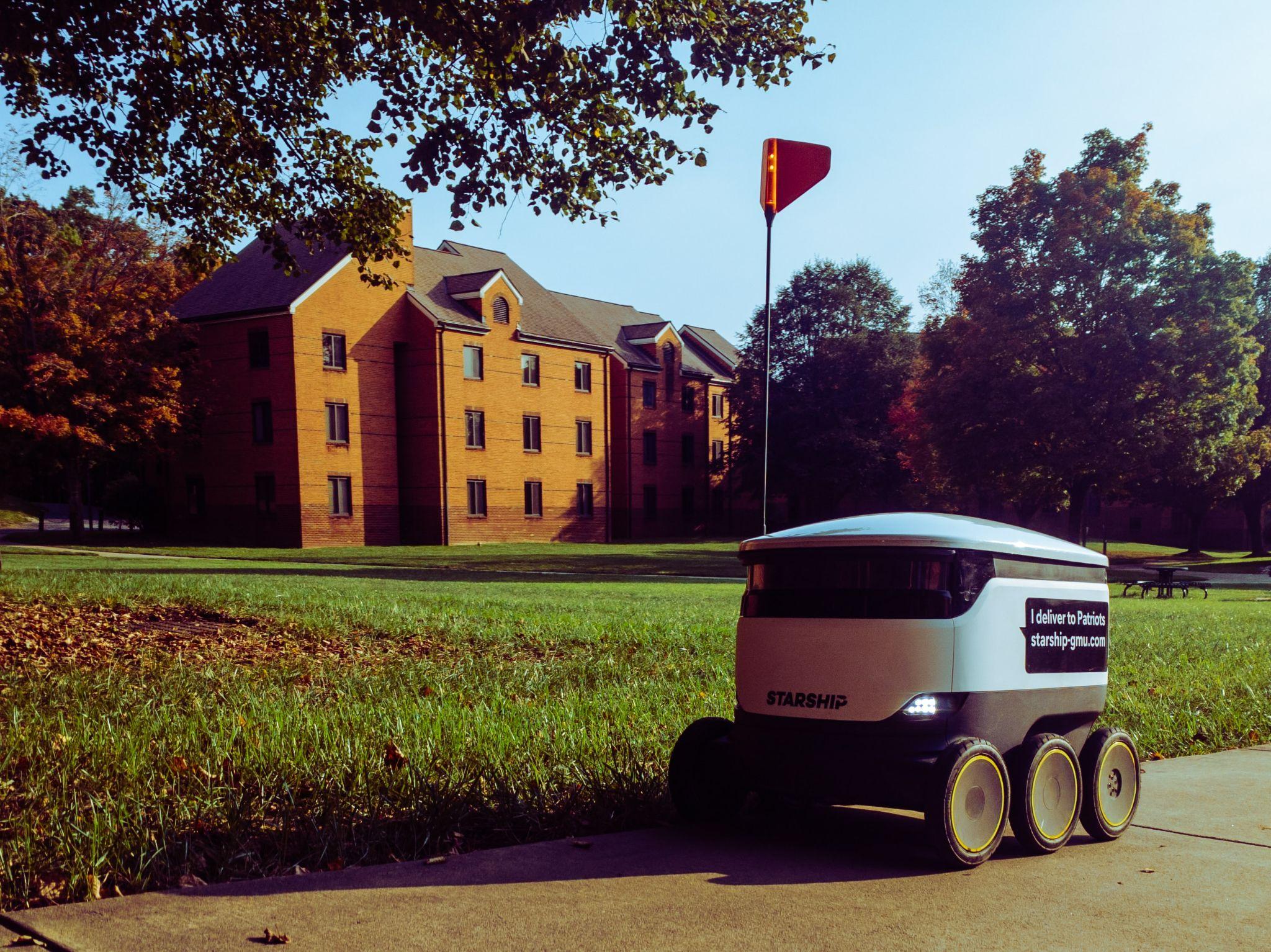
Scout is the name of the delivery robot first tested by Amazon in 2019, in a neighborhood of Washington and then in Atlanta, Irvine (California) and Franklin (Tennessee). Two years earlier, it had acquired Dispatch, a robotics company.
However, during the last quarter of 2022, Amazon announced the end of these tests without much explanation. The company said that it was "redirecting the program" after some of aspects did not meet customer requirements.
This announcement does not mean that Amazon has completely abandoned the idea of robot deliveries, but we will have to wait and see when it resumes this journey.

FedEx
The courier company’s high-profile delivery robot tests included agreements with companies such as Pizza Hut and Walmart to help evaluate autonomous delivery needs.
However, coincidence or not, it was also in October 2022 when FedEx announced the end of its autonomous delivery robot tests.
In this case, the company said that "although robotics and automation are key pillars of our innovation strategy, SameDay Bot did not meet necessary near-term value requirements (…) however, it has enabled us to rapidly advance our understanding and use of robotic technology".
Possible causes of this ‘failure’
Efficient in controlled environments, but not in real life
Anther pilot evaluated different use cases to explore the use of autonomous micro-mobility on sidewalks in Pittsburgh, Miami-Dade, Detroit and San Jose in collaboration with Kiwibot, a manufacturer of delivery robots, which produced numerous conclusions.
In Pittsburgh, for example, robots found it difficult to tackle irregular sidewalks or sidewalks with bushes. In Detroit, the robots were not quick enough to cross wide avenues before the traffic light turned red.
Legislation
Regulations governing autonomous vehicles are still an obstacle for their development. In the case of delivery robots, the most famous case was the letter sent by the New York city council to FedEx, ordering it to cease its SameDay Bot tests, since it was violating numerous regulations, the most significant of which is that New York does not allow this form of autonomous devices on its streets and sidewalks.
Photographs | Unsplash/ Bill Nino, Amazon