



This is a guest post written by Anastasia Sukhoroslova, Founder and CEO, All Things Urban; Co-Founder and Managing Director of the GeoSpatial Hub.
Open any smart city strategy and you will find sensors, data platforms, climate plans and, increasingly, AI. What you will rarely find is a page about the people expected to make it all work. Yet over the past decade, cities have created a whole set of roles to do exactly that.
I have spent more than ten years in the urban sector, the last eight building All Things Urban, a global career platform connecting more than 100,000 urban professionals and organizations across over 80 countries and 2,200 cities. We work with employers, municipalities, and top universities looking for talent, new skills and ways to reach the urban workforce, while our community tells us what professionals themselves are trying to learn and where their careers are moving. Our local chapters, from Barcelona to San Francisco, show us what is happening on the ground. Together, this gives us a live picture of how urban work is changing.
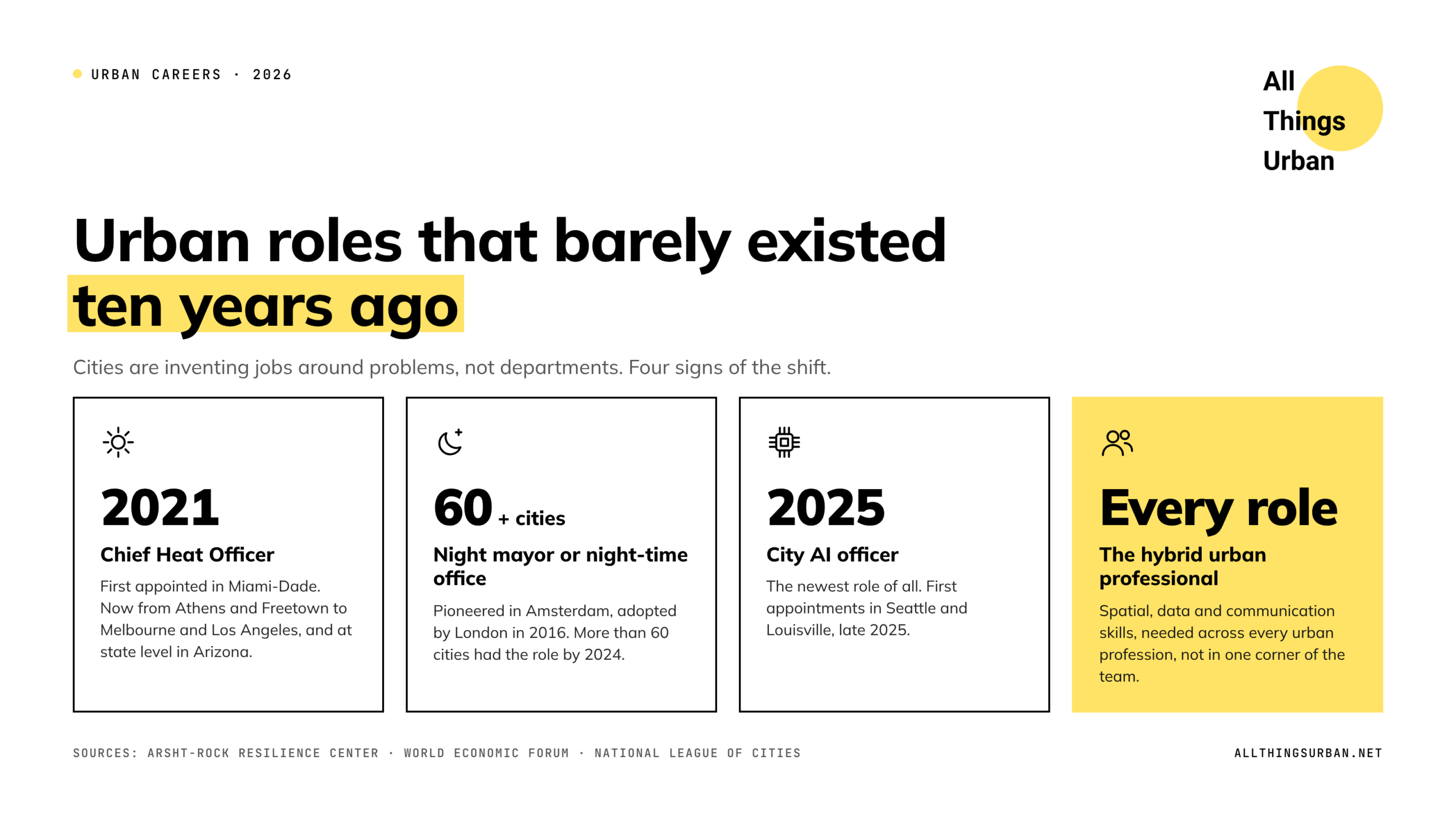
Take extreme heat. In 2021, Miami-Dade County appointed the world’s first Chief Heat Officer. Cities from Athens and Freetown to Melbourne, Dhaka and Los Angeles followed, and in 2024 Arizona became the first US state to create the role. The job goes far beyond climate science: it means aligning health, housing, streets, and infrastructure departments that have historically worked apart.
The same is happening after dark. Amsterdam pioneered the night-mayor model, London followed in 2016, and today more than 60 cities have a night mayor or dedicated night-time office. This is about far more than nightlife. Work, mobility, culture, logistics , nd care already extend well beyond the traditional working day, and hotter cities may increasingly see activity shift towards cooler evening and night-time hours. Transport, safety, noise, public space and health all intersect after sunset. Someone has to connect them.
Then there is data. Chief Data Officers now sit in many city governments, from Barcelona to New York. Dedicated urban AI roles are emerging too: in late 2025, Seattle and Louisville became two of the first US cities to appoint executive-level AI leaders.
But the bigger shift we see, through All Things Urban and through GeoSpatial Hub, the spatial skills and training platform I co-founded, is not that cities need more data specialists. They need more spatial intelligence across every urban profession.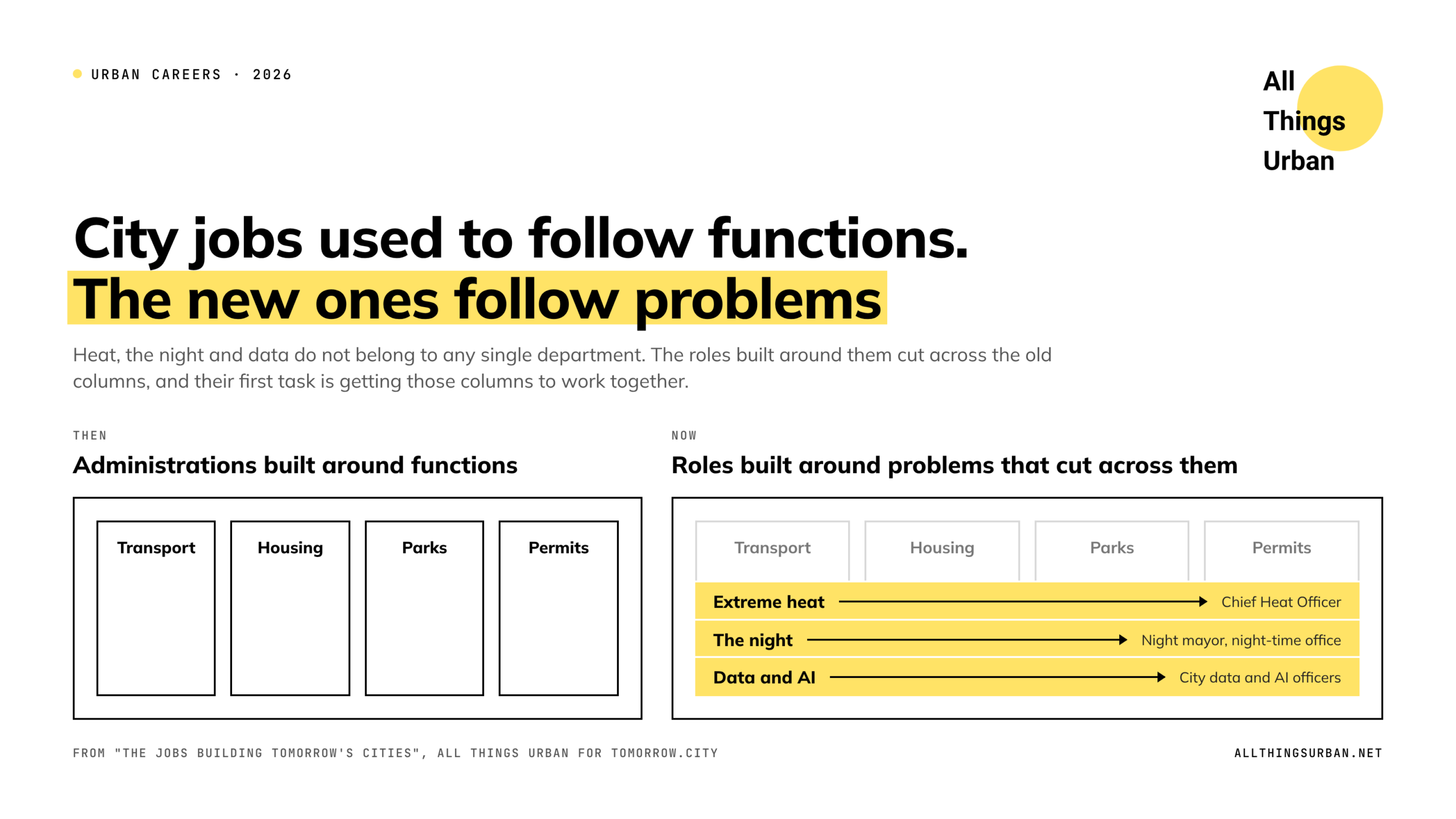
Spatial analysis historically sat downstream in urban work, often producing a map once the question had already been defined. Increasingly, it is moving upstream. Planners, architects, mobility professionals and climate teams need spatial intelligence to help define the question in the first place: what is happening where, who is affected, which patterns overlap and where an intervention could matter most.
We have trained more than 500 professionals from over 45 countries, and increasingly the request comes from organisations, from engineering consultancies to city teams, that want spatial skills across the whole team. Most participants do not want to become data specialists; they want to be better planners, designers and decision-makers who can read spatial data themselves and explain what it means.
City administrations were built around functions: transport, housing, parks, permits. The emerging roles are built around problems that cut across them, which changes the skills cities need. The clearest trend in our community is the hybrid urban professional: technically literate, but equally strong in communication, systems thinking and translating between data, policy, and communities.
What does this mean in practice?
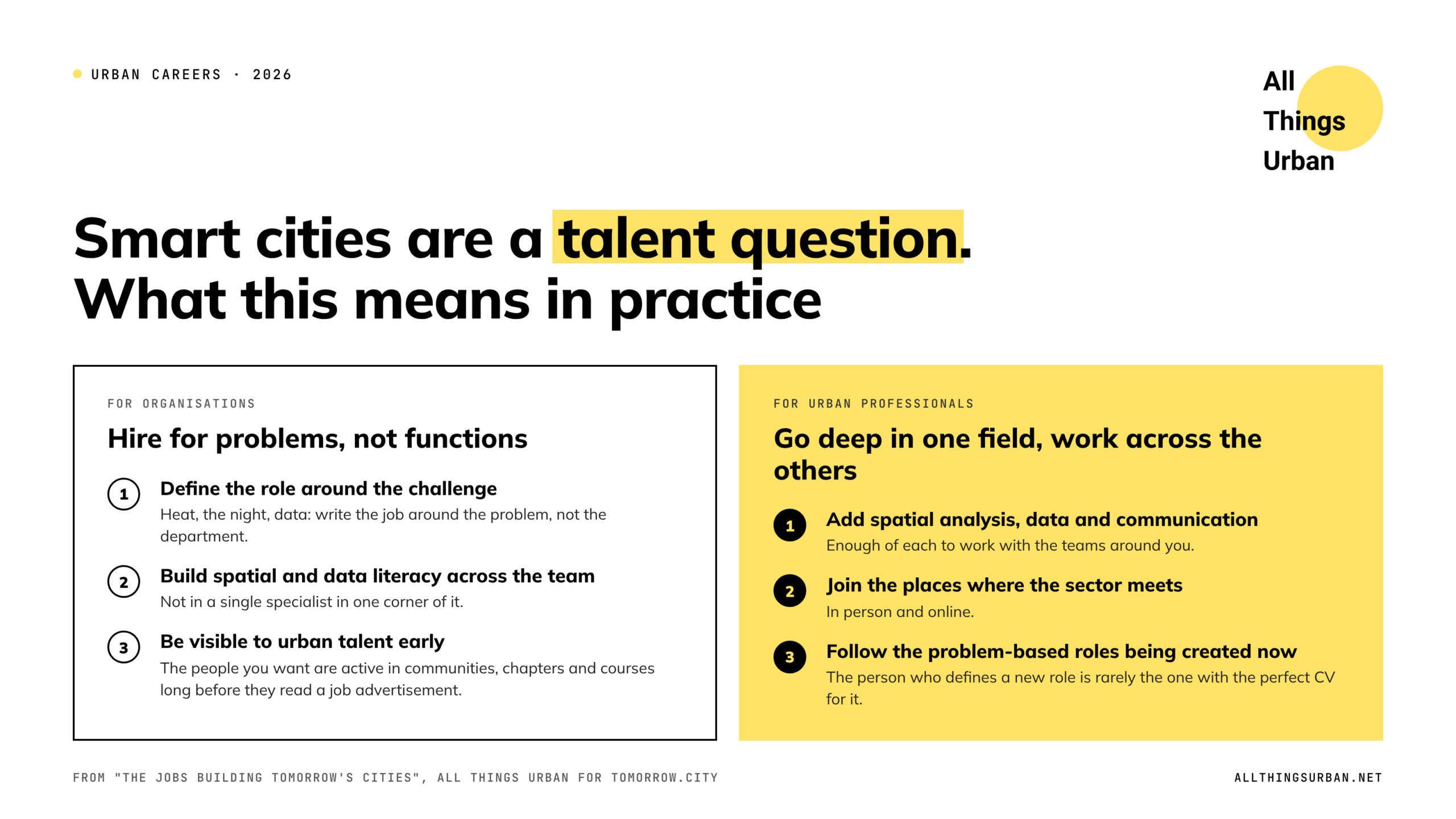
- For organisations: hire for problems, not functions. Define roles around the challenge, not the department; build spatial and data literacy across the whole team, not in one specialist; and show up where urban talent already is, in professional communities, long before you post a job.
- For urban professionals: go deep in the field that drives you, but learn enough spatial analysis, data and communication to work across the others. Be where the sector meets, in person and online. And watch the problem-based roles being created now: the person who defines a new role rarely has the perfect CV for it.
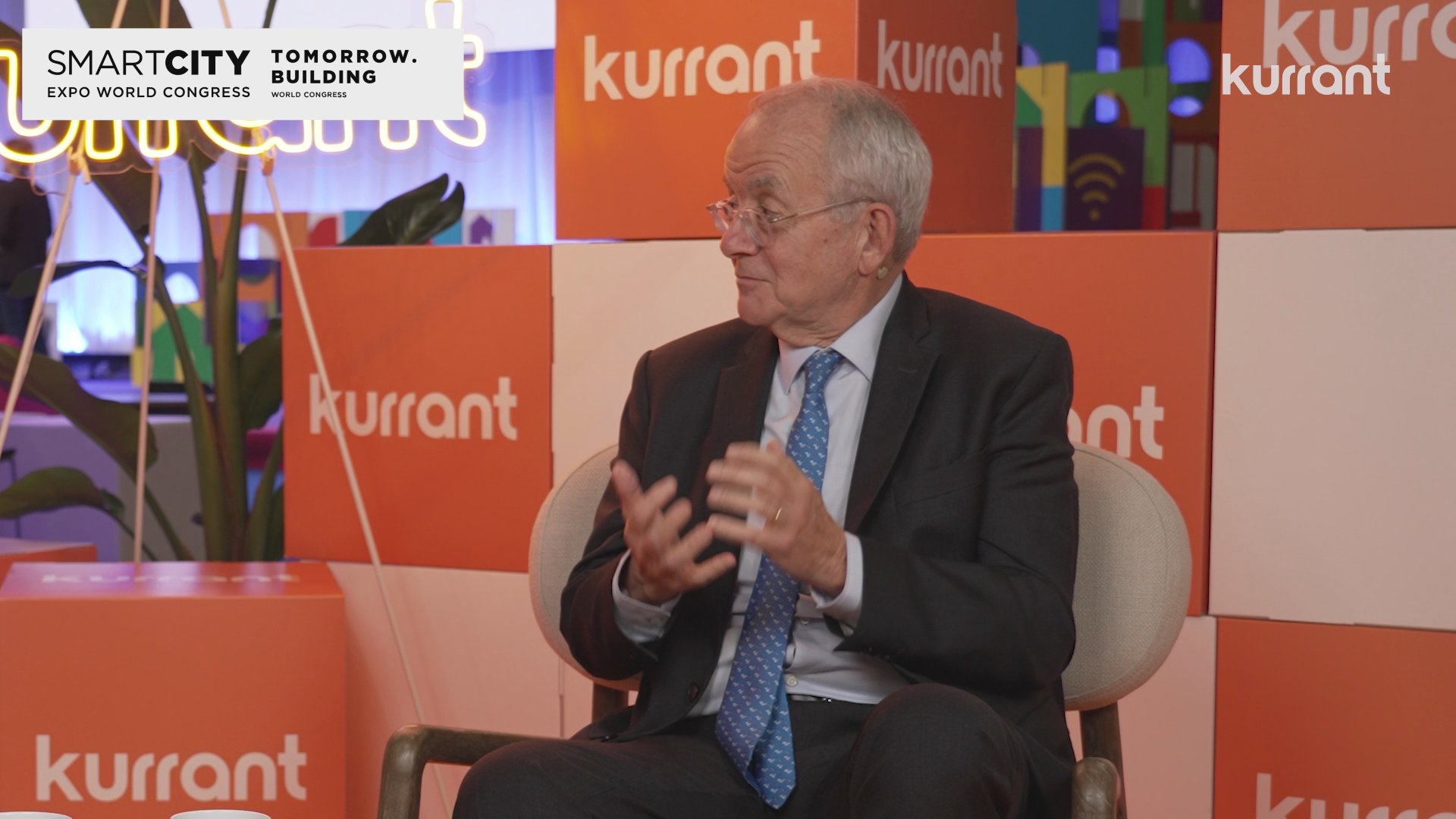
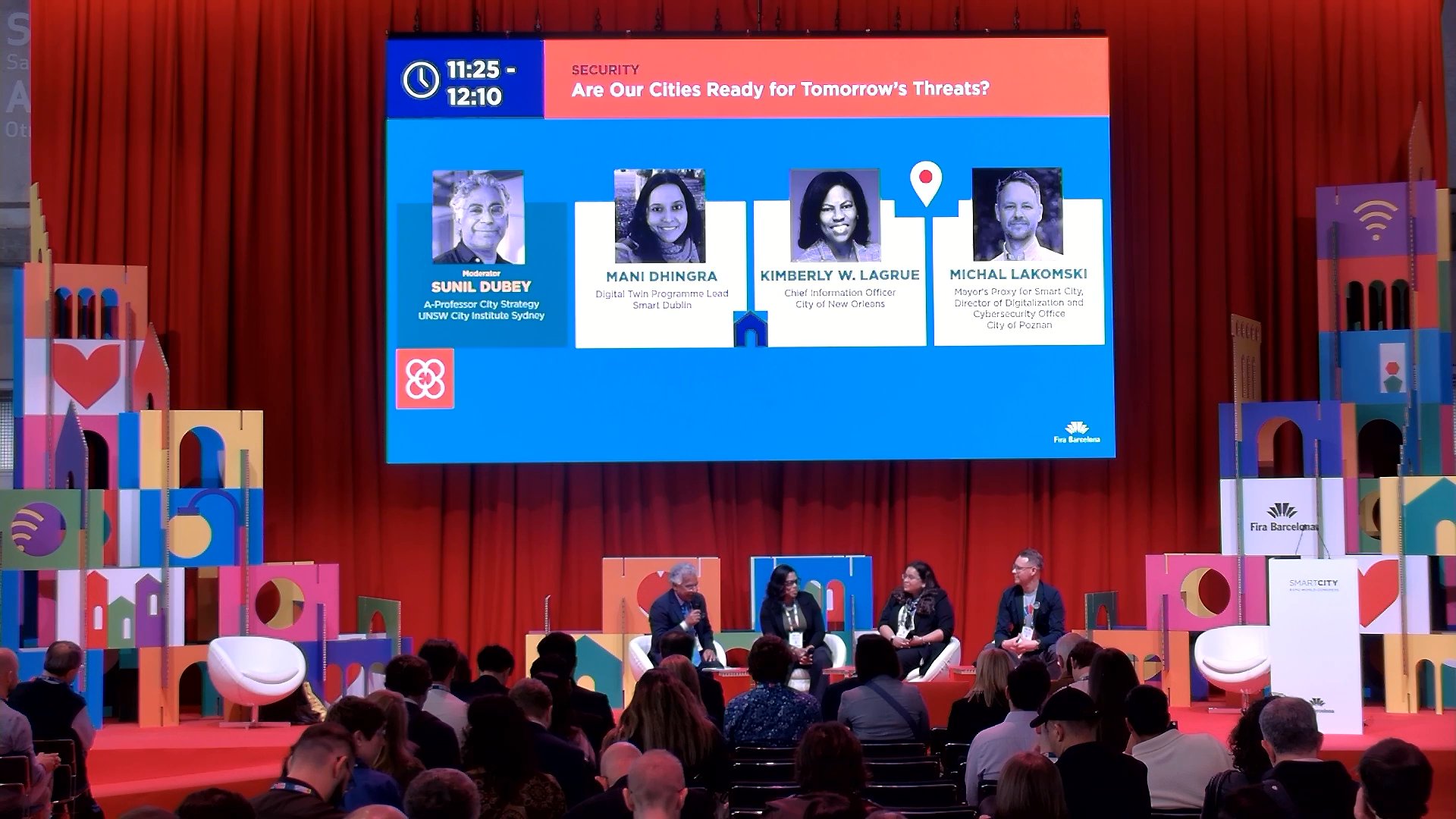
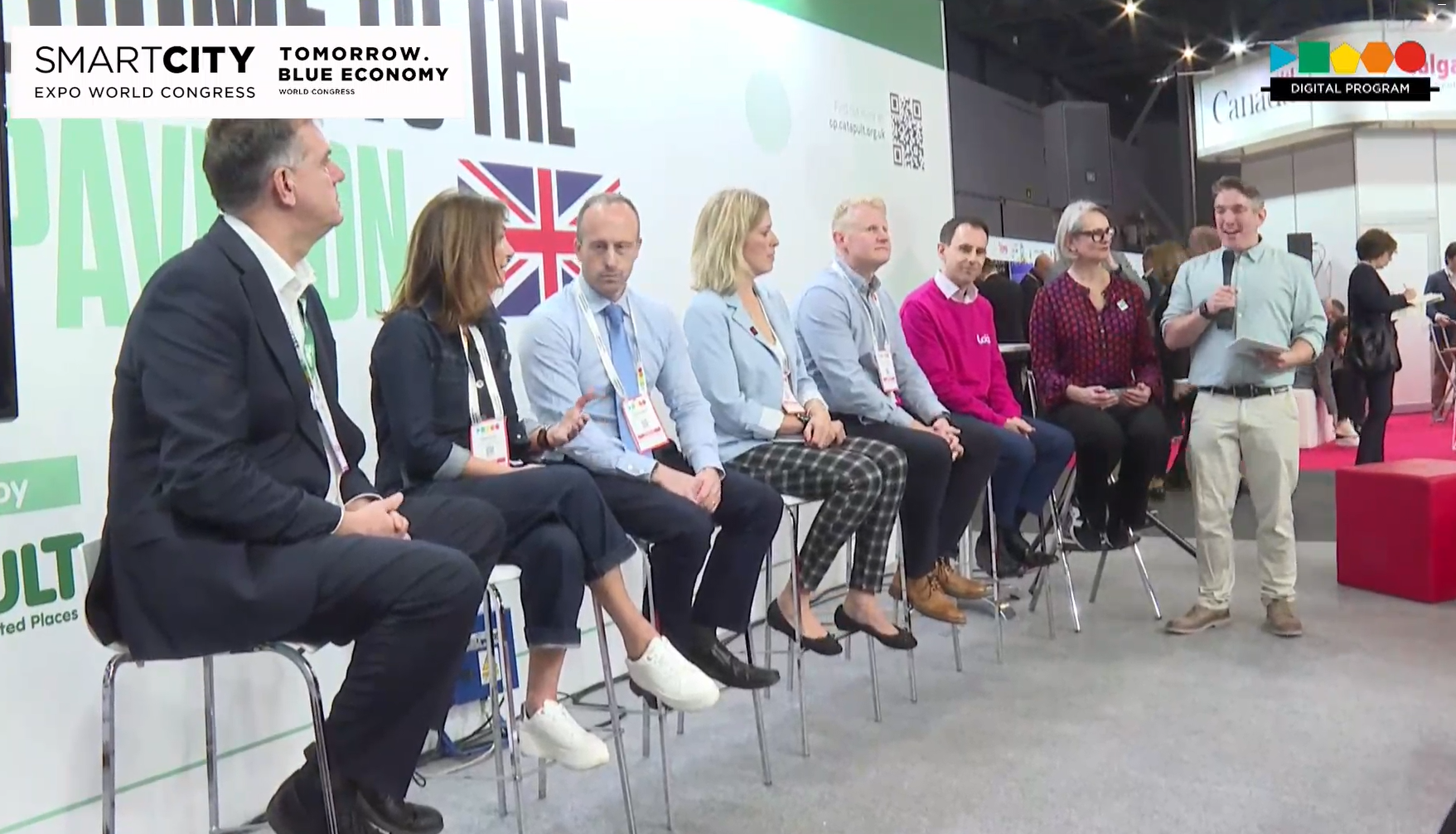
The future of smart cities is not only a technology question. It is a talent question. That is the perspective I will also bring to the conversations I moderate at Smart City Expo World Congress this November.
About the author
Anastasia Sukhoroslova is the Founder and CEO of All Things Urban, a global career platform for urban professionals with a community of more than 100,000 members in over 80 countries, and Co-Founder and Managing Director of GeoSpatial Hub, a spatial skills and training platform powered by All Things Urban. All Things Urban works with universities, employers and event organisers to reach urban talent worldwide; GeoSpatial Hub delivers tailored GIS and spatial-analysis training for teams. All Things Urban is a long-standing media partner of Smart City Expo World Congress, where she will moderate sessions in November 2026. More at allthingsurban.net.
Sources
- Adrienne Arsht-Rockefeller Foundation Resilience Center, “Melbourne, Australia, Lord Mayor Announces City’s First-ever Chief Heat Officers” (Miami-Dade, Freetown, Athens 2021; Santiago, Monterrey, Melbourne 2022): https://onebillionresilient.org/?p=14681
- TIME, “Living With Extreme Heat? These Cities Are Taking Action”, 29 July 2025 (Miami-Dade first in 2021; Dhaka, Santiago; Arizona first US state with a chief heat officer, 2024): https://time.com/7305946/cities-tackling-extreme-heat/
- Route Fifty, “Can chief heat officers protect US cities from extreme heat?”, 12 Aug 2024 (Los Angeles and Phoenix heat officers): https://www.route-fifty.com/infrastructure/2024/08/can-chief-heat-officers-protect-us-cities-extreme-heat/398738/
- World Economic Forum, “Cities: night-time strategies to address urban challenges”, 9 Jan 2024 (60+ cities with night mayors or night-time departments; London night-time economy 26 billion pounds, New York 35.1 billion dollars; London role created 2016): https://www.weforum.org/stories/2024/01/24-hour-cities-night-time-strategies-urban-challenges/
- National League of Cities, “As AI Spreads Through City Hall, Chief AI Officers Emerge”, 4 Feb 2026 (Seattle and Louisville appointed city AI officers in late 2025): https://www.nlc.org/article/2026/02/04/as-ai-spreads-through-city-hall-chief-ai-officers-emerge/
- Ajuntament de Barcelona, Municipal Data Office (city Chief Data Officer): https://ajuntament.barcelona.cat/en/municipal-organisation-chart/organ/Municipal%20Data%20Office
- All Things Urban community figures (100,000+ urban professionals, 80+ countries, 2,200+ cities): https://www.allthingsurban.net
- GeoSpatial Hub, powered by All Things Urban (500+ professionals trained, 45+ countries): https://geospatial-hub.com
Images & graphics provided by All Things Urban.