



Author | Arantxa Herranz
A growing number of cities around the world are testing new smart waste management solutions with the aim of not only improving efficiency in terms of resources, but also the costs associated with keeping their streets clean. In some cases, automation is helping solve overcrowding problems that come with the accumulation of people and industries.
Seoul is the capital and largest city in South Korea, and the largest megacity in the developed world. A paradigmatic example of a smart city in constant development, it has five sites designated as UNESCO World Heritage and numerous shopping centres and cultural sites attracting large numbers of international tourists.
Around 10 million people live in the city, but if we take into account the entire metropolitan area, the population exceeds 25 million people. This is half of all the residents in the country. This makes it one of the cities with the highest population density in the world, almost twice that of New York City, four times higher than Los Angeles and eight times higher than the density of Rome.
Seoul also has a lively nightlife, with people staying out on the streets until after 10 at night. Litter bins, therefore, fill very quickly at all times of the day, making it difficult to keep the streets clean. In fact, the average amount of household waste generated per day is estimated to be 9,608 tonnes (and these are figures from 2016).
Few trash bins for so much litter
In addition to the high volume of waste generated in the city, Seoul had another significant problem in terms of treating this waste correctly: the number of public litter bins was insufficient for the population, which resulted in litter being strewn over the streets.
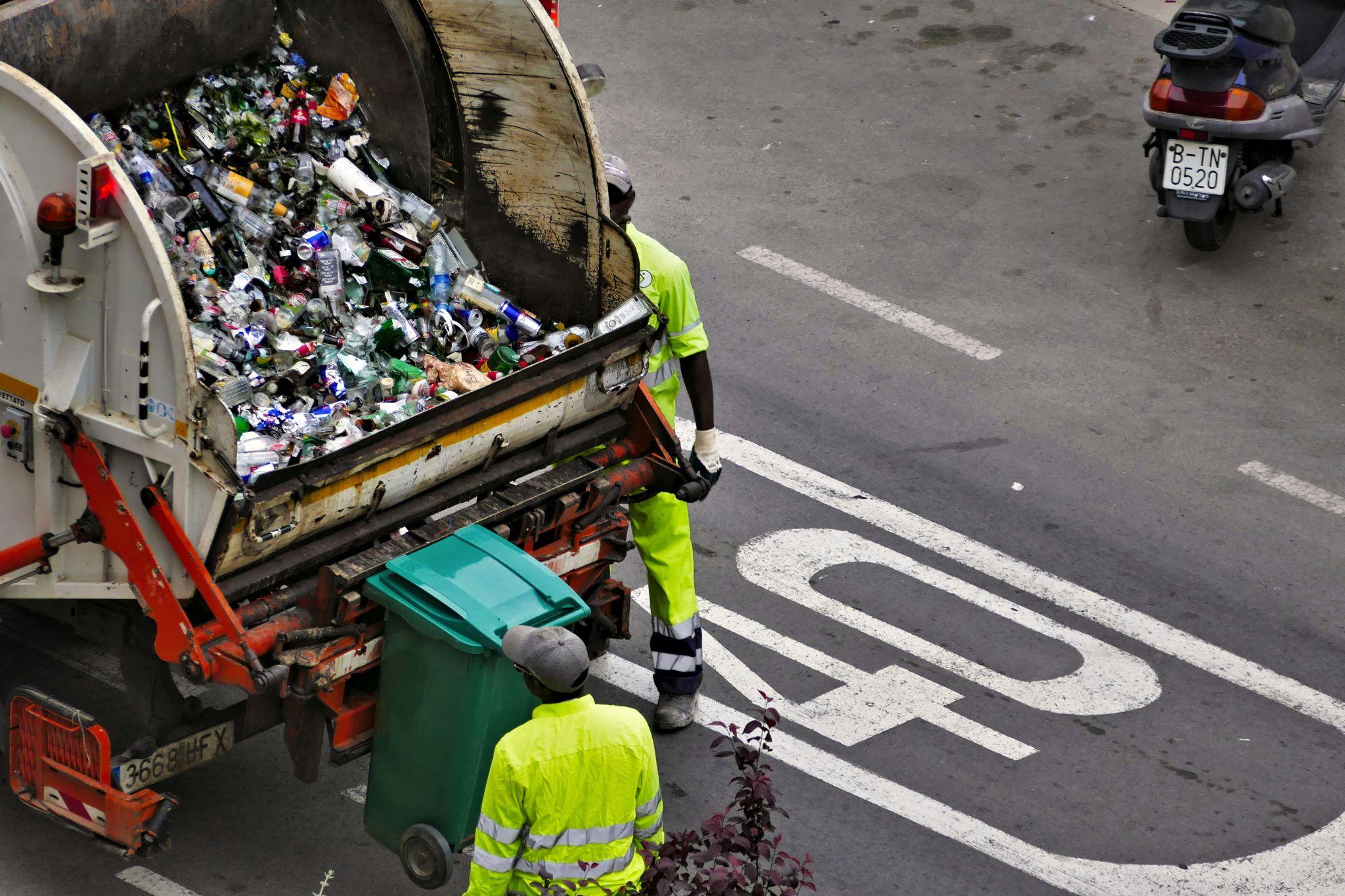
That is, those responsible for the city had to tackle the problem of having to collect litter frequently (between four and five waste collections per day was insufficient) and, the fact that the bins were often filled to the brim and overflowing. In addition to this, the waste collection planners did not know if the bins were actually full, while staff in Seoul had to deal with plastic bottles and paper cups that constantly accumulated on top of the recycling bins.
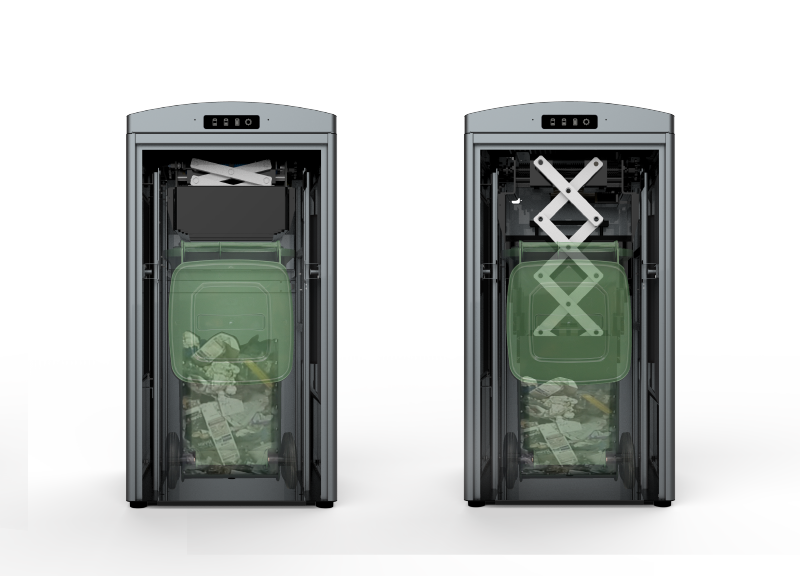
A local company, Ecube Labs, found the solution: an innovative litter bin that compacts its contents with a solar-powered compressor. The idea came about from imitating the behaviour of citizens: a litter bin never overflows in a household, since people press the litter down with their feet to reduce the volume. And if it works at home… Why not do the same with litter bins on the streets?
The possibilities of solar power
This technology allows the containers to store up to four times more waste before having to be emptied. Unlike the traditional method of collecting general waste and recycling materials, this method enables containers to be monitored thanks to technologies such as IoT (Internet of Things),which has enabled the city of Seoul to reduce waste collection costs by 83% and eliminate the problem of overflowing bins. It has also enabled the frequency of the waste collection tasks to be reduced by 66% and recycling rates have increased by 46%.
The bins function with solar power, therefore they can constantly compact the waste deposited in the bins. This increases the capacity by 700%, which in turn reduces waste collection by 85%. This guarantees that the bins will only be collected when they are full, thus requiring fewer collection visits and improving the flow of traffic within the city. The result is cleaner and safer streets.
Traffic reduction due to fewer collection visits helps reduce carbon dioxide and other emissions. And this, in turn, raises public awareness on the use of renewable energies. Furthermore, the recycling bins have led to a reduction in the production of food waste by around 10% in the capital. Some of the food waste containers also have a special function of converting organic waste into compost. This material is then used in community gardens or it is donated to farms.
Finally, thanks to the use of solar energy, these bins can charge themselves and notify the amount of litter they contain by electronic transmission; therefore, the status can be checked from a mobile phone.
Sensors for traditional bins
The most comprehensive version of these bins is expensive. Therefore, initially Seoul installed 85 smart bins in 2014 for general and recyclable waste in particularly populated areas of the city centre. As an intermediate measure, and so all the bins in the city’s streets did not have to be replaced, capacity sensors were installed on existing conventional bins.
In just three months of using the smart waste management solutions, the city saw enormous improvements in its public sanitation. Since installing the clean bins, the amount of litter overflowing from the bins dropped and there was significantly less litter on the streets. Furthermore, as these bins can provide their status and fill-level information, the cleaning team was able to organise more efficient waste collection programmes and collect recycling bins before the bottles and glasses accumulated on top of the bins.
Seoul’s innovative waste management service is an example to be followed by other massified cities, proving that even the partial implementation of smart solutions, can bring about significant benefits.
Images | Ecube Labs