



Table of Contents
This is a guest post by EIT Urban Mobility written by Victoria Campbell. EIT Urban Mobility is the leading innovation community for urban mobility in Europe, committed to accelerating the transition to sustainable mobility and more liveable urban spaces.
To support the emissions reduction goals outlined in the European Green Deal, the European Commission is aiming to deploy 3.5 million publicly accessible charging points by 2030. As cities race to meet these objectives, curbside space is becoming one of the most hotly contested pieces of urban infrastructure.
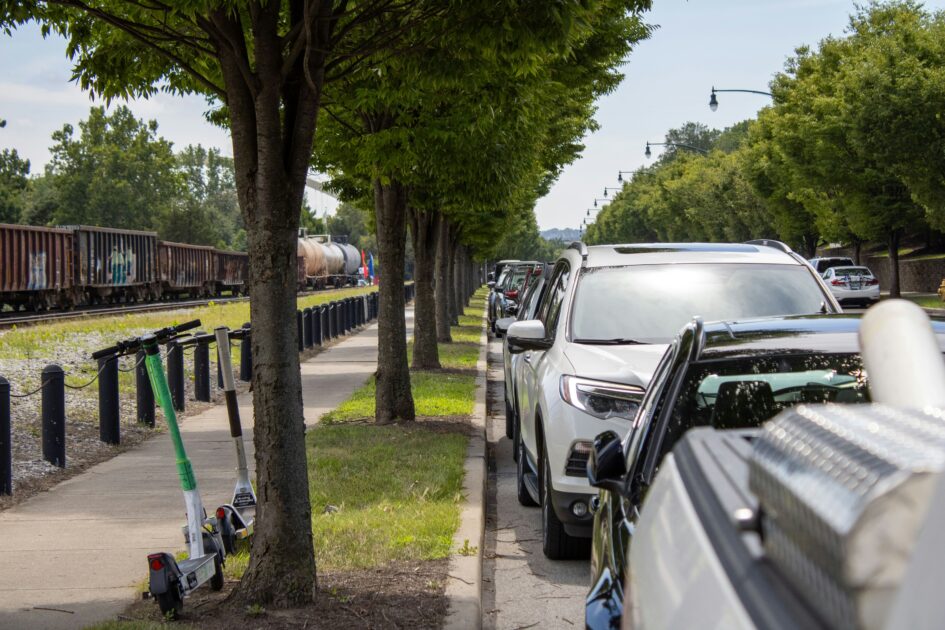
Electric vehicle (EV) charging points are increasingly viewed as essential public assets, particularly for residents without access to private driveways or garages. However, every charging point installed on a city street occupies space that could otherwise be used for bike lanes, loading zones, public transport stops, wider sidewalks, green infrastructure, accessible parking or community spaces.
These various needs create a tricky balancing act for urban planners. While cities must provide sufficient charging infrastructure to support the shift away from fossil-fuel vehicles, they must also ensure that valuable public space remains accessible, inclusive and multifunctional for all residents. Simply allocating more curbside space to parking and charging risks reinforcing car dependency and limiting opportunities to create more liveable streets.
The challenge is therefore not just where to install EV chargers, but how to manage the curb so that multiple users – drivers, residents, logistics operators, public transport users, cyclists and pedestrians – can coexist efficiently. Across Europe, innovative EV charging solutions are being implemented to support increased charging rollout and several EIT Urban Mobility-supported projects demonstrate how technology can help optimise the use of limited street space while supporting broader sustainability and mobility goals.
Enforcing high-demand curbside use
One of the biggest challenges facing urban curbside management is ensuring that designated spaces are used as intended. Whether a curbside area is reserved for deliveries, EV charging, passenger pick-up or accessible parking, misuse can reduce its effectiveness and undermine sustainability goals.
The Smart Zone Enforcement project in Istanbul, Türkiye and Bucharest, Romania tackled this problem through digitally managed curbside zones. The initiative, led by startup Coding the Curbs, focused on monitoring dedicated loading and unloading areas through sensors and real-time enforcement tools. When violations occurred, enforcement officers received instant alerts and were able to process reports directly through a mobile application. The system also integrated with municipal enforcement processes, making compliance easier to monitor and manage.
The results of the project demonstrate the potential of digital curb management. Following the introduction of the enforcement module, occupancy duration in smart zones fell by 35%, indicating faster turnover and more efficient use of the limited curbside space. The system also achieved high alert accuracy and strong support from enforcement officers.
While the project focused on curbside logistics usage rather than EV charging, the underlying principle is highly relevant as charging points are only valuable when they remain available for active charging. Smart enforcement can prevent overstaying and unauthorised parking, ensuring that charging infrastructure delivers maximum benefit without requiring additional curbside allocation.
Parking management for inclusive mobility
Effective curbside management must also account for accessibility and social inclusion. In Aarhus, Denmark, a 2025 pilot project using AI-powered cameras and sensors was deployed to monitor the occupancy of accessible parking spaces in real time. Information was then shared through a digital platform to help users plan journeys based on actual parking availability.
The initiative addresses a common challenge for cities: limited data on how designated parking spaces are being used. By providing accurate occupancy information, the system improved utilisation of accessible spaces while generating insights for future policy decisions. City authorities could then better understand demand patterns and determine whether existing allocations met user needs.
The project highlights an important lesson for EV charging infrastructure. Rather than expanding curbside allocations based on assumptions about use patterns, cities can use real-time data to understand demand, identify underutilised assets and make evidence-based decisions. AI-enabled monitoring can help ensure that charging stations are deployed where they are most needed while avoiding unnecessary occupation of public space.
Reducing pressure on the curb
In some cases, the most effective way to balance EV charging with competing demands for public space is to reduce pressure on curbside infrastructure altogether.
The 2025 RAPTOR Park and Ride Optimisation project in Utrecht sought to achieve exactly that goal. The pilot encouraged drivers to park at peripheral Park and Ride (P&R) facilities and complete their journeys using public transport or shared mobility services. Users received parking and mobility incentives through a bundled digital offer designed to make sustainable travel options more attractive.
The project aimed to increase the use of existing P&R facilities, reduce congestion and improve air quality by shifting travel behaviour away from private vehicle use within the city centre. By connecting parking infrastructure with public transport and shared mobility services, Utrecht explored a more integrated approach to urban mobility.
A similar principle underpinned the ParkingAround pilot project in Mannheim, Germany which employed digital tools to make underutilised off-street parking spaces easier to find and access. By helping drivers use existing parking capacity more efficiently, the project reduced the need for additional on-street parking infrastructure and demonstrated how technology can unlock space that already exists.
For cities struggling to find space for new EV chargers, this both projects offer an important insight: not every charging need must be met at the curb. Strategically located charging provision at transport hubs, mobility centres, off-street parking sites and P&R facilities can reduce pressure on central curbside infrastructure while supporting multimodal travel.

A smarter future for the curb
As EV charging demand continues to increase, cities will face pressure to provide charging infrastructure while maintaining vibrant, inclusive and sustainable public spaces. The solution is unlikely to come from dedicating more curbside space to a single use.
Conversely, the EIT Urban Mobility-supported projects in Istanbul, Bucharest, Aarhus, Utrecht, and Mannheim point toward a more sophisticated approach. Combining tools like real-time monitoring, AI-driven analytics, smart enforcement, multimodal mobility integration and the better utilisation of existing assets can all help cities maximise the value of limited curbside space. By treating the curb as a flexible resource rather than static parking infrastructure, cities can balance EV charging with accessibility, logistics, public transport, active mobility and public space needs.
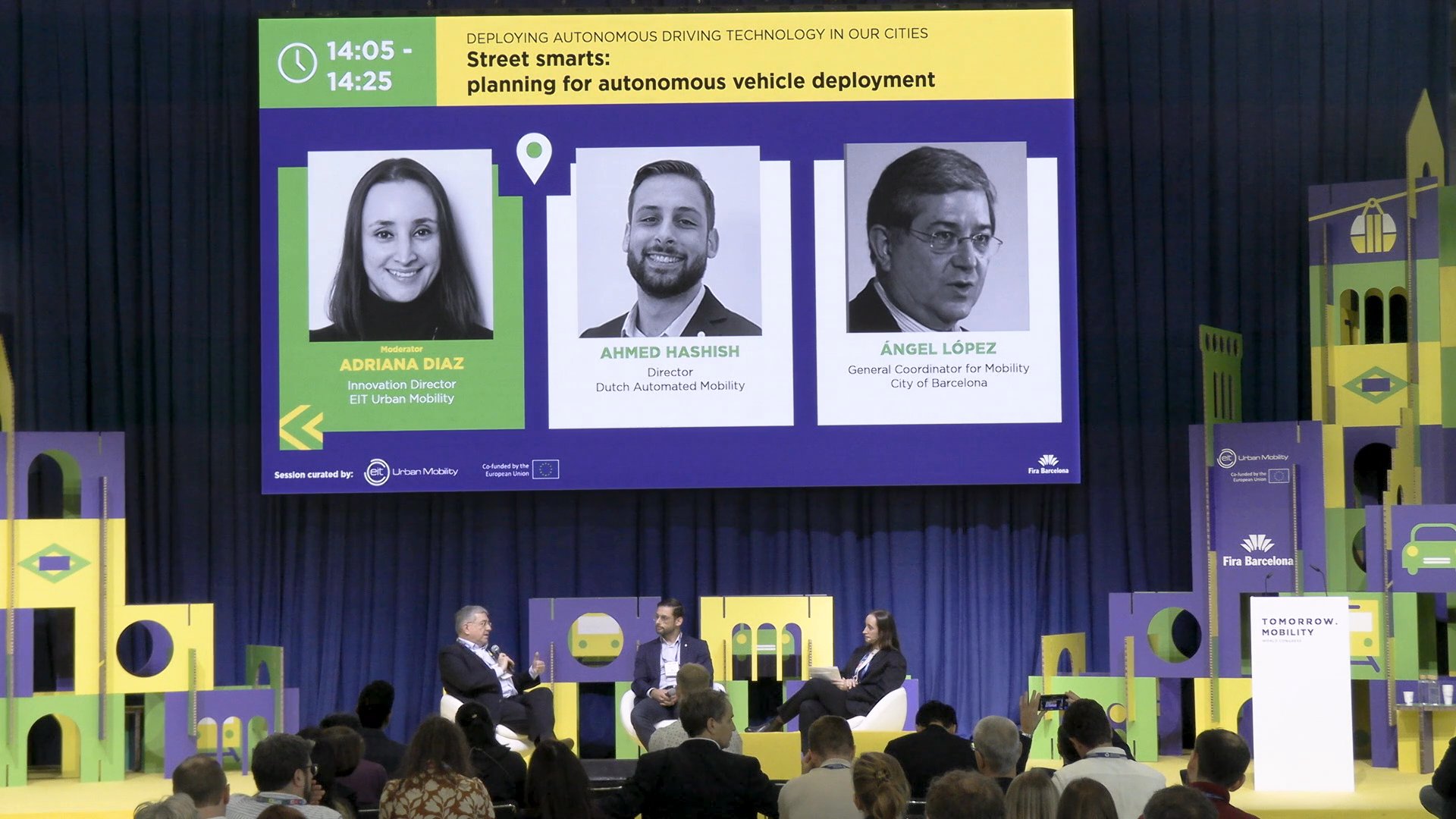
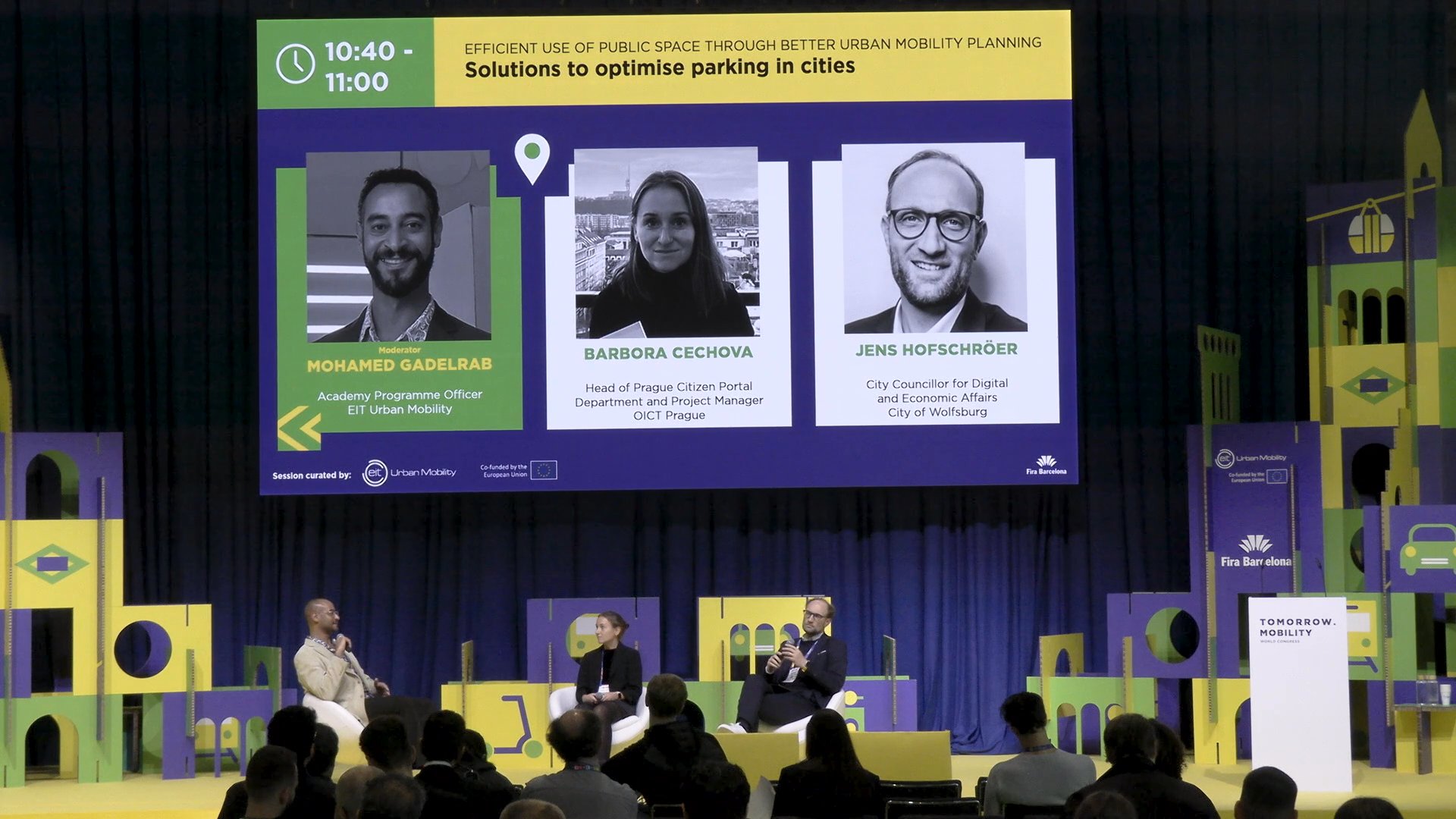
Want to learn more about curbside management? Join us at Tomorrow.Mobility World Congress 3-5 November, co-organised by EIT Urban Mobility and Fira Barcelona.
Photos: CardMapr.nl, Jude Wilson, JUICE.