Table of Contents
Author | Lucía Burbano
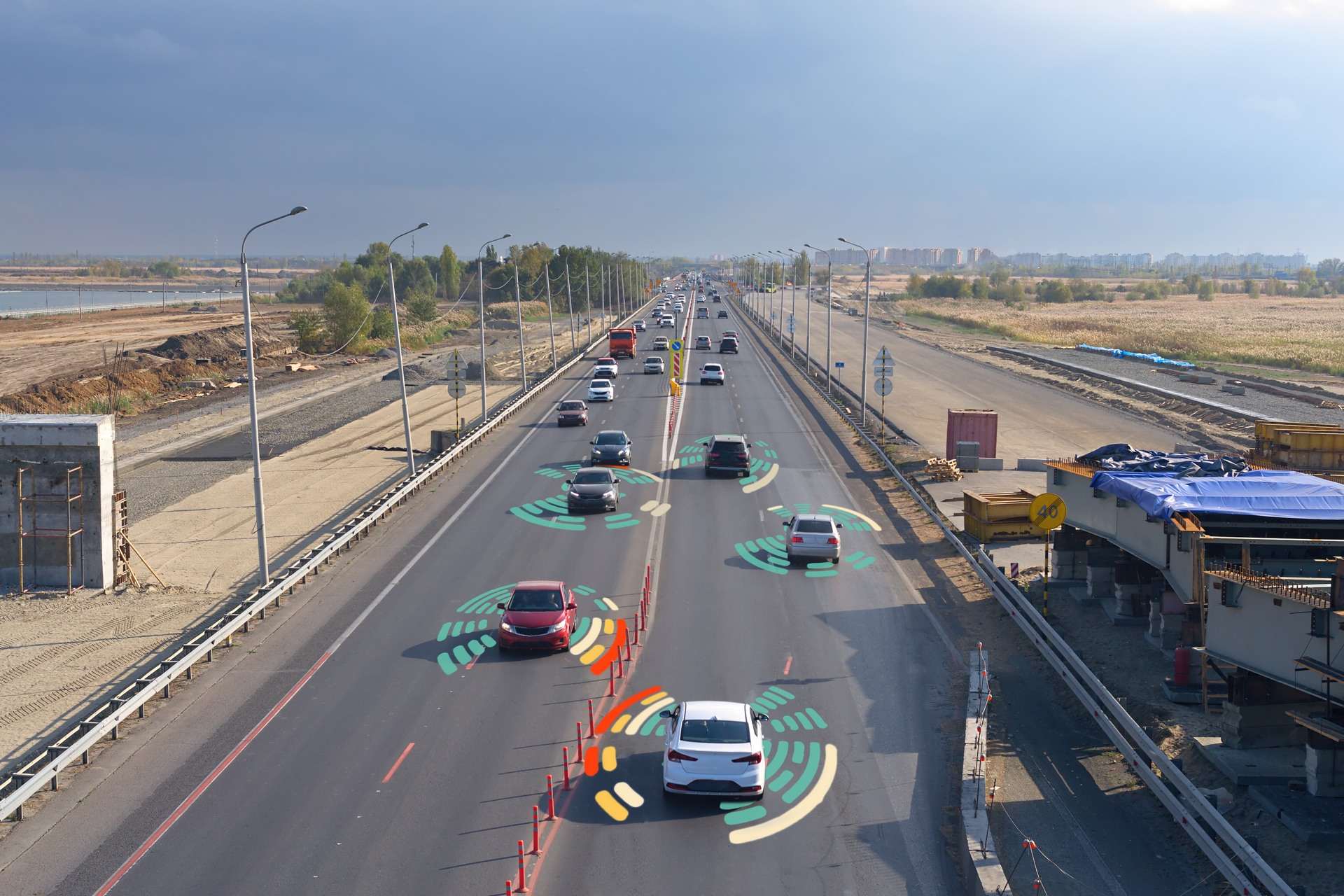
The first autonomous vehicle, manufactured by Mercedes-Benz and funded by the European Commission’s Eureka Project, traveled between Munich and Copenhagen at 90 km/h in 1995. Nearly 30 years later, we are still not seeing self-driving cars on our roads. The challenges are numerous and varied. Let’s look at some of them.
The regulatory challenges of autonomous vehicles
The most complex phases to legislate are those that do not require human attention, levels 4 and 5. An interesting study by RAND and the University of Michigan’s departments of Law and Mobility analyzes the regulations in place in countries that have made the most progress: Australia, China, Germany or Japan, among others.
In its conclusions, it indicates the most sensitive criteria and those that differ depending on the country analyzed:
Data ownership and privacy
The different national laws are having to deal with the management of data collected by autonomous vehicles. Specifically, the ownership and privacy of the same. The importance of these data is increasingly evident for investigating the origin of a possible system failure and making progress, but not all countries are prepared to share this information.
Japan and France allow the data to be used to investigate incidents and accidents, but China establishes, for example, that motor vehicle data collected in China must remain there.
Assignment of liability
This is where insurance firms can play a key role as mediators. Expectations may be established for insurance coverage (e.g., in the United Kingdom) and the allocation of liability between insurers and vehicle owners or operators (e.g., in Japan).
The assignment of liability leads to another debate: Who, other than a human sitting in the driver’s seat, is driving? The United Kingdom identifies three legal actors only one of which is a human.
Equity and protection of people, animals and objects
Some legal systems take into account the implications for disabled people. Germany’s law explicitly establishes the priority of people over animals and does not allow autonomous systems to be programmed to differentiate between categories of individuals.
Technical limitations of autonomous vehicles

Autonomous vehicles make their own decisions based, mainly, on two technologies that are old friends of smart cities: artificial intelligence (AI) and machine learning.
The capacity of the former to read and react to different situations is obvious, but not its limitation in the case of less predictable scenarios such as meteorological conditions.
To overcome this, a great deal of trust is being placed in deep learning, which would enable autonomous vehicles to analyze vast quantities of data, learn from their environment and make decisions based on this learning.
Another area of machine learning, which is crucial for autonomous vehicles, is reinforcement learning, which can be used to teach vehicles to make decisions based on the consequences of those decisions.
Connectivity and the deployment of the 5G network
5G technology is excellent at enabling the extensive flow of data required by autonomous vehicles, thanks to its bandwidth and low latency.
However, this connectivity needs to be uninterrupted on roads and other road infrastructures for vehicles to constantly receive this information and in real time. One of the main concerns is achieving uniform coverage, particularly in urban areas with high vehicle densities and in rural areas.
This requires a significant collaboration between various sectors that involves the creation of uniform standards for communication protocols, data security and privacy, ensuring that all autonomous vehicles, regardless of the manufacturer, can communicate efficiently and safely on a 5G network.
Photographs | Unsplash/ThisisEngineering RAEng, Unsplash/Kirill Tonkikh