



Table of Contents
Author | Raquel C. Pico
One of the main factors shaping the present and future of cities is technology and its increasingly invisible integration into urban development. Nothing captures this better than digital twins, a fundamental component of smart cities’ IT infrastructure and one of the most valuable tools for urban planning, but also one that raises questions and concerns among citizens.
What exactly are digital twins?
“Their purpose is to make the city better to live in,” Phil Christensen, Senior Vice President of Digital Cities Business Development at Bentley Systems, told the Financial Times. But what exactly do we mean when we talk about digital twins?
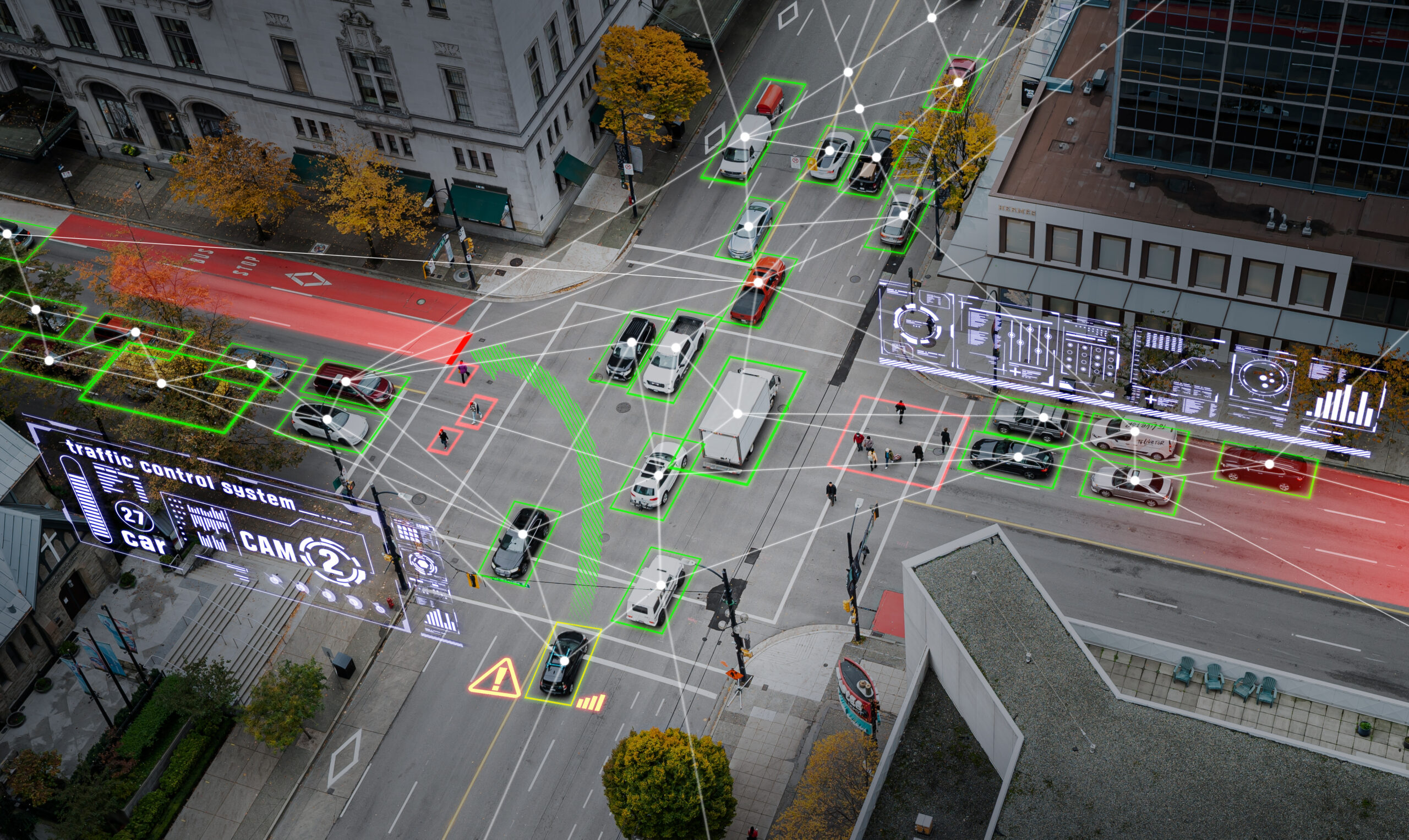
Digital twins are systems that enable physical environments to be recreated virtually in real time. In other words, they are a virtual version of what is happening, a kind of echo of current events and, crucially, of what could happen. In factories, they are used to anticipate system failures and improve production and productivity. In cities, they help planners better understand the impact of urban development, identify problems or bottlenecks, and visualize potential solutions. They are both a tool for remotely monitoring systems and a way to visualize what a city could look like in the future.
This has multiple benefits. Smart public services become more efficient, and the city as a whole, runs like a well-oiled machine. It can even offer indirect benefits, such as encouraging public participation, as it becomes easier to see what proposed changes will mean in practice and provide feedback. Glasgow (UK), for example, gives its citizens access to information on sustainability.
Concerns surrounding digital twins

For this to happen, vast amounts of data are needed, and it is precisely at this intersection that tensions begin to emerge. The greatest challenge posed by digital twins is not the technology, which already exists and is highly efficient, but everything they entail beyond IT infrastructure. Cities will be managing vast quantities of highly sensitive data, making compliance and transparency more important than ever.
After all, the technologies underpinning digital twins do carry privacy risks. The first concerns how this data is used. Citizens and human rights organizations are concerned that the information could ultimately be used to monitor citizens rather than to make decisions aimed at improving cities.
It is therefore essential to have a clear regulatory framework and for cities themselves to be completely transparent about what information they collect and how they use it. In regions with stringent data protection regulations, such as the GDPR, the European Union’s data protection law, this framework is already established by legislation. As Wei Zhai, an associate professor at the University of Texas, points out in an analysis, European law prevents sensitive information from being shared, thereby restricting the use of such data even in purely academic research settings. Ultimately, cities must also comply with data protection regulations.
The ethical challenges of smart cities
Some projects, such as the University of Cambridge’s Centre for Digital Built Britain, already advocate using digital twins for the common good and have established guidelines for cities to follow to ensure they meet ethical standards. Trust, social value, transparency, accountability, and cybersecurity are among the areas they believe should be prioritized.
At the same time, analysts stress the importance of never losing sight of the fact that cities are home to people. “People move, live and interact beyond those buildings and streets,” Zhai points out. This presents a challenge because a digital twin cannot ignore how people use infrastructure, yet human behavior is far more difficult to replicate than a simple construction plan. Capturing all the data generated by a city’s population is “impractical and ethically complex.” Zhai recommends using synthetic data, which is generated by algorithms and does not come from real people, but mimics real-world data. Bogotá (Colombia) uses synthetic data to better understand its rapid transit system.
However, this can create another problem by reinforcing biases already present in the data and exacerbating inequalities. It is also important to remember that digital twins cannot solve every problem. As the FT reports, they are less effective when it comes to issues such as the housing crisis and inequality.
Frequently Asked Questions
What threats do digital twins face beyond privacy and ethical concerns?
The most obvious are potential cybersecurity risks, which are inherent in digitalization itself. Cities need to work on cyber resilience.
What IT infrastructure supports smart cities?
The integration of different technologies, from artificial intelligence and data analytics to the Internet of Things, has transformed how cities are managed, how their realities are understood, and how their challenges are addressed. Digital twins integrate with and draw on all of these technologies.
Could digital twins manage a city on their own?
For now, they are support tools, and urban planning and management have not been automated. However, one of the potential next frontiers is precisely that of self-managing cities.
Photos | adventtr/iStock, Thapana Onphalai/iStock