



Table of Contents
Author | Lucía Burbano
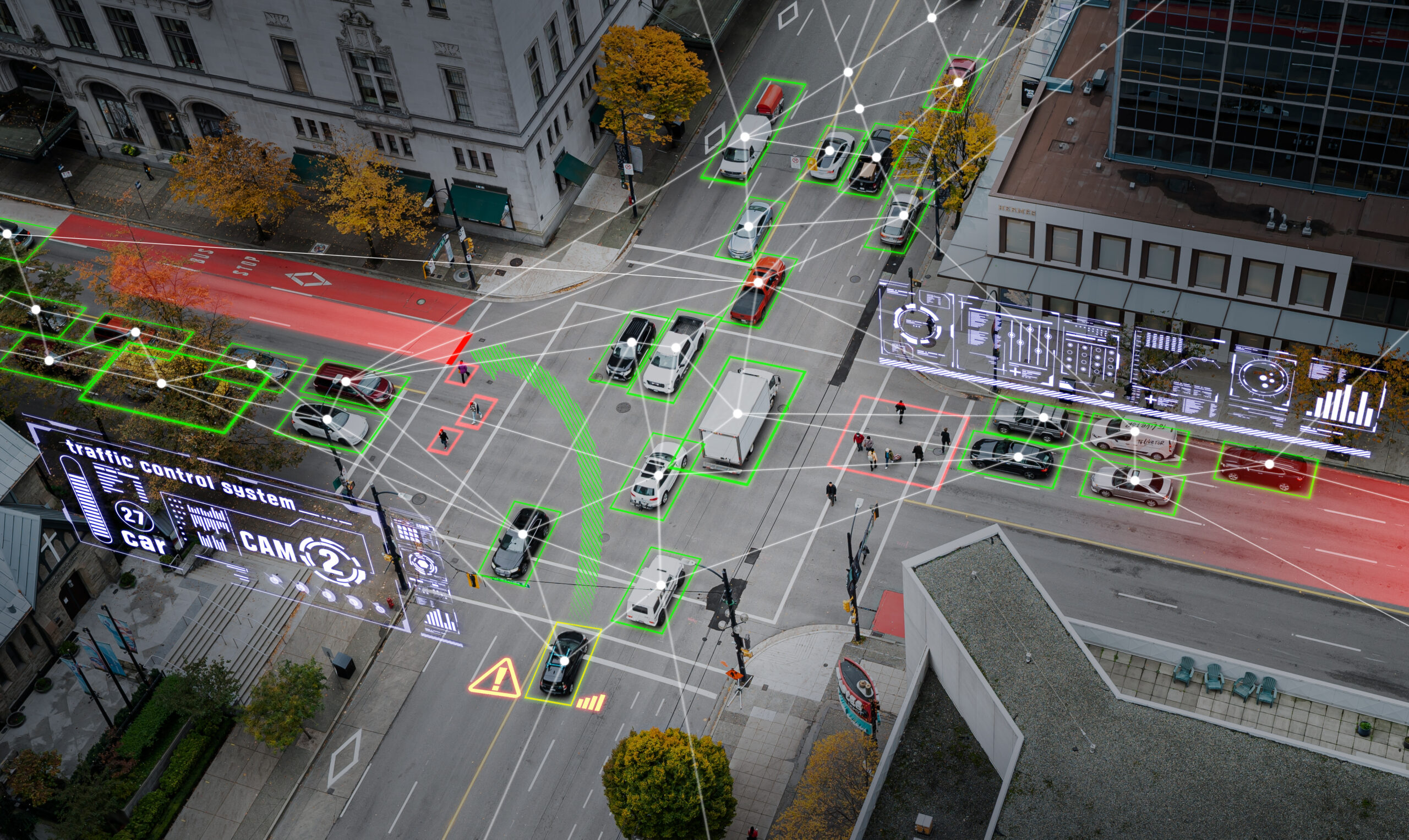
Agentic AI is already shaping urban planning. In a short time, we have moved from an Artificial Intelligence model that assisted urban planners to one that researches, simulates, compares, and recommends actions.
This evolution is significant because a conventional AI model can predict traffic, but agentic AI can achieve the same result across multiple layers. It uses external tools and data, evaluates the results, and is capable of replicating the entire process.
If this system acts as the “orchestrator,” the citiverse is the environment or infrastructure where this data, these simulations, or immersive interfaces are run. In a field such as urban planning, the combination of the two will define the cities of the next decade.
What Is Agentic AI in Urban Planning?
A publication by the International Telecommunication Union (ITU), Autonomous cities and AI: The next frontier of urban transformation explains how AI, digital twins, IoT, and autonomous systems enable cities to detect, predict, and manage systems without neglecting governance, transparency, interoperability, cybersecurity, and human oversight.
This last point is crucial, as urban planning involves making decisions that cannot simply be optimized. Agentic AI, however, can make urban planners’ work easier thanks to its ability to:
Test different urban development scenarios
An urban planner can task agentic AI with analyzing the impact of creating a new neighborhood with a specific number of residents while also reducing private vehicle use and heat islands.
Rather than simply generating a single answer, agentic AI can collect GIS, cadastral, demographic, and mobility data, generate several land-use scenarios, run transportation and energy simulations, or calculate housing capacity, emissions, accessibility, and heat exposure to develop a recommendation based on how these multiple factors interact with one another.
Combine agentic AI with digital twins
A digital twin is a dynamic digital representation of a city or part of a city that can integrate agentic AI.
DynaCITY is a clear example. This European project is developing AI-powered participatory digital twins to test measures related to mobility, land use, energy, and infrastructure, with pilot projects underway in Heidelberg, Lund, Menton, Funchal, and Beirut.
Turn urban planning into a multi-agent system
There is no single agentic AI responsible for every aspect of urban planning. Each agent specializes in screening different sets of sector-specific data and comparing scenarios under the supervision of the urban planner. This ability to coordinate multiple agents is one of the characteristics that sets agentic AI apart from conventional AI.
Some capabilities of agentic AI, such as its use in digital twins, are still in the pilot phase. Other more advanced applications, such as the use of multiple agents for urban planning, are at a more experimental stage and will continue to be developed over the next decade.
How the Citiverse Is Transforming Urban Environments

The citiverse allows digital representations of neighborhoods and cities to be created, enabling different scenarios to be simulated and reducing the uncertainty involved in making decisions based on forecasts.
Focusing on urban planning, integrating data on mobility, population, buildings, energy, the environment, and land use allows urban decision-makers to analyze decisions that affect different systems simultaneously and design cities from a more integrated perspective.
The citiverse complements agentic AI because, while the former provides the digital infrastructure that brings together all the city’s information, the latter acts as the operational brain that runs simulations and coordinates different models to achieve better solutions.
This study examines how this combination allows AI agents to simulate, compare, learn from, and evaluate different proposals implemented in the citiverse before applying them in the real world.
Cities Already Experimenting With the Citiverse and Agentic AI
Las Palmas de Gran Canaria
A 2026 research project developed an architecture based on generative AI and digital twins to simulate multimodal mobility. Users can describe a scenario in natural language, which an AI agent then translates into simulation parameters.
The system integrates population density data, tourism activity, OpenStreetMap, and traffic data, and models buses, the planned MetroGuagua BRT system, and pedestrians. The prototype presented achieved 96% accuracy in configuration recognition and mapping tasks, while simulations that would otherwise have taken around 19 hours were completed in less than 20 minutes.
Lund, Sweden
Lund is one of the five pilot cities in the European DynaCITY project, which in this case focuses on how to use the digital twin to explore urban scenarios that enable citizen participation.
The idea is that residents not only receive the plans for a future intervention but can also experiment with different alternatives and provide input that feeds into the planning process.
What Challenges Does Implementing Agentic AI in Urban Development Pose?

Implementing agentic AI in urban development presents challenges that go far beyond technology, as its use must address issues of governance, transparency, privacy, security, and human intervention.
Governance and accountability
If an agent recommends changes, there needs to be clarity about who is responsible for the decision and its consequences.
Data quality and bias
Agents use large amounts of urban data. If this data is incomplete, outdated, or underrepresents certain groups or neighborhoods, the recommendations may reproduce or even exacerbate these inequalities.
Transparency
It is not enough for AI to say that one option is optimal. It should demonstrate what data it used, which scenarios it compared, and what criteria determined the outcome.
Interoperability
The citiverse relies on connecting different digital twins, data sources, and tools. However, cities and their providers use different systems, formats, and standards that need to be compatible with one another.
Avoiding the automation of policy decisions
AI can calculate which alternative reduces emissions or traffic the most, but it cannot decide on its own which values a city should prioritize.
Cost and inequalities between cities
Creating a citiverse requires data infrastructure, sensors, models, interoperability, and specialized personnel. Cities with fewer resources may be left behind if they lack the investment and capabilities needed to implement these technologies.
Frequently Asked Questions About Agentic AI, the Citiverse, and Urban Planning
What is agentic AI applied to urban planning?
It is AI capable of researching, simulating, comparing, and recommending actions through autonomous, multilayer processes and with a comprehensive perspective.
How do agentic AI and the citiverse complement each other?
The citiverse provides the digital environment, while agentic AI acts as the orchestrator of data, models, and simulations.
What can this combination bring to urban planning?
It allows different scenarios to be tested while simultaneously assessing their impact on mobility, housing, energy, emissions, or climate.
Which cities are already experimenting with these technologies?
Las Palmas de Gran Canaria and Lund are two examples, with projects focused on multimodal mobility and citizen participation.
What challenges does agentic AI pose for cities?
Governance, data bias, transparency, interoperability, privacy, cybersecurity, human oversight, and inequalities in access.
Photos | Unsplash/SASI, Unsplash/Alex Knight, DKosig/iStock