


Table of Contents
Author | Lucía Burbano
On June 6, U.S. President Donald Trump signed an executive order aimed at boosting the country’s drone capabilities by accelerating their integration into the National Airspace System, supporting domestic manufacturing, and streamlining regulatory processes.
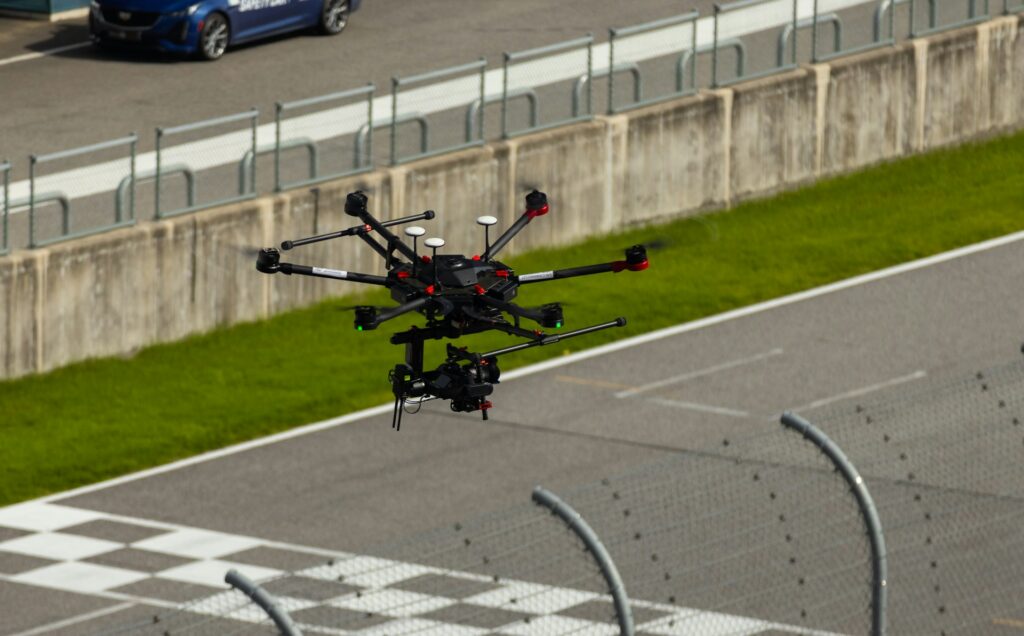
One of the key measures included in the order is the Police Drone as First Responder (DFR) program, which uses drones equipped with cameras and other sensors to respond quickly to emergency calls, providing officers with a real-time view of the situation.
Although numerous U.S. cities already use DFRs, the number is expected to increase significantly in the coming months following Trump’s announcement.
How DFRs Work
When a 911 emergency call is received, a pilot dispatches a drone from a strategic location to stream live video and sensor data to both the pilot and responding officers. This allows them to assess the scene, potentially locate suspects or victims, and make more informed decisions on how to manage the situation.
Drones as first responders are equipped with features like loudspeakers, which in some cases allow officers to resolve situations remotely, minimizing the need for physical intervention.
DFR programs offer several advantages:
Faster response times
Drones can reach the scene much faster than traditional ground units, especially in large areas or when traffic congestion is an issue.
Increased officer safety
By providing situational awareness, drones can help officers avoid potentially dangerous situations.
Lower response costs
Drones offer a more cost-effective way of gathering information and assessing situations compared to deploying multiple officers or using helicopters.
Improved evidence collection
Drones can capture high-quality photos and videos, which can be used as evidence in investigations.
Adjusting the legal framework for DFR deployment
The ‘Unleashing American Drone Dominance’ law, enacted on June 6, aims to normalize remote flights that take place beyond the visual line of sight, until now, the main obstacle to the widespread implementation of DFRs.
Police departments that already use drones to monitor their streets have gone through a lengthy and complex process to obtain an exemption from this restriction, allowing them to conduct drone flights as first responders.
Since Trump’s announcement, the Federal Aviation Administration has sped up the approval time for DFR exemptions from around 11 months to just one or two days.
As of June 11, 2025, the administration had received 300 DFR exemption requests under the new process. Of these, 214 were approved and 78 were still pending.
Cities and states in the U.S. already using drones as DFRs
There are currently about 260 DFR programs and 7,000 public safety drone programs in the U.S. The Chula Vista, California police department, which launched the first DFR program in 2018, describes it as “a transformational method of policing that has demonstrated the ability to increase officer and community safety and reduce overall police response times.”
Since its launch, and according to the city’s official website, there have been 3,577 arrests. Most were related to disturbances, domestic violence, or medical emergencies.
Another California city, Palm Springs, launched the largest drone first responder program in the U.S. in May, covering 37 square miles.
Photographs | DutcherAerials/iStock, Unsplash/Bigfoot STNGR