



Table of Contents
Release of 7th Edition: WW Observatory for Attractive Cities for Talent
Why El Puerto de Santa María (Cádiz, Spain) may represent the next urban model
Author | Prof. José A. Ondiviela PhD
For decades, the global competition for talent seemed to belong almost exclusively to capital cities and major metropolitan giants. If a young engineer, researcher, entrepreneur, designer, executive or creative professional wanted opportunity, the implicit advice was simple: go to the capital. Capitals concentrated airports, universities, ministries, headquarters, theatres, international schools, investment, nightlife, public institutions and symbolic power. They were the obvious magnets.
But the talent race is changing. The most attractive city is no longer automatically the largest, richest or most famous. Increasingly, talented citizens are not asking only, “Where can I earn more?” They are asking a broader and more human question: “Where can I live better while still developing my potential?”
That question is transforming the urban map. Across many countries, intermediate and non-capital cities are gaining ground: Dubai versus Abu Dhabi, Bergen versus Oslo, Aarhus versus Copenhagen, Gothenburg versus Stockholm, Tampere versus Helsinki, Antwerp versus Brussels, Valencia versus Madrid. The pattern is not identical in every country, but the logic is similar. These cities inherit many of the national advantages of their country —safety, institutions, infrastructure, health systems, education, connectivity and stability— while offering a more manageable scale, lower housing pressure, shorter distances and a better chance of approaching the 15-minute city ideal.
In other words, they offer a better citizenship contract.
The future talent winner may therefore not be the capital city. It may be the well-connected intermediate city located within reasonable reach of a larger metropolitan or iconic centre. The ideal model is not isolation, but proximity: a city that gives citizens quality of life every day while keeping access to the international airport, opera house, universities, hospitals, theatres, conferences and business networks of the larger system.
This is where El Puerto de Santa María, in Cádiz, becomes an interesting case.
El Puerto de Santa María: a city between charm, sea and metropolitan access
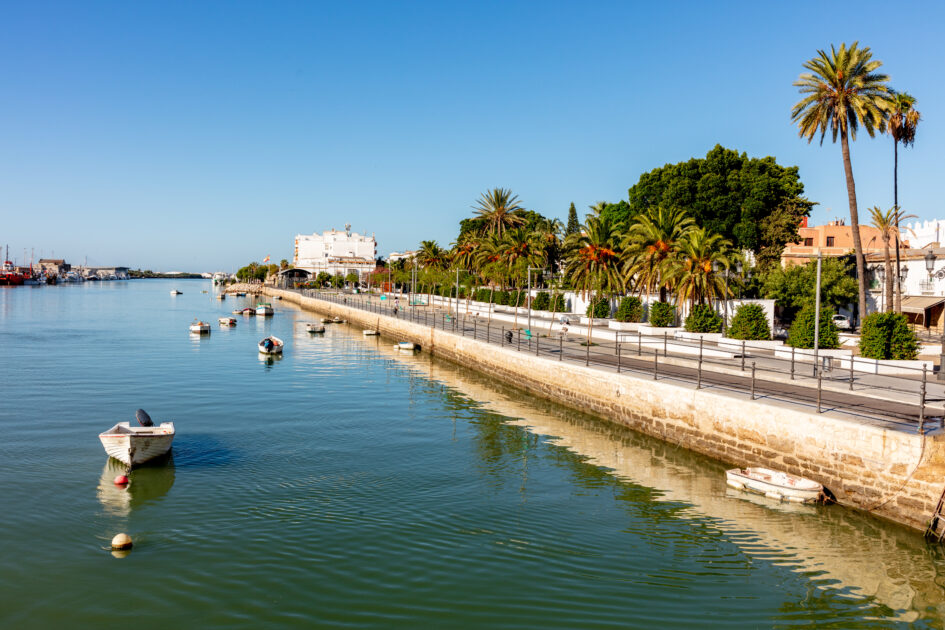
El Puerto de Santa María is not a global capital, and that is precisely its advantage. It is a medium-sized Andalusian coastal city of around 90,000 inhabitants, located in the Bay of Cádiz metropolitan area, a polycentric urban system of approximately 640,000 inhabitants when defined through its core municipalities (Boletín Oficial del Estado, 2025; Junta de Andalucía, 2025a). It is large enough to provide services, identity, schools, public life, gastronomy, beaches, culture and economic activity, but small enough to remain understandable and human in scale.
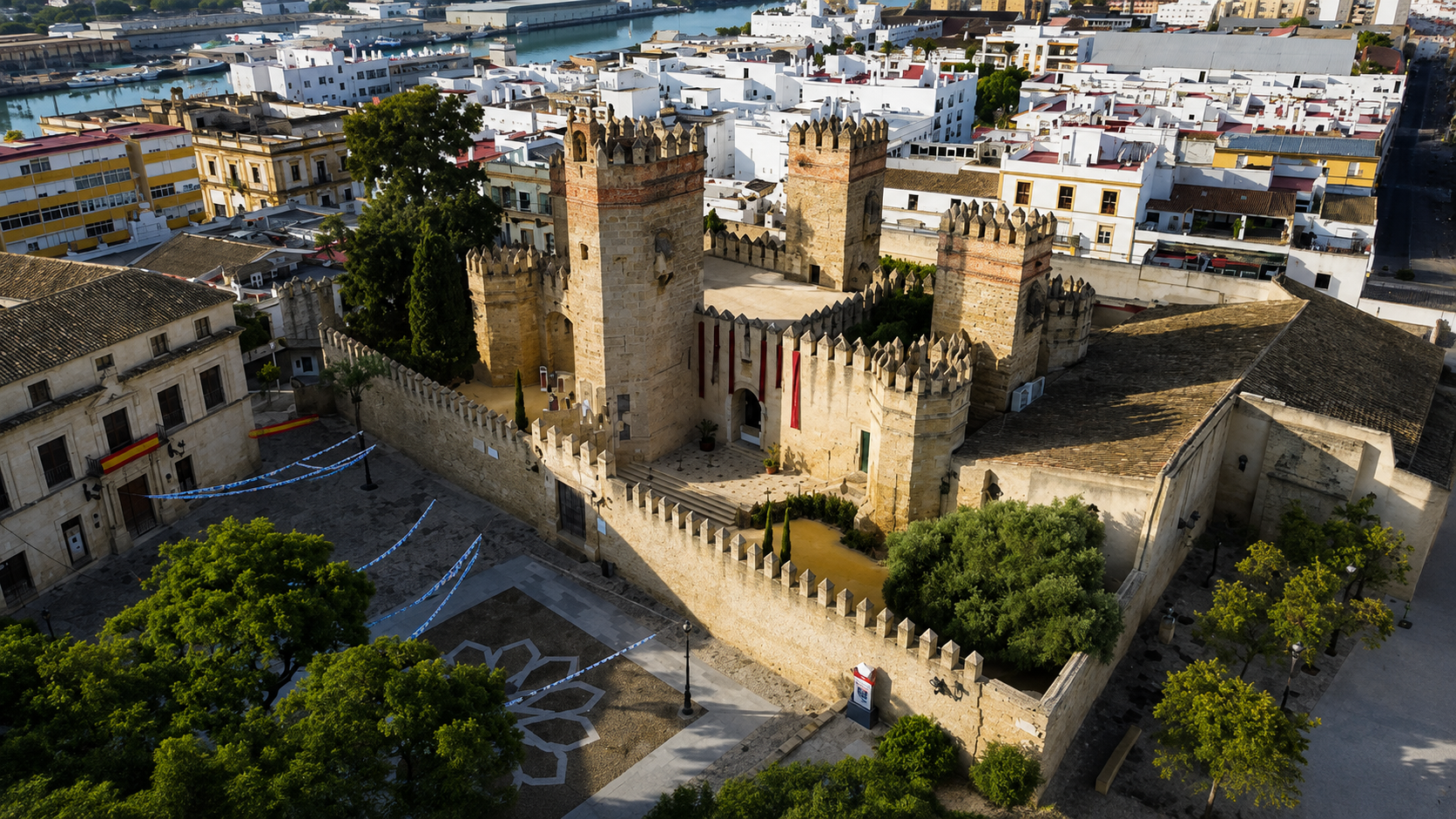
Its attractiveness does not come from being a miniature Madrid, Barcelona or Seville. It comes from being something different: a city with everyday liveability, Atlantic identity, access to nature, excellent gastronomy, maritime culture, historical architecture, beaches, nearby airport access and integration into a wider metropolitan system.
El Puerto has always been a city whose reach extended well beyond its size. Its location on the Atlantic turned a medium-sized coastal town into a gateway for people, goods, ideas and knowledge travelling between Europe and the Americas. Today, the nature of those connections has changed, but the underlying advantage remains: being an intermediate city does not mean being peripheral.
The metropolitan advantage: El Puerto–Bay of Cádiz
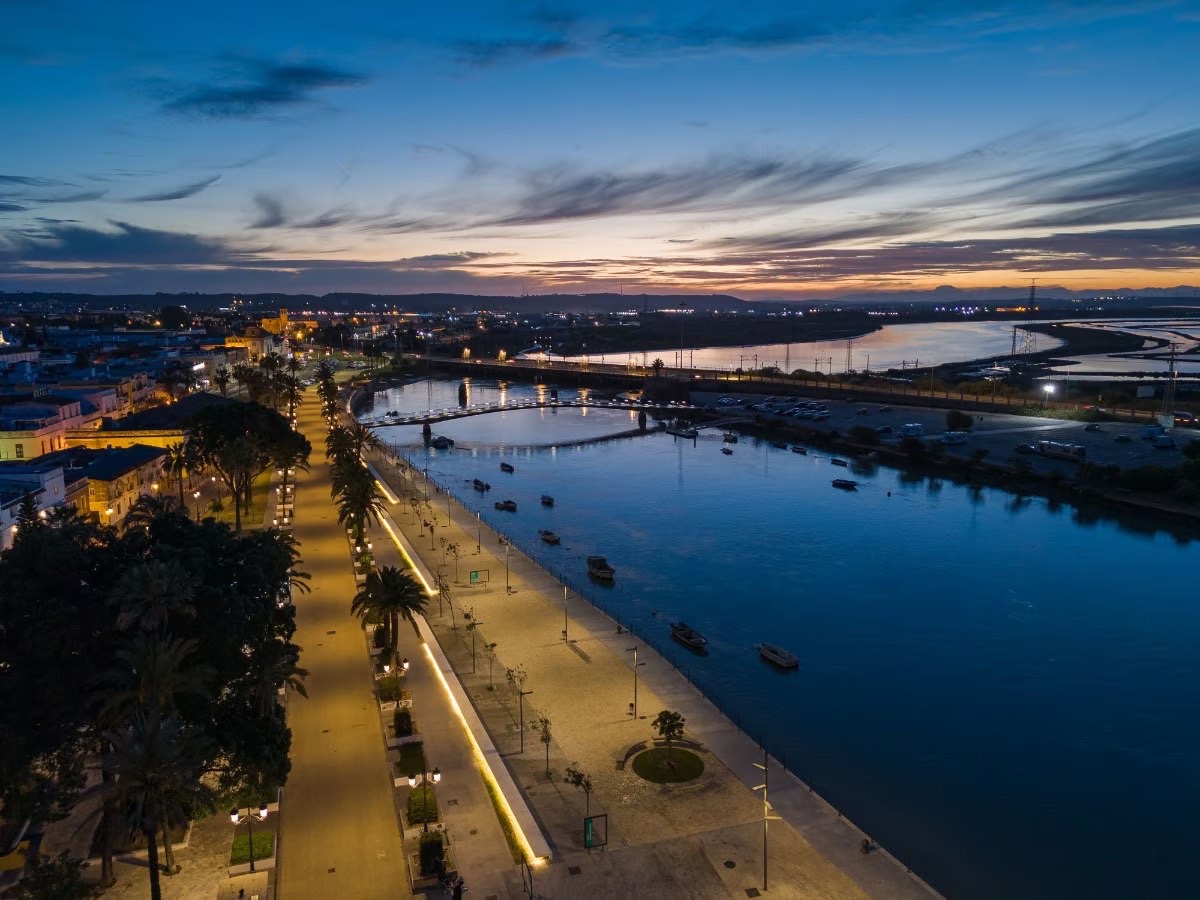
The best way to understand El Puerto is not as a small city alone, but as a node in a polycentric metropolitan system. The Bay of Cádiz area is not a classic monocentric metropolis dominated by one central city. It is a network of complementary urban centres: Cádiz brings heritage, administration, university presence and symbolic capital; Jerez brings scale, airport access, wine culture, logistics and inland economic depth; El Puerto adds coastal residential quality, gastronomy, beaches, leisure and an attractive family-oriented urban lifestyle.
This polycentric structure matters. A single intermediate city can be too small to compete alone for global talent. But a well-connected network of intermediate cities can offer something very powerful: distributed quality of life plus shared metropolitan opportunity.
The Regional Government of Andalusia has long recognized the territorial relationship between the Bay of Cádiz and Jerez, and metropolitan mobility planning includes Cádiz, Jerez, El Puerto, Puerto Real, San Fernando, Chiclana and other nearby municipalities. The metropolitan transport plan for the Bay of Cádiz refers to more than 2.5 million daily trips in winter, almost all within the metropolitan area (Junta de Andalucía, 2025a, 2025b). That figure shows that this is not a loose collection of towns. It is a functional urban system.
For talent attraction, this is crucial. El Puerto does not need to contain every function inside its municipal boundary. It only needs fast, reliable and comfortable access to the functions of the wider system. In this sense, connectivity multiplies attractiveness.
Housing: the battlefield of attractiveness
Housing is one of the strongest explanations for the rise of intermediate cities. Iconic capitals can remain culturally magnetic while becoming functionally hostile to middle-income talent. When housing absorbs too much income, a city’s attractiveness declines even if wages are high and cultural life is extraordinary.
El Puerto is not cheap in absolute terms, especially compared with inland towns, and its housing market is under pressure because of tourism, second homes and coastal desirability. Its attractiveness is therefore not based on being a low-cost destination, but on still offering a comparatively favourable balance between housing costs and quality of life. If compared to Madrid and many major urban centres, it still offers a much more accessible proposition. Idealista data for 2026 placed sale prices in El Puerto at around or below €3,000 per square metre, while Madrid city was above €7,000 per square metre in the same period. Rental data also show a major gap: El Puerto was around €12 per square metre per month, compared with Madrid at more than €23 per square metre per month.
However, the same qualities that make El Puerto attractive, its coastline, climate, accessibility and lifestyle are also contributing to growing housing pressure. This is particularly relevant when considering the city’s future as a destination for talent: an intermediate city cannot rely indefinitely on an affordability advantage that its own success gradually erodes.
Lovability, liveability and affordability
The rise of intermediate cities can be summarized through three ideas: lovability, liveability and affordability.
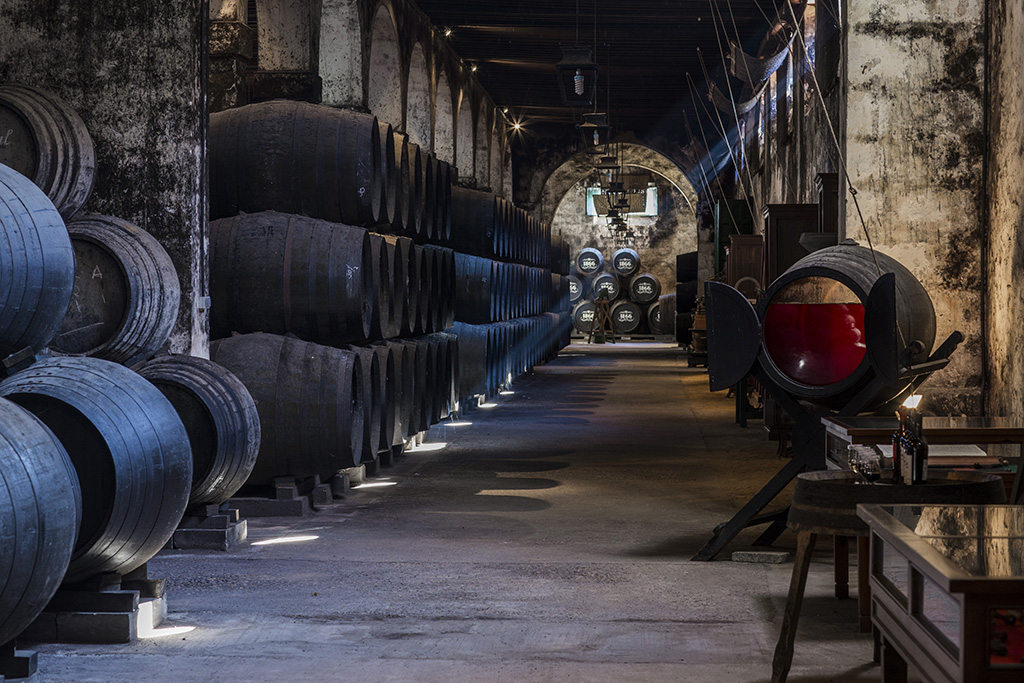
Lovability is the emotional dimension. El Puerto has a recognizable identity: the Guadalete, the wineries, the Osborne bull, seafood, beaches, Andalusian urban life, historical buildings, sailing culture, summer life, proximity to Cádiz and Jerez, and a relaxed Atlantic rhythm. People do not fall in love with generic efficiency. They fall in love with places that feel real.
Liveability is the practical dimension. El Puerto offers daily scale. Many trips are shorter. The city is easier to understand. Nature is close. The beach is not a weekend expedition; it is part of the urban system. Cádiz can be reached across the bay, including by catamaran. Jerez Airport is reachable by train. Seville is close enough for business, culture and high-level services. The wider metropolitan area compensates for the limits of municipal size.
Affordability is the economic dimension. This is where many capitals are failing. A city can be beautiful, dynamic and globally connected, but if housing becomes impossible, if commuting consumes hours every week, if families cannot find space, or if young people cannot form households, the citizenship contract breaks. Intermediate cities do not automatically solve the housing crisis, but they begin from a more favourable position.
The lesson is clear: the winning city is not necessarily the biggest city. It is the city that best balances opportunity and life.
Modern industry and qualified employment
El Puerto should also be read as an industrial and logistics city, not only as a residential, coastal or gastronomic destination. This is important because talent attraction cannot rely only on lifestyle. It also needs qualified employment, modern companies and professional ecosystems. The clearest example is aerospace. Airbus identifies its Cádiz site as a contributor to Airbus Commercial Aircraft and Defence & Space programmes (Airbus, 2026).
Regional and municipal institutions have also treated the El Puerto site as a strategic industrial asset: the Junta de Andalucía assigned the Airbus consolidation project in El Puerto to its Project Acceleration Unit, while the municipality described the Airbus-El Puerto expansion as part of a technological, sustainable and future-ready industrial ecosystem (Ayuntamiento de El Puerto de Santa María, 2021; Junta de Andalucía, 2023). Airbus’s global A320 production ramp-up target toward 75 aircraft per month by 2027 further underlines the relevance of advanced aerostructures capabilities in the province (Airbus, 2025).
This changes the city’s narrative. El Puerto is not only a place from which professionals can work remotely; it is also a place where engineers, technicians, maintenance specialists, logistics profiles and aerospace workers can build careers in advanced manufacturing.
The Amazon logistics station adds a second layer of modern economic activity. Amazon’s own Spain facilities information lists Puerto de Santa María as part of its Spanish logistics network, and Amazon Jobs identifies Puerto de Santa María as an active location for operations and logistics roles (Amazon, 2026; Amazon Jobs, 2026). Together, Airbus and Amazon show that El Puerto’s attractiveness is not based only on quality of life. It also has anchors in modern industry, logistics, automation, aerospace production and skilled employment.
What El Puerto must protect
The opportunity is real but not guaranteed. Intermediate cities can also become victims of success. If tourism pressure, second homes, short-term rentals and speculative real estate grow without control, El Puerto could reproduce the same affordability problems that are weakening larger cities. The strategic challenge is therefore to grow without losing the qualities that make the city attractive.
El Puerto should protect five assets:
- First, housing diversity. The city needs homes for residents, not only seasonal demand. Talent attraction fails if teachers, nurses, entrepreneurs, young couples and municipal workers cannot live in the city.
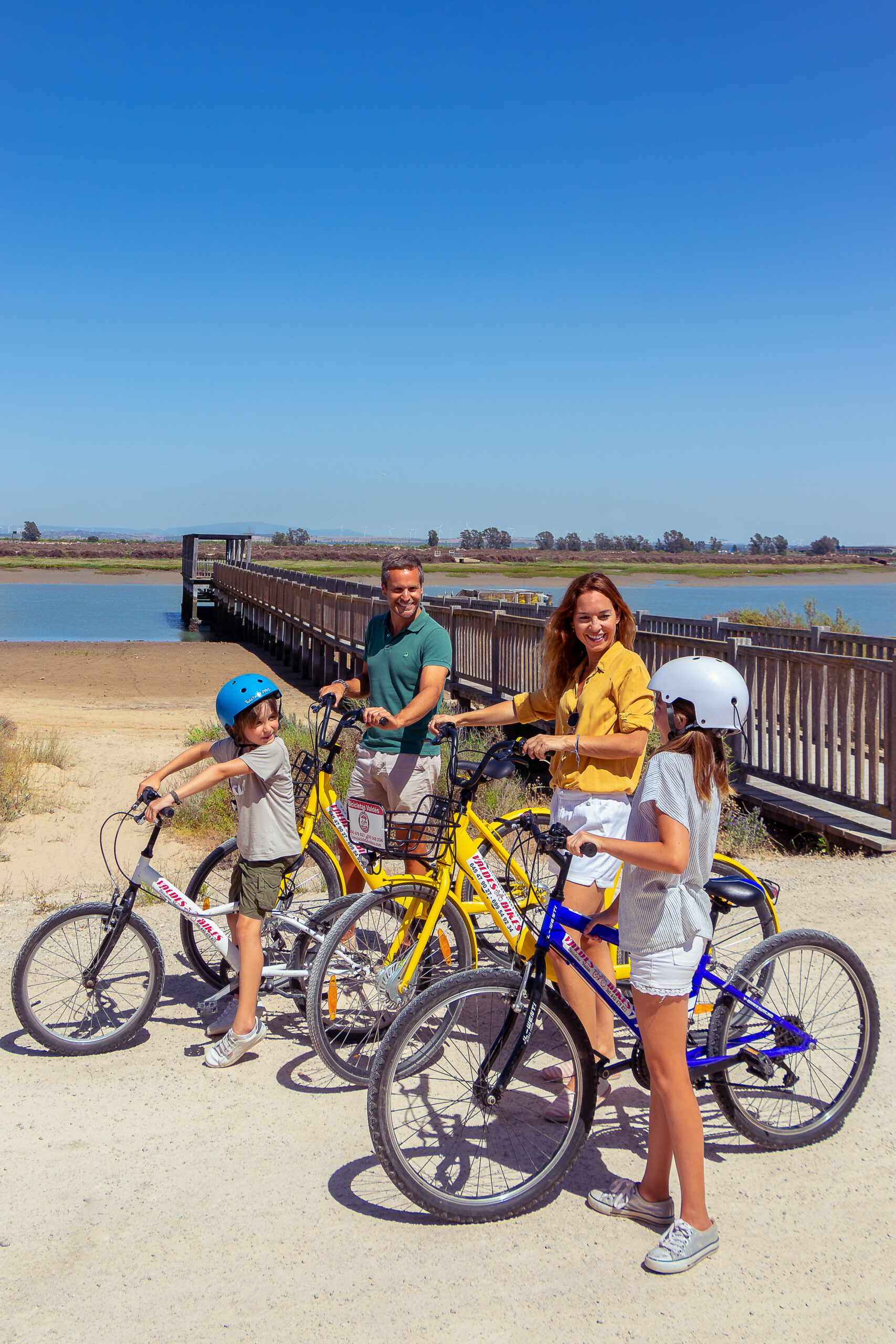
- Second, metropolitan mobility. The city’s future depends on better rail, bus, bicycle, pedestrian and maritime links across the bay and toward Jerez and Seville. Connectivity is the multiplier that allows El Puerto to behave like a larger city without becoming one.
- Third, identity and public life. El Puerto’s advantage is not only beach tourism. It is heritage, gastronomy, wine culture, local commerce, neighbourhood life and the everyday experience of Andalusian urbanity.
- Fourth, natural heritage. Beaches, marshes, pine forests and coastal ecosystems are not leisure accessories. They are strategic infrastructure for health, climate adaptation and attractiveness.
- Fifth, urban health. Atmospheric quality, noise levels, street cleaning & waste management. They are to be carefully observed not only for visitors but very specially for the permanent resident, as it directly affects the quality of living in the city.
A model for the next city
The rise of intermediate cities does not mean that capitals will disappear or lose their role. Madrid, Barcelona, Paris, London, Copenhagen, Stockholm, Helsinki and Brussels will remain essential. But the talent map is becoming more distributed. People increasingly want access to the capital without necessarily paying the daily price of capital life.
That is the opportunity for cities like El Puerto de Santa María.
El Puerto can offer a model of Southern European attractiveness: coastal but urban, historic but liveable, metropolitan but human-scale, connected but not congested, desirable but still more accessible than the large capitals. It does not need to become a global city in the old sense. It needs to become an excellent intermediate city in the new sense.
In the coming years, the talent race will not be won only by cities with the tallest towers, the largest airports or the biggest GDP. It will be won by cities that offer a convincing life project. A city where people can work, raise children, age well, belong, move easily, enjoy culture, access nature, and still connect to the world.
El Puerto de Santa María, if it manages housing, mobility, university access, sustainability and identity wisely, could be one of those cities.
—————
ABOUT JOSÉ ANTONIO ONDIVIELA
Prof. José Antonio Ondiviela, PhD, is the Director of the Citizen-Centric Intelligent Cities Research Institute of the Universidad Francisco de Vitoria, Madrid. He is the author of the Worldwide Observatory for Attractive Cities. You can access the 7th edition here. Feel free to connect with him on Linkedin. Correspondence: [email protected].
Images | El Puerto de Santa María