



Table of Contents
Author | Lucía Burbano
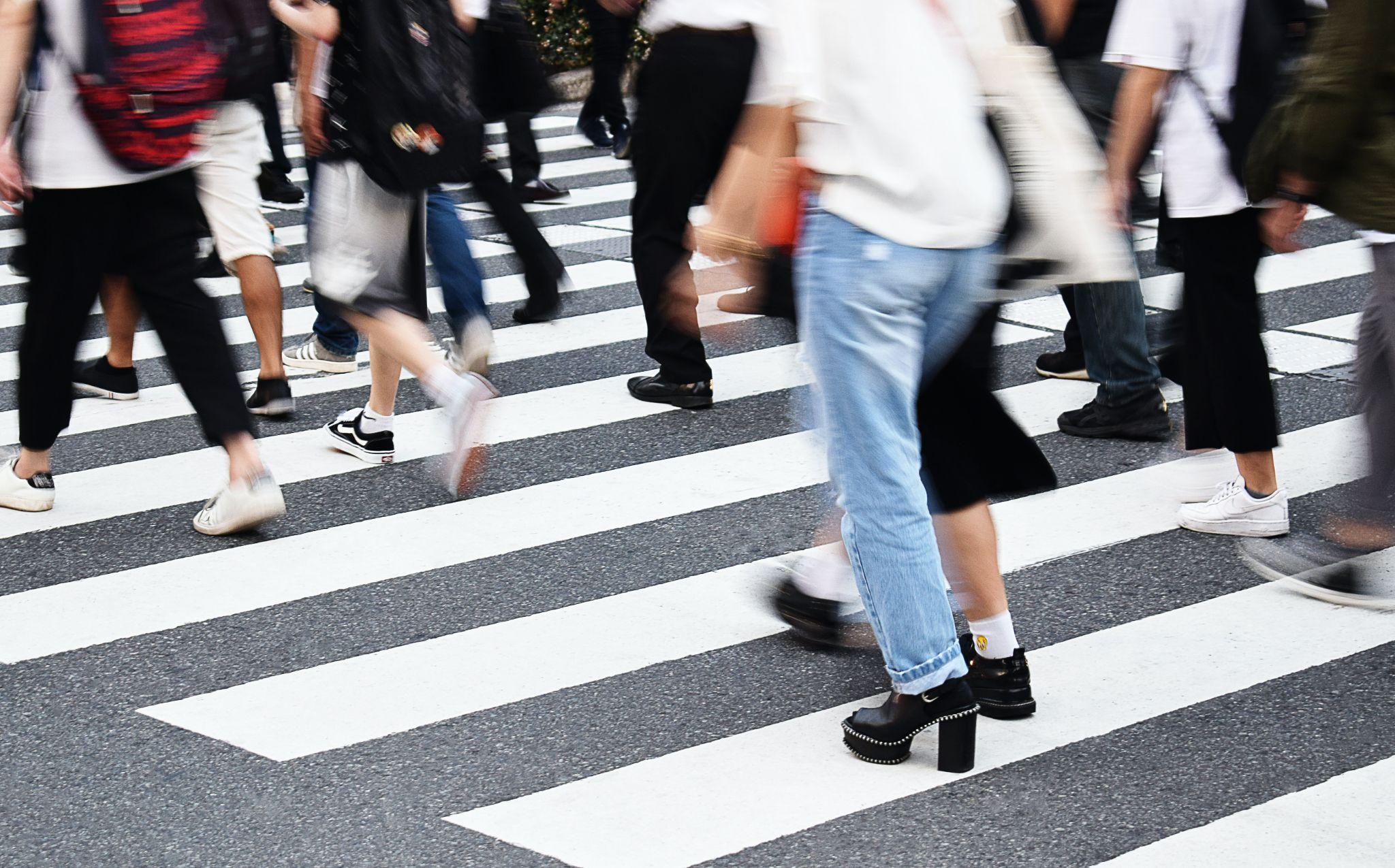
Walkable cities are those that establish policies designed to create more areas for pedestrians as a way of responding to environmental pressures and the need to live in healthier environments.
Walkability does not happen overnight. It requires a long-term vision, infrastructures that encourage citizens to give up the comfort of their cars because, really, they are not going to need them in their day-to-day activities.
What is a walkable city?
Embracing walkability requires a change of perspective in the design of cities. People should have priority over motorized vehicles in city planning and urban design: streets, squares, avenues and sidewalks. Opting for density of services is also essential. This model includes using public transport and non-motorized means of transport for journeys that cannot be made on foot.
Benefits of walkable cities
There are many benefits to empowering pedestrians. Walking isn’t just good for you, it also allows interaction among residents and favors the local economy; it reduces the environmental footprint caused by private vehicles and promotes social equality since, ultimately, all humans are pedestrians.
More environmentally-friendly cities
If anyone had any doubts regarding the pressure exerted by cities on the environment, according to the study Frontiers in Sustainable Cities, just 25 megacities produce more than 50% of the world’s urban greenhouse gas emissions, the equivalent of 2,600 megatons of CO2 per year.
Buildings, transport, industrial processes and other sources such as fossil fuel combustion and the use of electricity in residential and institutional buildings are responsible for these emissions.
To improve air quality, cities need to prioritize the use of more sustainable transport systems with zero emissions such as bicycles, scooters, public transport that uses non-polluting energy sources and, above all, pedestrians, who must feel safe and comfortable when getting around a city.

Healthier environments
Today’s societies are becoming increasingly sedentary, but there is a way to resolve this issue. "Walking briskly for 15 to 30 minutes each day can significantly improve our health" according to I-Min Lee, professor at Harvard University, who led a study on sedentary lifestyle, published in the The Lancet.
A walkable city can create the physical space that invites people to exercise. This objective can be achieved by embracing pedestrianization in a green environment, helping to improve the quality of air we breathe and swiftly encouraging greater walkability.
The emotional factor is important too, since walking regularly has a positive impact on a person’s wellbeing, helping to reduce stress, improving sleep quality and increasing creativity and self-esteem.

Techniques for making a walkable city a reality
Implementing measures that will help cities to transition towards strategies that benefit pedestrians includes achievable measures such as these:
- Pedestrians must feel safe This entails designing wider sidewalks, ensuring their correct maintenance, designing urban furniture that encourages pedestrians to take a break along the way and good lighting.
- Citizens need to feel that they own the streets. An extended strategy, which also serves as a test bench for pedestrianization, is for cities to close busy streets to motorized vehicles once a week or month.
- Urban planning should be based on the compact city model and favor neighborhood density so that all basic services a resident may need are located within 15 minutes of one another.
- Eliminating motorized traffic completely may be a utopia, but limiting the speed of these vehicles is not. There is already a maximum speed limit of 30 km/h in many areas and pedestrian crossings are becoming increasingly sophisticated, with the aim of favoring pedestrians.

Which are the world’s most walkable cities?
According to the ranking published in October 2020 by the Institute for Transportation and Development Policy, these are the most walkable cities in the world:
- Bogota: The Colombian capital’s strategy to combat the growth it experienced in the mid ’90s was to extend its transport system with the implementation of the Bus Rapid Transit system, accessible to 85% of the population.
- Paris: According to the abovementioned study, this is the city with the highest number of services (schools, health center) per capita located within a distance of one kilometer.
- Hong Kong: Despite being one of the most densely populated cities, it has developed an escalator and walkway system that accesses one of the main areas of the city, Victoria Peak, which can also be accessed by streetcar.
- London: One of the British capital’s strategies has been to pedestrianize Oxford Street, increasing the number of bike lanes and establishing a mandatory congestion charge for cars that access the city center.
Photos | Unsplash/Chris Barbalis, Unsplash/Mārtiņš Zemlickis, Unsplash/Nerea Martí Sesarino, Unsplash/Jan Antonin Kolar