



Table of Contents
This is a guest post written by Bibiana Aido, UN Women Regional Director for the Americas and the Caribbean.
Time and care: Key dimensions of sustainable cities
The way cities organize time is not neutral: it can reproduce inequalities or become a powerful tool for social justice.
For decades, we have learned to plan urban spaces: where to build a school, how to connect a neighborhood, where to locate a health center, or how to improve public transportation. But another dimension of urban life often takes a back seat and profoundly shapes our well-being: time.
How is time distributed among the people who live in a city? How long does it take us to get to work, take our children to school, or access a health center? How much time do we have to rest, participate in our communities, or simply enjoy leisure activities? The answers to these questions do not depend solely on individual decisions. They also depend on how we organize our cities.
That is why incorporating time into urban planning means recognizing that public policies also distribute time and opportunities.

Inequality is measured in time
The unequal distribution of unpaid domestic and care work creates time poverty, limiting opportunities for rest, leisure, education, labor market participation, and well-being for millions of people, particularly women. This situation is more pronounced in lower-income households and those with caregiving responsibilities, with couples who have children experiencing the greatest disparities. The result is a vicious cycle: the burden of care reduces the time available to study, work, or earn an income, while a lack of financial resources makes it harder to access services and support that could help redistribute this burden.
As cities increasingly invest in data-driven solutions, artificial intelligence, and urban management tools, an important question arises: how can we harness innovation to ensure its benefits reach more people? A smart city incorporates the time dimension so that technological innovation contributes to people’s well-being and better responds to their needs.
The latest study on time use by UN Women and the Time Use Initiative (TUI) shows that women and men experience cities differently. Mobility patterns, modes of transportation, and the number of daily trips are closely linked to caregiving responsibilities and shape the time available for other activities. These differences demonstrate how urban design and organization directly influence how people allocate their time in everyday life. The findings also reveal how multitasking, mobility patterns, and caregiving responsibilities associated with household composition affect access to rest, well-being, leisure, and other opportunities.
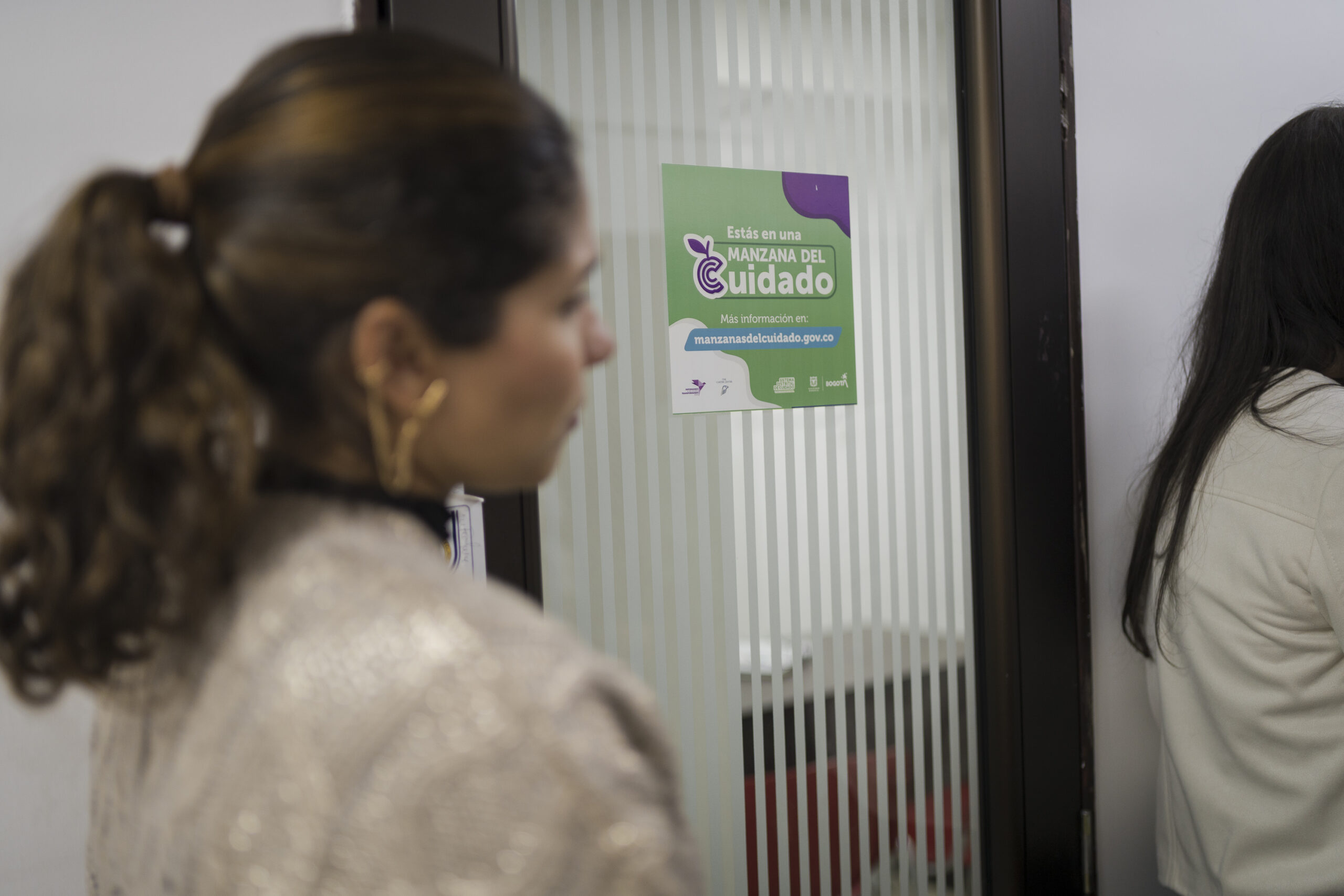
When caregiving falls primarily on women, time, opportunities, and autonomy are distributed unequally. In Latin America, according to available data from Argentina, Chile, Colombia, El Salvador, Mexico, Peru, and Uruguay, one in four people experiences time poverty, particularly women in single-mother households. Women spend between 2 hours and 12 minutes and 3 hours and 5 minutes more per day than men on unpaid domestic and care work.
The organization of time is also linked to well-being and mental health. The study shows that people who report rarely feeling rushed spend more time on leisure activities and less time on care work.
Care and time in building livable cities
In Latin America and the Caribbean, women spend between two and three times as much time as men on unpaid domestic and care work (ECLAC). Against this backdrop, freeing up women’s time and equitably redistributing caregiving responsibilities means reducing the burdens that limit the time available for well-being, self-care, and leisure, all of which are intrinsically linked to urban life.

Cities are key actors in this transformation. At the local level, public services, mobility, community spaces, and care infrastructure are organized, directly shaping how people spend their 24 hours. Time, therefore, is more than an individual matter; it is also shaped by public policy decisions. Incorporating a time-based perspective into urban planning makes it possible to identify invisible inequalities and design responses that improve quality of life, promote shared responsibility for care, and ensure more equitable access to opportunities, services, and public spaces.
The challenge for local governments is to recognize the value of time and incorporate it as a central criterion in urban planning, service delivery, and the development of cities that care. Just as cities have learned to plan space, they now face the challenge of planning time.

Meeting this challenge requires moving from recognizing the problem to taking concrete public action. In recent years, the idea that time is not merely a resource but also a matter of rights has gained momentum, as economic, social, and territorial factors shape opportunities to have, allocate, and exercise control over one’s daily time. From this perspective, time-related policies provide a framework for local governments to examine how the organization of services, mobility, urban schedules, and care infrastructure affects people’s daily lives and opportunities.
In a context marked by population aging, rapid urbanization, transformations in the world of work, and climate challenges, time management is emerging as a strategic resource for building more resilient cities. Democratizing time, that is, expanding everyone’s ability to have time for caregiving, work, rest, participation, and leisure, is a commitment to more equitable cities capable of transforming how we inhabit spaces and share time.