



Table of Contents
Author | Raquel C. Pico
It is one of those topics that works really well on social media. It is also great material for reality shows, highly clickable news features, and interviews with people who have completely changed their lives. The main characters welcome us into tiny homes, converted vans, or micro apartments. They have started micro-living, downsizing their living space and gaining in efficiency and savings.
What is micro-living
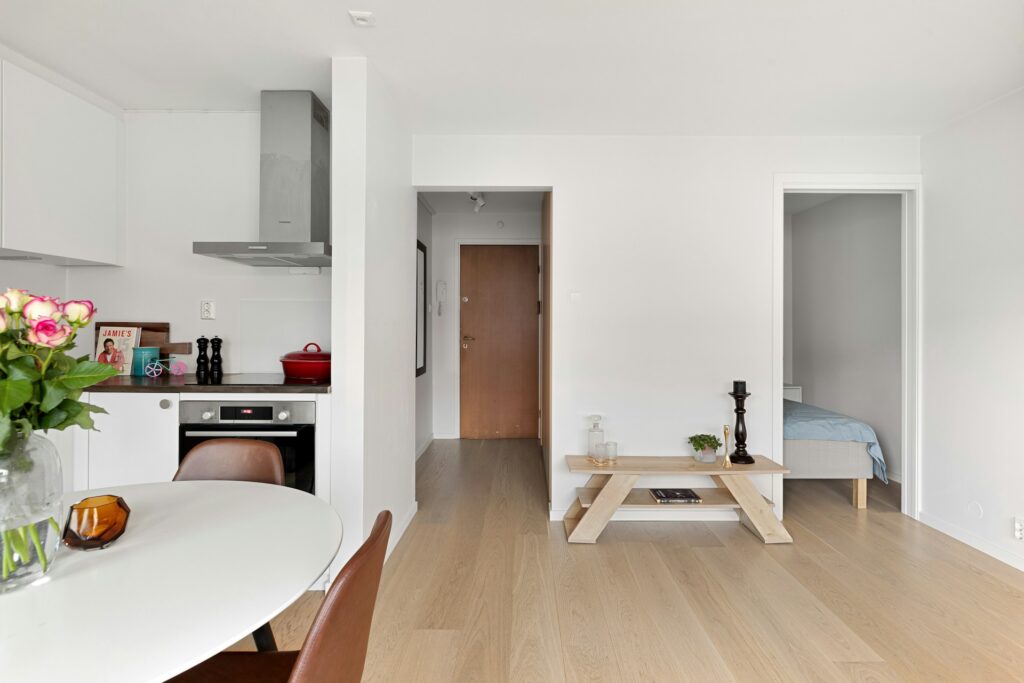
These are the key principles behind micro-living. Homes are turned into small, minimal spaces where every detail is carefully thought out to make the most of every inch and maximize efficiency. They typically range from about 30 to 40 square meters and include multifunctional areas (the living room, for example, might also serve as the bedroom).
Micro apartments, like studio flats, are the clearest example of this lifestyle and are beginning to dominate the new urban landscape.
Micro-living is one of the major lifestyle trends at the start of the 21st century. It is a global urban trend, driven by several key factors: urban population density, limited building space, economic issues or the rise of minimalism and the portrayal of simple living as something aspirational. In some cases, the desire to reduce environmental impact also plays a role.
A more sustainable option
In fact, as an analysis by Architectural Digest concludes, micro apartments could be “the best thing to happen to the planet.” Construction is one of the sectors with the largest carbon footprint, but at the same time, most cities are facing a housing crisis. They need livable spaces, and choosing micro-living could help reduce that environmental cost.
The smaller the space, the smaller its footprint but, beyond that, increasing the population density of each building would reduce the need to construct more housing. It could even be tied to the urban circular economy, by converting larger spaces into a greater number of homes.
This is not the only benefit of micro-living. Supporters also highlight its innovative potential in construction and space design, with furniture that transforms and serves multiple purposes, clever storage solutions, and movable walls that allow spaces to adapt.
Similarly, these micro apartments are seen as a potential tool to address social problems and gaps, such as the lack of housing options for young people or vulnerable populations. Some initiatives use tiny homes and micro-living to reduce homelessness, offering living spaces for people without a home. Seattle (United States) is one of the cities experimenting with this, as a solution to both the housing shortage and the high rate of homelessness.
In Stockholm (Sweden), the Snabba Hus project uses prefabricated micro apartments to create housing solutions for young people. And MyMicro NY in New York (United States) offers mini apartments to residents, completed with shared common areas.
A side effect of high living costs

But why choose micro-living instead of larger and, at first glance, more comfortable spaces? Beyond those who embrace a minimalist lifestyle to be more sustainable, one of the main reasons for choosing a tiny home or a micro apartment is cost. The rise in living expenses and the interest in saving money have made this option increasingly attractive.
The cost-of-living crisis is global and has become entrenched since the Great Recession of 2008. The pandemic and the effects of the war in Ukraine have further driven up inflation and made life more expensive. For example, the Ipsos Cost of Living Monitor shows that 37% of the Spanish population is just getting by. Housing is one of the biggest burdens on financial health. According to European Union data, housing prices in the region doubled between 2015 and 2023.
Micro-living is, for a large part of the population, the only accessible path to housing. While the cost per square meter is higher, the final price of these homes is lower. In addition, there are savings on maintenance costs. Energy costs, for instance, are lower.
This ties into another major issue of our time: precariousness. In fact, some critics argue that micro-living is being marketed as aspirational or a lifestyle choice when it is really just a symptom of the cost-of-living and housing crises, and evidence of an increasingly harsh real estate market. As participants in a session by the Urban Studies Foundation concluded, micro-living has gained ground in various markets as a way to extract more economic value from buildings. One example would be the capsule hotels in Hong Kong.
New ways of living
Even so, and beyond precariousness, the micro-living boom is also being shaped by changing lifestyles. Demographic shifts are influencing urban design: there are fewer couples and more single people, leading to more one-person households and less need for space. At the same time, urban spaces are being repurposed, and city centers are being reinvented. One example is the growing trend in Spain of converting ground-floor commercial spaces into street-level micro apartments.
Photos | Alec Favale/Unsplash, Lisa Anna/Unsplash, nemke/iStock