Table of Contents
Author | Jaime Ramos
Today, the concept of smart cities is inseparable from that of big data management. Big Data is now the key to accessing different technologies that provide extraordinary opportunities within the urban context. The institutional integration of data requires accurate planning and strategies based on local priorities.
DATA AND SMART CITIES: THE REAL MEANING
Data management from an urban perspective constitutes a fundamental relationship for the application of technologies related to artificial intelligence, IoT, or Blockchain. Data allows for a more thorough understanding of the processes involved in cities, enabling solutions to be identified and applied to problems which, to date, have been hard to solve. The utopian disappearance of traffic jams is a common example.
In simple terms, one could say that without these strategies self-driving cars or “urban” metaverses would never reach their full potential. In reality, ignoring the importance of management, governance and the potential of Big Data would prevent access to a series of fundamental instruments and services, which will serve to tackle some of today’s urban challenges.
TYPES OF DATA IN SMART CITIES
We understand the city as a living organism. Millions of stimuli reach us through our senses in our everyday life, which are classified, filtered and processed based on certain biological priorities. For example, we do not process an E-flat in the middle of a piano sonata in the same way as we do the sound of a car horn.
Efficient management and governance of urban data emulates a similar model. It uses the mass collection of information to implement its processes. The city collects information through “its senses”. In terms of data, the following are some examples:
- Energy data. Related to flows of energy from smart grids.
- Data on the use of urban resources and processes. Data provided by water supply networks or waste management.
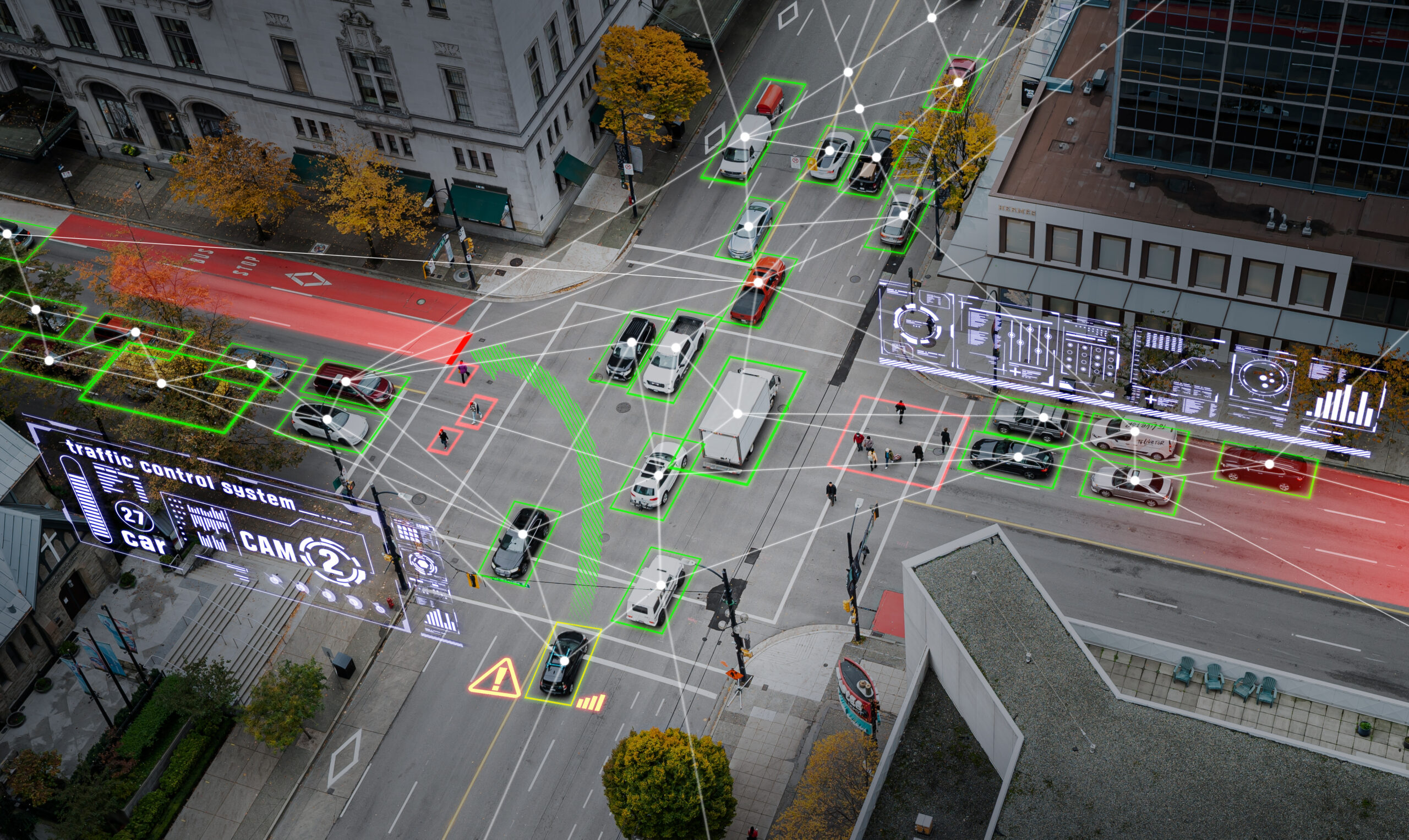
- Mobility data. Related to transport systems, including vehicles and infrastructure.
- Security data. For example, data associated with CCTV images.
- Data collected relating to local and regional services, and those relating to healthcare services.
BENEFITS OF AN EFFECTIVE DATA STRATEGY

The Bloomberg Center for Government Excellence at Johns Hopkins University recognizes five direct benefits for cities with data management strategies.
- They transform promises into citywide strengths.
- They foster the application of other strategies.
- They improve institutional and administrative performance, which results in improved services.
- They align staff data capabilities with city needs.
- They contribute to decision making and boost leadership.
MONITORING WATER CONSUMPTION IN COPENHAGEN
The importance of experiencing these benefits has led to efficient management and governance examples that can be seen today. A notable example is how the public agency Frederiksberg Forsyning in Copenhagen has applied big data to increase savings on water loss and reduce CO2 emissions.
This case is paradigmatic from a data point of view. Since, those responsible for the agency identified the need to implement their own consumption data collection and monitoring system to save resources.
DATA MANAGEMENT RISKS AND THREATS
Cases like this emphasize the importance of big data management strategies in urban areas. It is a core and essential assignment, the full potential of which is yet to be discovered. However, big data governance presents its own series of challenges.Discrimination, cyberthreats or loss of privacy highlight the need to establish a regulatory framework.
Images | Freepik/evening_tao, Freepik/rawpixel.com