



Table of Contents
This is a guest post written by Giuseppe Masanotti, a Construction Engineer specialized in structural engineering. He is a member of the Urban planning Commission and of the Structural Safety Commission of the Turin Order of Engineers.
When concrete becomes intelligent and self-repairs itself
Concrete is everywhere: bridges, tunnels, buildings, dams, schools, stations… Yet despite its apparent solidity, it is a surprisingly vulnerable material. Even a simple crack, often invisible to the naked eye, can trigger a slow process of degradation: water and carbon dioxide seep in, salts infiltrate, and internal reinforcements begin to corrode. Every crack represents a failure that must be repaired with resin injections, cement mortars, or radical reconstruction—in any case, it involves expensive repairs.
Over time, maintenance costs multiply, structural risks increase, and in extreme cases, collapse occurs. One must also realistically consider that sometimes maintenance is not carried out in time for economic or organizational reasons, or simply because it is impossible to inspect 100% of structures and notice all cracks.
But something is changing…
Today, research is moving in a fascinating direction: transforming concrete into a material capable of “healing itself”. Just like skin that heals after a cut, cracks in concrete could also close by themselves, without human intervention. One of the technologies that makes this possible involves microorganisms.
How “living” concrete works
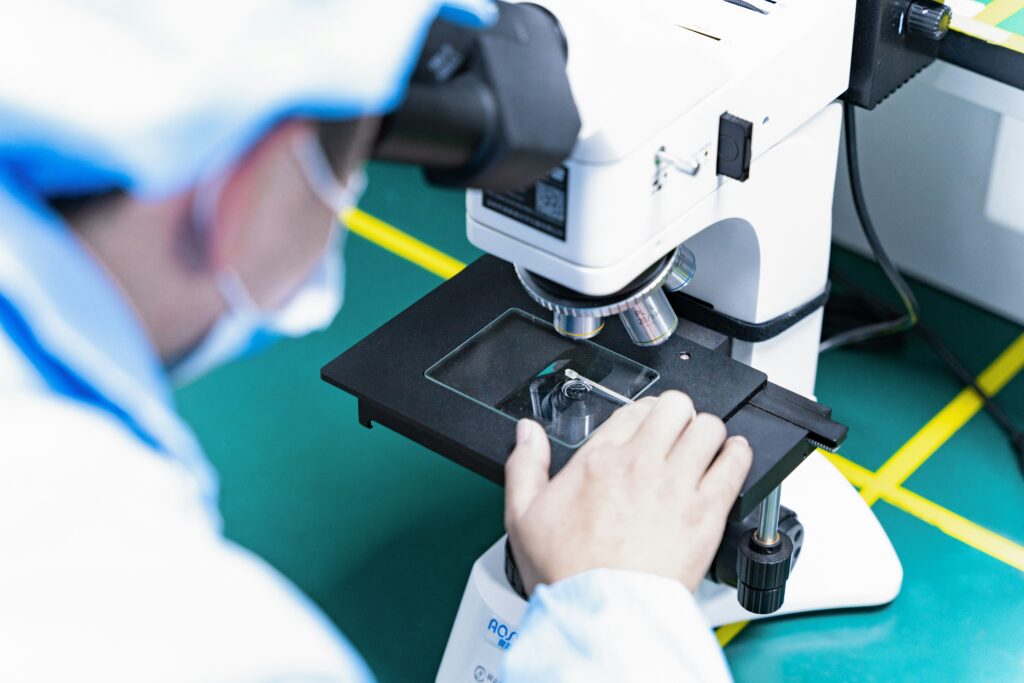
The idea behind self-repairing concrete is as simple as it is revolutionary: introducing microorganisms into the material that can produce crystals of calcium carbonate, the same substance that shells are made of. Spores of these bacteria are embedded in the concrete matrix, often encapsulated within porous materials like biochar, diatomaceous earth, or hydrogels to survive the harsh alkaline environment.
These bacteria, selected for their ability to survive in extreme environments, remain dormant until a crack opens. When moisture penetrates the concrete, the bacteria “wake up,” consume the embedded nutrients, and begin producing crystals that fill the cracks and seal the damage.
It is a quasi-organic process—silent and invisible, but with enormous effects: the structure seals itself, water no longer enters, corrosion stops, and the life of the structure is extended by decades.
Tests have shown that this reaction can close cracks up to 0.8-1 mm wide, recovering on average 80-90% of the original mechanical strength and significantly hindering the penetration of chlorides and CO₂.
New perspectives for durability: active materials
The ability to self-repair not only limits future damage but radically changes the way we think about maintenance. It is no longer a matter of “repairing when something breaks,” but of preventing degradation at its source. Biological concrete is no longer an inert material, but an active system capable of interacting with its environment.
Experiments conducted so far, both in the laboratory and on a small scale, have shown that the technique works even in complex conditions such as marine environments, freeze-thaw cycles, or industrial contexts. Of course, results vary depending on the bacteria used, the encapsulation materials, and the geometry of the cracks. But the principle remains valid: concrete that repairs itself lives longer, degrades less, and requires fewer interventions over time.
Over time, fewer interventions mean lower costs, reduced environmental impact, and fewer service interruptions.
Despite a slight increase in initial cost (typically around 10-15%), Life Cycle Assessment studies indicate that long-term expenditure for extraordinary maintenance can be reduced by up to 50-60%, with a positive impact on municipal budgets and infrastructure management.
No less important is the environmental benefit: fewer repairs mean less consumption of raw materials, less energy for producing mortars and resins, and above all, less use of “fresh” concrete. In perspective, every tonne of CO₂ saved in the life cycle of a bridge or tunnel translates into a tangible contribution to combating climate change.
From the laboratory to the city
Self-repairing concrete is not a mere “technological addition”—it is the first step toward a new way of approaching construction, in which materials become participants in their own maintenance, actively reacting to environmental stresses.
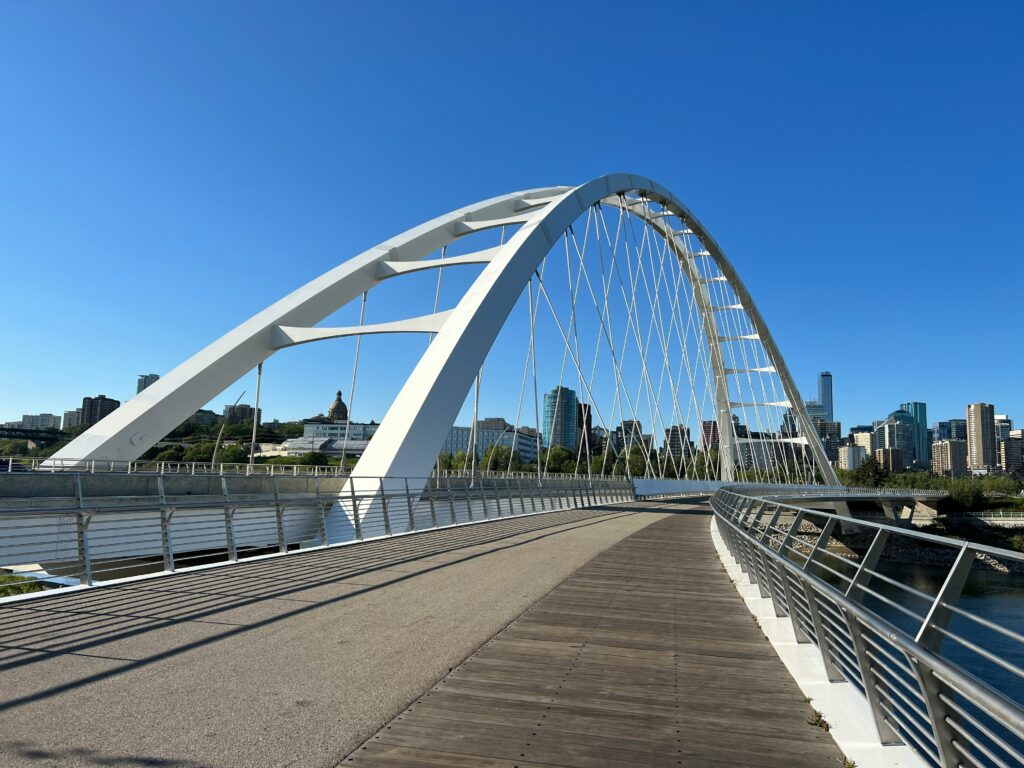
Today, these technologies are still in the testing phase, but the signs are clear: the transition to smarter concrete has begun. Some pilot projects, such as pedestrian bridges and small hydraulic infrastructures, have already integrated self-repairing mixtures. The next step is to bring these materials to an urban scale, in the renovation of existing networks and in the construction of new works—not only to increase the resilience of structures, but to rethink the entire life cycle of construction materials.
Imagine a city in which the surfaces of bridges, parking structures, façades, and pavements take care of themselves, resisting weather, impacts, and time more effectively. In this scenario, smart cities are not only technological in their software, but also in the materials they use.
Self-repairing concrete, in this sense, is a key technology: silent, invisible, but with enormous transformative potential. Because true innovation is sometimes hidden in very small things—like cracks and the invisible microorganisms that close them up.
Photos: Samson, Lightsaber Collection, Kiernan James, Peter Robbins.