



Table of Contents
Author | M. Martínez Euklidiadas
"Cities are the most important physical creation ever built by Man", according to José Antonio Ondiviela, an opinion shared by other major urbanists including Jane Jacobs, Edward Glaeser, Carolyn Steel or Ben Wilson. The new 2022 edition of his ‘WorldWide Observatory for Attractive Cities‘ once again talks about cities being the "epicenter of human activity". But what makes them attractive?
What makes a city attractive? Why do families migrate to these environments?

According to the model presented by Ondiviela some years back, a city’s attractiveness can be represented as its ‘profitability‘, an objective scale related to quality of life, job opportunities and lifestyle; and ‘magnetism‘, a more subjective scale related to the emotional aspect of decision making.
When migrating to a city, people acquire a ‘contract‘ with it: certain services and benefits emerging from society in exchange for taking part in a common project and becoming participants of the urban cocreation. ‘City’ is often understood as the metropolitan area accessible within a typical commuting distance, although the current trend is 15-minute cities.
Cities offer all types of personal and family development opportunities. They provide more, and better paid jobs and education opportunities (costing less), more comprehensive healthcare services, more people with whom to mix at all levels and more leisure activities. When people migrate to cities, it is the people themselves who create that future attractiveness.
"We must balance the preservation of our identity, history and culture with strong investment in the future, in innovation and in projected image. Let’s take exquisite care of our reputation, we must avoid populisms and manipulations, otherwise our city image will be hurt." — José Antonio Ondiviela, WorldWide Observatory for Attractive Cities
How to measure the attractiveness of a city

There are many different indexes to classify urban environments based on dozens if not hundreds of dimensions. Some of these indexes include sustainability, creativity, nighttime leisure activities, business or quality of life. But these are just fragments disconnected from a more complex reality.
The ‘WorldWide Observatory for Attractive Cities’ uses 67 indicators for urban magnetism and another 33 indicators for profitability. Some indicators are urban security, the talent of the city, tolerance, poverty levels or the deployment of telecommunication networks.
By using a cell phone app, people were asked what indicators they considered to be key in their scale of values. Naturally, urban mobility was the first, followed by health and sustainability.
The most attractive city in the world

Once the indicators are weighted with the population’s most important dimensions, an index or a ranking of urban attractiveness can be obtained, which takes into account numerous dimensions. In 2022, the city of Bergen (Norway) stood out, not just because of its high scores in all dimensions, but also because of its equilibrium.
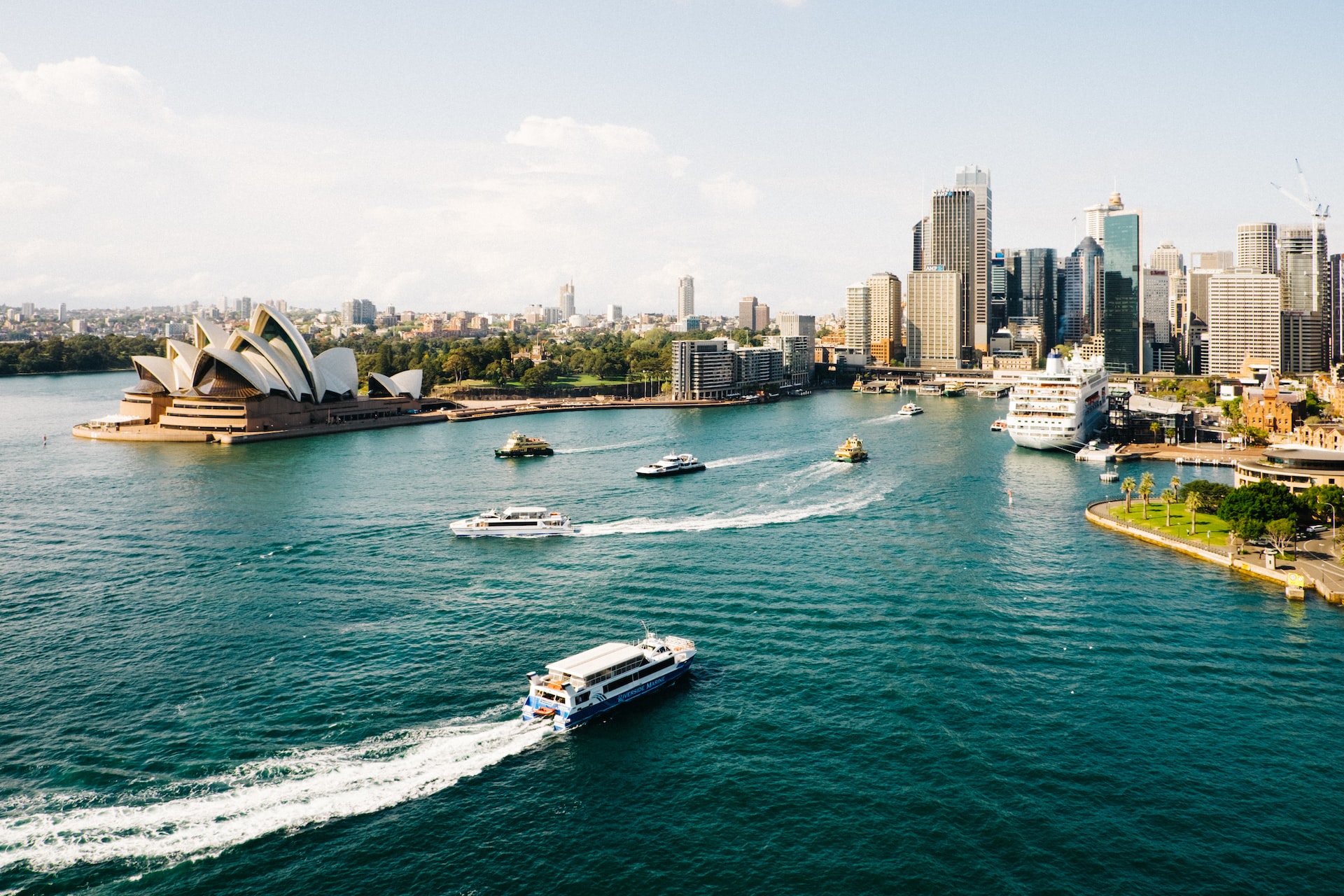
It was followed by Sydney (Australia), Stavanger (Norway), Oslo (Norway) and Aarhus (Denmark). Scandinavian cities, with medium urban density, mixed use urbanism, high standard of public transport and medium-size cities, are often at the top of these lists.
Appeal as a holistic concept
All travelers can identify their favorite cities and why they are their favorite. Public transport punctuality and frequency, good connections with communication nodes such as airports and stations, the quality of their museums, gastronomy, cleanliness… Initially, they may be easily identifiable factors to interpret, but not to replicate. And that is often because they are interconnected concepts that form part of a common reality.
If Bergen was considered the most attractive city in the world, it was not because of how clean its streets are, to mention just one of its many appealing aspects, but rather because behind it there is a culture of preservation and economic resources that guarantee the correct maintenance of the city, also facilitated by municipal revenues obtained from the city’s economic appeal. And at the same time, if Bergen exudes a magnetism for businesses, it is, to a certain extent, because of the image portrayed by a well-maintained environment.
The attractiveness of a city, as we will see, is not even the sum of concepts, but rather a complex relationship of these that integrates a "whole". And as such, it is rare for a success story to be exportable without a review and adaptation process, since the economic, social and political realities of each city may be drastically different.
+ MORE ABOUT JOSÉ ANTONIO ONDIVIELA
Prof. José Antonio Ondiviela is the Director of the Worldwide Observatory for Attractive Cities, supported by Universidad Francisco de Vitoria. You can download the 2022 version of this unique Observatory HERE. He is also Microsoft Western Europe Government & Smart Cities Solutions Director.
Prof. Ondiviela will share some insights from its WW Observatory at the upcoming Smart City Expo World Congress 2022, in the session Engaging Citizens for a Collective Future, November 16, from 11:15 to 11:45, local time.
Additionally, in order to have a better understanding of these factors, José Antonio Ondiviela and his team have developed an app that enables people to discover which cities best adapt to the likes and needs of each person based on the analysis of the 175 most attractive cities in the world according to numerous international studies. The app, which is updated with new indicators each year, is available for iOS and Android devices.
Images | Agent J, Jacek Dylag, Dan Freeman, Steffen Muldbjerg