



Table of Contents
Authors | Pablo Vinuesa, Raquel C. Pico
January 4th is World Braille Day, the aim of which is to raise awareness of the need to improve the lives of persons who are blind or partially sighted. Braille is an adapted alphabet that allows blind people to read and write. In fact, it could even be described as a form of accessibility technology that is more than two centuries old. New technologies are enhancing this tactile reading and writing system, making it possible to develop practical applications for everyday life in our cities. Braille technology, including digital braille devices, is therefore a powerful accessibility solution for smart cities, but it is not the only one. There are many other examples of assistive technology for visual impairment that address specific challenges and improve visual accessibility.
How assistive technology for visual impairment works
According to estimates by the WHO, around 2.2 billion people worldwide live with some form of visual impairment, whether partial or total. For a significant proportion of them, vision loss is linked to ageing, meaning that many have not learned Braille in the same way as those who have lived with visual impairment since childhood.
These WHO figures highlight the importance of adapting our cities to improve accessibility and quality of life. Smart technology is playing a key role in driving this transformation. Assistive technology for visual impairment, also known as adaptive technology for the blind and visually impaired, acts as a gateway to accessibility, helping improve everyday life for people across the full spectrum of visual disability. This includes everything from low vision aids and Braille technology to digital Braille devices and many other innovative solutions.
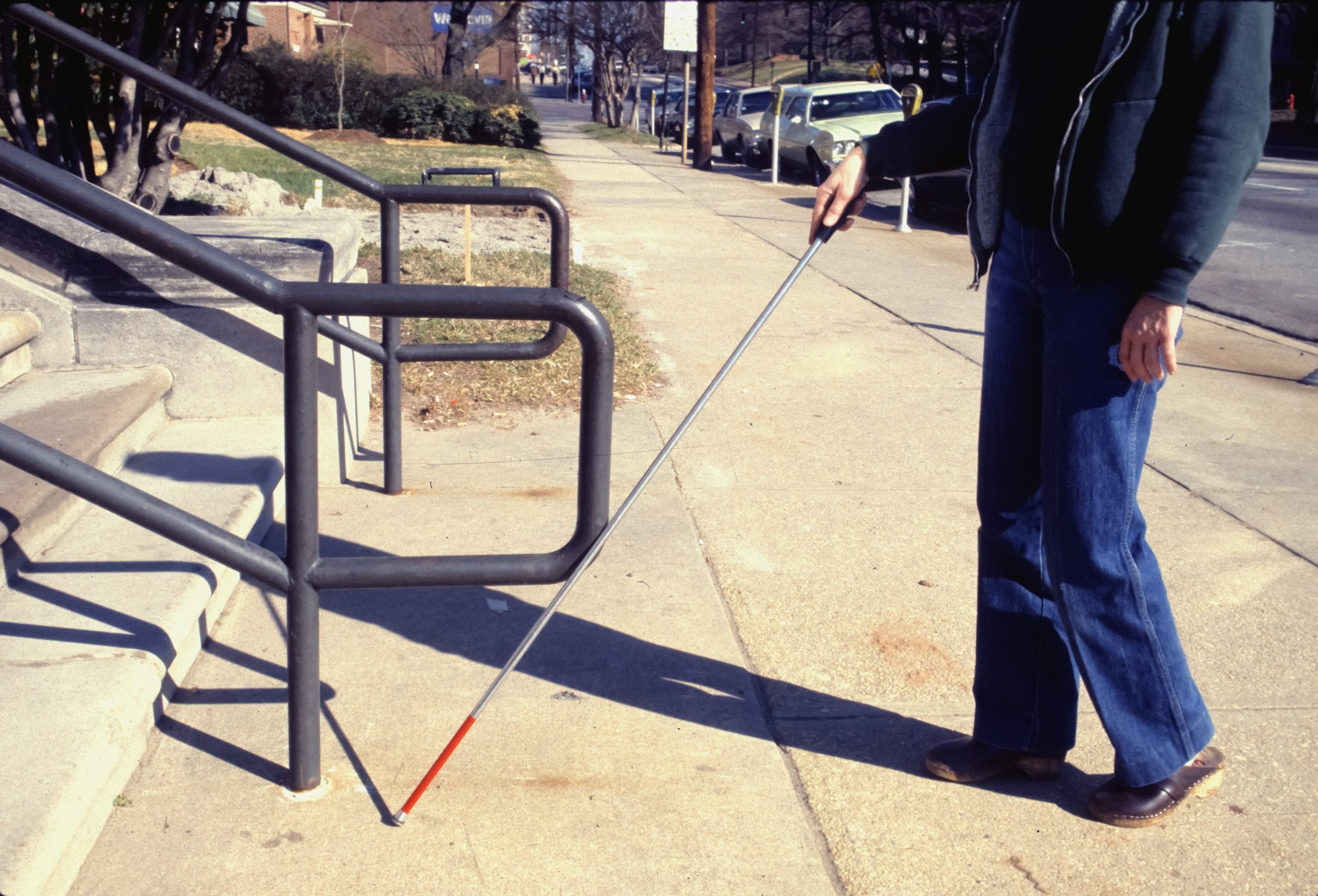
In short, there are countless innovative projects focused on improving accessibility, making the most of the potential of existing technology. From wearables to 3D printing, together with an endless number of applications for mobile devices or developments involving well-known instruments such as the white cane.
5 examples of assistive technology for visual impairment
Screen readers
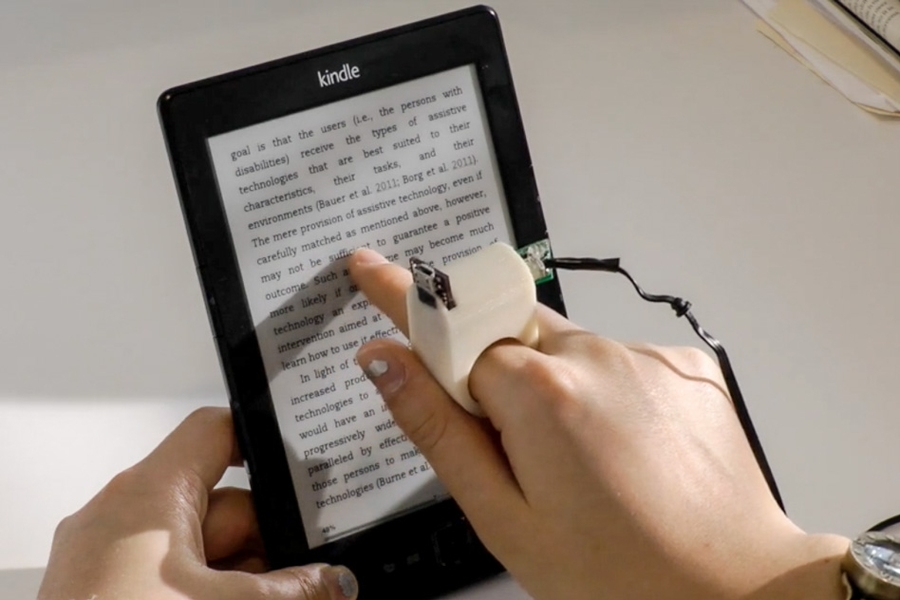
Many of us learnt to read by running our finger across the page to keep track of where we were. This intuitive habit is transferred to the digital world with Finger Reader, the ring that identifies words on a screen. This device created at the MIT Media Laboratory uses an algorithm capable of interpreting the text and then reading it aloud.
3D sound mapping
Applications such as Microsoft Soundscape build a meticulous audio map that informs visually impaired people of what is around them as they walk around a city. Sound beacons and synthesized 3-D stereo sound recreate layers of details and context.
Screen magnifiers
In the form of a large handheld magnifying glass, it enlarges the screen size and enables, for example, more universal access to the catalogue of municipal libraries. There are several types, among them handheld ones, enabling them to also be used in adapted reading environments at home and outside. They can also be accompanied by sound reading software.
Smart glasses
Many blind people retain a certain degree of sight, although this is limited to the perception of light or movement. Oxford University has developed smart glasses that use a camera system and specially designed software for the visually impaired to identify nearby objects and avoid potential obstacles, boosting their residual vision. The same idea is behind the Orcam MyEye 2 glasses, that easily fix to a magnetic mount attached to the sidearm, or the Spanish project EyeSynth.
Braille touchscreens
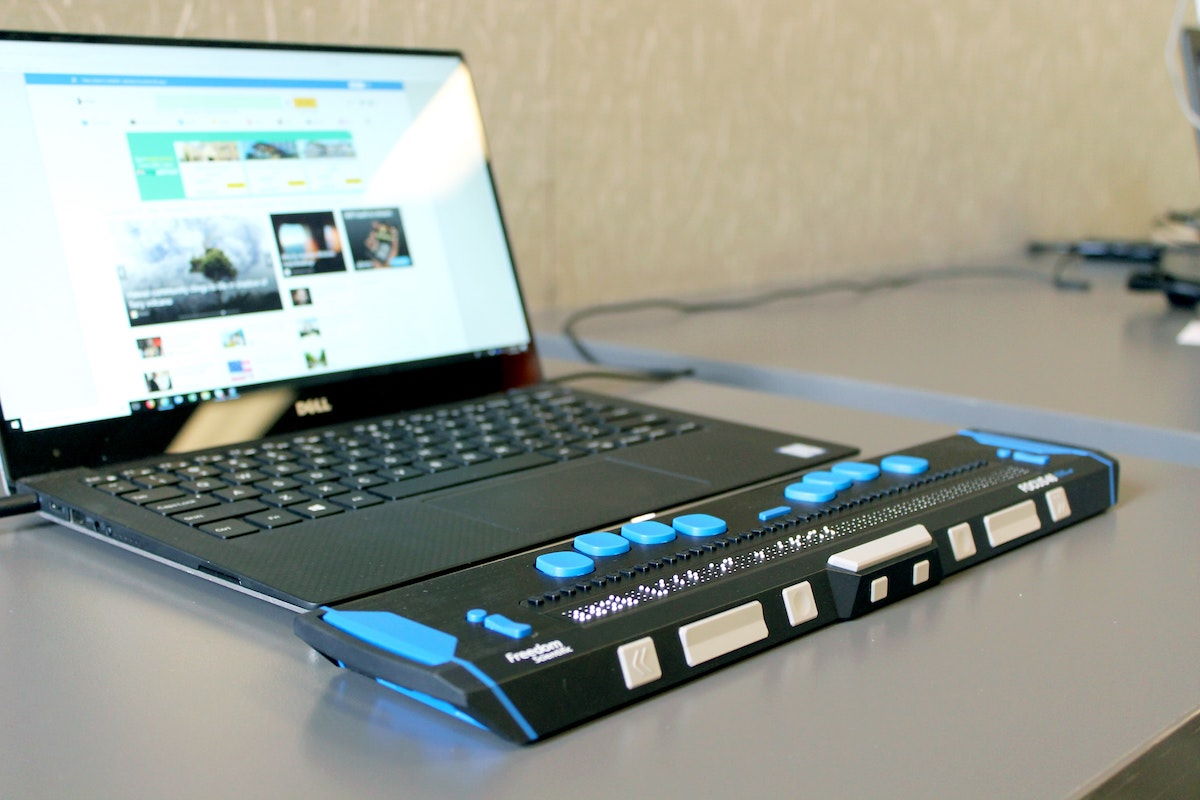
There are devices that allow Braille characters to be reproduced in real time. This functionality can also be added to computers or smartphones with external devices, but options such as Blitab, a Braille tablet using a liquid-based technology providing tactile relief, are particularly interesting given their portability.
More innovative examples of assistive technology for visual impairment
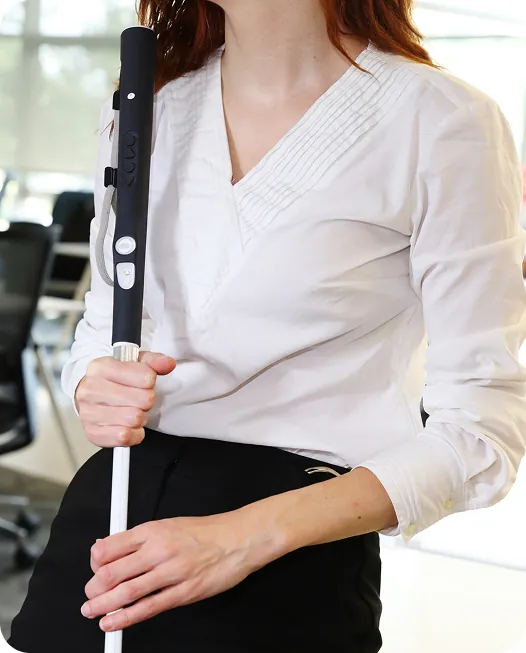
Alongside these leading examples, there are many other forms of assistive technology for visual impairment designed to address highly specific needs.
For example, Do Watch, the Braille smartwatch. The WhatsCine app adapts movies to formats suitable for blind people. WeWalk is a smart cane equipped with Google Maps and speakers. The Foresight Augmented Reality Bluetooth beacons act like highly precise, personalized guides, and we cannot forget the many examples of urban guides for blind people developed by different municipal and state organizations.
In short, this illustrates that there are more options available than tactile paving tiles to guide blind people.
Why this is an urban challenge
Cities must be functional for all their residents. Accessibility in smart cities is not an optional extra that simply makes them slightly better. It is, in fact, the answer to a fundamental question: how to ensure that the basic rights of all citizens are respected. Buildings, infrastructure and green spaces must therefore take into account the functional diversity of the people who live in them and their different needs. There is already growing discussion around a new model of smart and caring cities. The concept is simple: listening to these communities and considering their needs when designing urban spaces. This approach is already being applied in urban planning designed for people with autism spectrum disorder.
Inclusive urban design elements
There are also those who design sensory-based environments, by applying textures and the appropriate contrasting colors for buildings. We also need to see more accessible solutions such as tactile tourism maps or information centers and signage points outdoors equipped with Braille characters or raised tactile letters. This also applies to the private sector. For example, most major banks have ATMs with Braille keypads and audio guides.
Examples of cities working to improve visual accessibility
Tokyo is often regarded as one of the most accessible cities for people with visual impairments. Its tactile guidance systems on public transport networks and sidewalks support urban mobility so effectively that the concept has been adopted in cities around the world. The city also offers extensive audio guidance systems and infrastructure designed with the visual diversity of its residents in mind.
However, large metropolitan areas are not the only places where accessibility can be improved. Assistive technology for visual impairment and accessible urban planning can also be implemented in much smaller cities. All that is needed is a willingness to change and a clear strategy. Even historic cities with centuries old architecture can introduce meaningful adaptations and improvements. This has been demonstrated by San Cristóbal de La Laguna.
The city in Tenerife received the European Union’s Accessible City Award in 2024. It introduced multiple accessibility initiatives that considered a wide range of thresholds, needs and forms of disability, going far beyond simply adding signs or ramps. One particularly interesting initiative for blind and visually impaired people was the improvement of accessibility in the green area surrounding the Cruz del Carmen Visitor Center. By creating multisensory trails, the experience no longer depends solely on sight, but can also be explored through touch, smell and sound.
AI for visual accessibility
Throughout history, Braille has integrated itself into our cities through its inclusion in everyday objects such as notes or coins, bus shelters, button panels in elevators and packaging of food products, medications or kids’ games. Braille has the chance to bloom again in this new digital era.
Technological devices based on this alphabet are being constantly updated, and artificial intelligence could play a decisive role, as illustrated by the support of tech giants. For example, in 2018, Microsoft launched the AI for Accessibility project, with a budget of 25 million dollars and the aim of making its technology available to people with disabilities. Artificial intelligence is becoming a powerful ally in assistive technology for the blind and visually impaired, helping to improve accessibility.
In short, the range of assistive technologies for visual impairment is expected to continue growing, improving the quality of life of city residents around the world. Accessibility remains one of the key priorities of smart cities.
5 key questions to understand assistive technology for visual impairment
1. What is assistive technology for visual impairment?
Assistive technologies for visual impairment are tools designed to help people with visual disabilities carry out everyday tasks more easily.
2. What are some examples of assistive technology for visual impairment?
The range of solutions continues to grow, from low vision aids and Braille technology to adapted watches and many other devices.
3. Is Braille considered assistive technology for visual impairment?
Braille is a reading and writing system that uses raised dots, allowing it to be read through touch. Put simply, it is an alphabet created to meet a specific accessibility need.
4. How many blind or visually impaired people are there in the world?
According to the WHO, around 2.2 billion people worldwide live with some form of visual impairment. Since 55% of the global population lives in cities, a significant proportion of these individuals are urban residents.
5. Why should cities focus on assistive technology for visual impairment?
Accessibility is a cornerstone of smart city development. Cities can only be truly smart if all residents are able to access and benefit from their services.
Images | Elizabeth Woolner en Unsplash, Finger Reader por el MIT, WeWalk, CDC