



Table of Contents
Author | Lucía Burbano
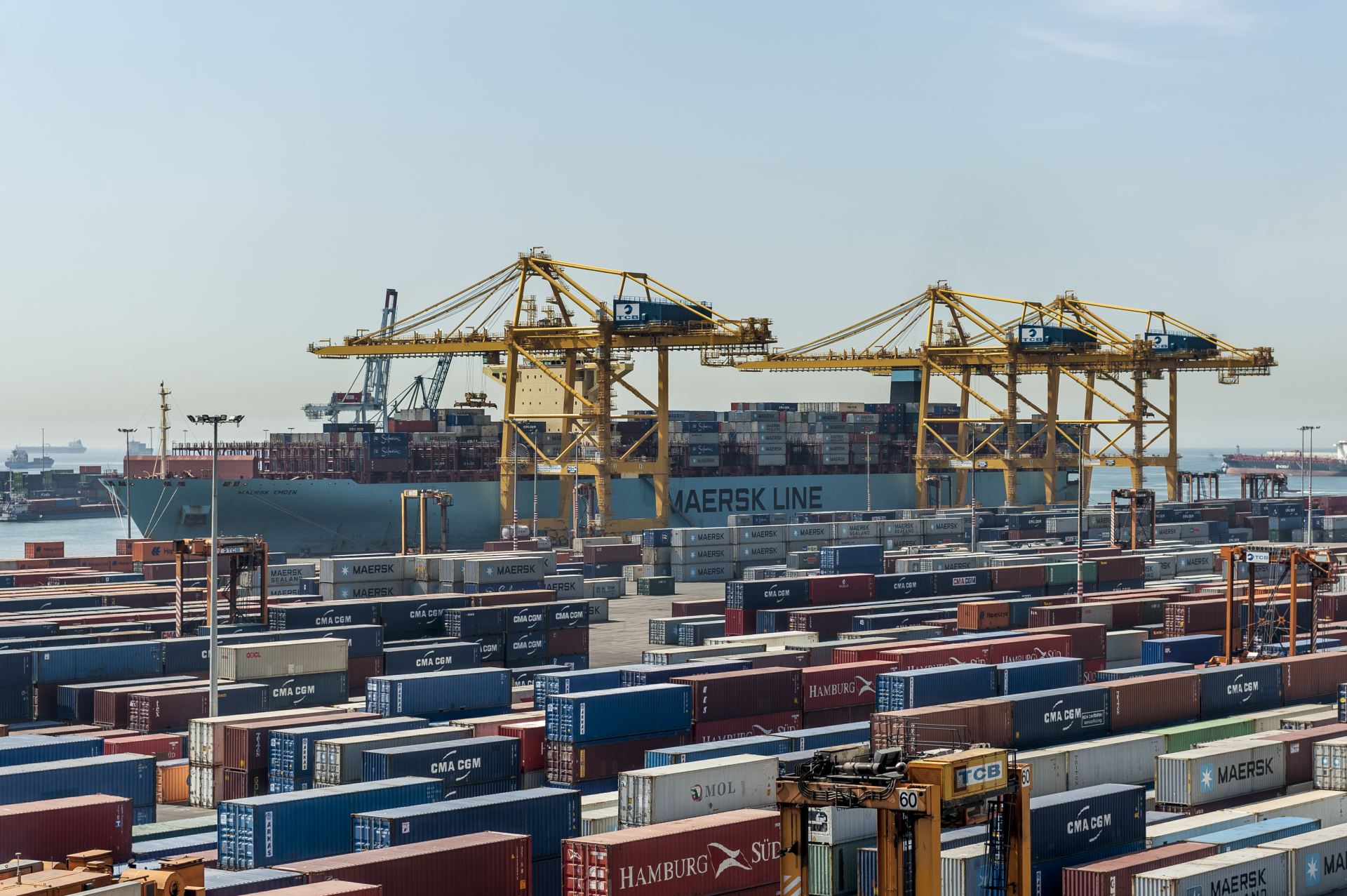
Without forgetting their function as an essential infrastructure within a global supply chain, the influence and environmental, human and technological responsibility of ports with society is on the rise.
This new role is summarized in the SMART acronym (sustainability, multimodal, agility, resilience and transparency), concepts that form the pillars of the Port of Barcelona’s 4th Strategic Plan, which it will develop over the next five years and which represents its vision of the future. They will also play an important role in the next edition of the ‘Smart Ports: Piers of the Future’ 2021 to be held on 16-17 November.
The SMART concept falls within a mission: to generate prosperity for the community by identifying trends that will impact not only the logistics-port sector but society as a whole and the future of cities.
S for sustainability

One example is the transformation of industrial neighborhoods and buildings in port areas so they be used for innovation or research purposes or simply for residents to enjoy. Or, as part of the multimodal concept, a commitment to fewer polluting modes of transport such as rail travel and the reduction of noise pollution and environmental emissions generated by ships and cruise liners mooring in the ports. A growing trend is to convert ports into providers of renewable and clean energies such as solar or hydrogen to supply the boats that call at the ports.
Also in relation to sustainability, a term that is becoming more popular is the blue economy. Based on technology, innovation and science, the aim is to responsibly safeguard, improve and boost the ocean’s resources in diverse sectors including tourism, aquatic and marine biotechnology, renewable energies, fishing or maritime transport.
Its growth is more than justified, since it represents a chance to invest in the welfare of the planet and its cities with the involvement of ports, since these have the chance to amalgamate the characteristics of this concept thanks to their long-term relationship with the sea.
Its impact on Barcelona is measurable, since the sectors associated with this activity generate 15,000 jobs (1.4% of all employment) and 3,750 million euros in annual turnover. This is just the beginning, since the City Council and the Port of Barcelona have signed a collaboration agreement to promote further initiatives, including the development of an enterprise hub focused on the generation of innovative ideas and solutions within the framework of the blue economy, the result of which will have a local and global impact.
Agility and resilience for a digital future.

Ports can also offer agile and resilient solutions to global challenges such as those experienced over the past eighteen months. The growing and unstoppable digitalization of the sector, for example, enabled cities to continue to receive supplies safely, thanks to the remote management of logistics operations.
The last letter of the SMART acronym refers to transparency, which in this case seeks to promote open access to information and to foster a citizen-centered governance system that eliminates paper in order to increase process efficiency.
The next edition of ‘Smart Ports: Piers of the Future’ will release the moorings to explore concepts that not only concern port communities but which will also be key for the future and health of the planet: e-mobility and its development in port cities; digitalization in all areas of transport and logistics; and the Blue Economy.
In this regard, the event’s program will debate aspects including the energy transition in ports and the maritime sector; e-mobility and its development in port cities; digitalization in all areas of transport and logistics; and the Blue Economy, with the aim of defining the full social and economic potential offered by ports and their associated activities today.
Images | Unsplash/Naja Bertolt Jensen,APM Terminals, Hutchison Ports BEST