Table of Contents
Author | Lucía Burbano
When completed, expected in spring 2027 after several delays, Circle House will mark a turning point in sustainable architecture in Denmark. The project comprises 60 social housing units built in Aarhus, based on the principles of a circular economy. This means, among others, it can be disassembled and its elements can be recycled without losing their integrity.
Circle House: Denmark’s pioneering circular social housing
With Lejerbo housing association as the developer, an association that follows the Danish principles of public housing with a focus on social responsibility rather than design, Circle House is a collective project: The initial concept was developed by 3XN/GXN, Lendager Group, and Vandkunsten under the coordination of GXN Innovation, while RUM and Sweco, together with Torntoft & Mortensen, subsequently won the competition to develop and deliver the project.
It consists of 60 housing units located in Lisbjerg Bakke, a residential neighborhood on the outskirts of Aarhus, designed as scalable demonstration project to incorporate new knowledge about circularity in the construction and architecture sector.
Although it was expected to be completed in 2023, it appears that the first residents will not be able to move in until spring 2027, as the project has experienced significant delays, including the bankruptcy of the original contractor, which led to a new tender and the subsequent restart of the construction process.
The structure was completed in January 2026, and in August 2026, the new contractor, Enemærke & Petersen, published an update confirming that the 60 homes are being built according to Design for Disassembly principles and that work on the project is continuing.
Prototyping a circular laboratory
As a preview, Demonstrator, a full-scale 40 m² prototype was unveiled in 2020. It was conceived as a collection of solutions and products already available on the market that contribute to the creation of a circular building. Designed as a laboratory for construction systems, connections, disassembly options, and component identification, its objectives were to:
- Show, at full scale, that it is possible to construct a circular building.
- Raise visitors’ awareness of circular economy principles.
- Discuss the development of products that focus on circularity.
- Serve as a catalog of circular solutions available to the industry.
- Introduce companies’ products to a wider audience.
The Circle House project
With a total area of approximately 5,400 square meters and a total acquisition cost of around DKK 110 million, Circle House is designed based on the 15 principles of the categories of Design for Deconstruction, Identifying Materials and Circular Economy, developed as guidelines and strategies for the application of reuse and the circular economy within the construction sector.
Specifically, the aim of the project is for 90% of construction materials to be reusable, without appreciable loss of their construction value.
The site chosen for Circle House features a steep slope from the main street down to a wedge-shaped green area, and its highest point offers a scenic view of Aarhus.
Two types of buildings will be constructed on the plot, 3-story terraced houses and 5-story tower blocks. The latter will be located at the highest part of the plot, so as not to overshadow the lower buildings.
All the Circle House terraced housing will have northeast facing entrances and southwest facing gardens. Extending the length of the urbanization is a green, recreational common area. The building density onsite is between 65% and 80%.
Circular design and basic principles
The principles of circular design in Circle House are applied in three aspects: the construction systems, choice of materials and multidisciplinary collaboration.
Construction systems
Circle House consists of a series of construction systems that can be disassembled, reused or reassembled preserving their integrity. To do so, a minimum quantity of elements are used, which can also be disassembled. In total, six are used: two for the facades, two different lengths for the beams and two measurements for the roof.
The circular superstructure is based on the existing solutions of the project’s industrial partners: precast concrete elements manufactured by Spaencom, Peikko mechanical joints and the connections are cast with lime mortar from Kalk.
Only 12 precast concrete structures are used, including the foundations.
The facade is fitted using mountings to enable rapid assembly and potential disassembly.
Materials
Some materials selected for Circle House are:
Recycled tiles
Made out of recycled plastic waste from households with a range of natural colors. By sorting the plastic waste by color, a range of different tiles could be designed.
Wood
The varied facade cladding is mounted to the wall by a wood grid, which uses larch wood, as this tree species has a natural protection against rot and mold. It ensures long durability without any treatment.
Recycled acoustic panels
With a service life of at least 75 years, a single panel can be used in numerous use cycles thanks to a smart mounting system.
The collaboration of Danish companies
The project brings together more than 60 companies from within the construction sector, with each providing their knowledge and expertise. This example of collaboration in the construction sector is crucial for making the principles of a circular economy a reality. Likewise, it will enable companies to adopt new business models and technologies and advance towards the application of the circular economy in the built environment.
Sustainable features of Circle House
In addition to the foregoing, Circle House incorporates more sustainable practices in the project. An example is digitized traceability, which links to a material passport containing information about the element.
Despite using concrete, its use is kept to a minimum. The prototype on display showed a facade made with cork and old newspapers, algae for insulation and used tires for the floor.
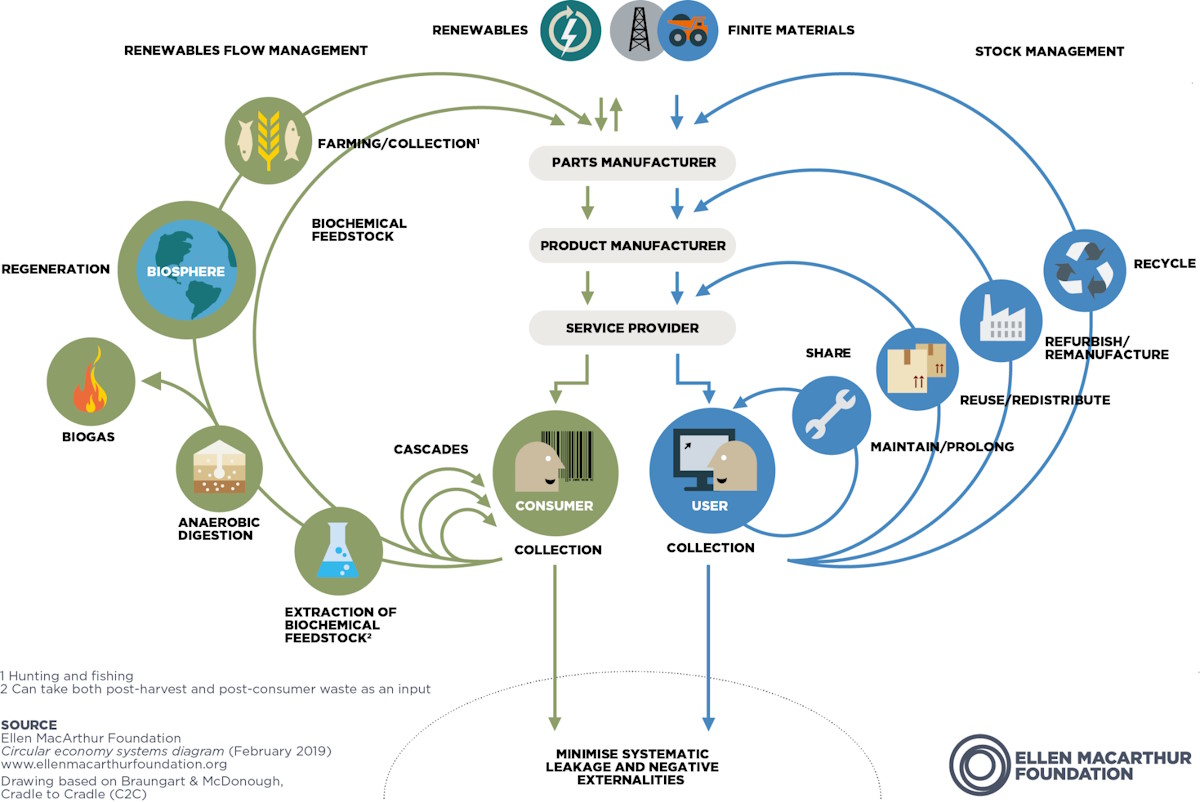
The Ellen Macarthur Foundation has calculated that applying a circular approach in construction could reduce the emissions from construction materials by 38% by 2050. In Europe, the Foundation estimates that the total economic potential of implementing a circular economy in the construction sector amounts to approximately €575 billion in direct annual economic benefits by 2035.
Design for Disassembly
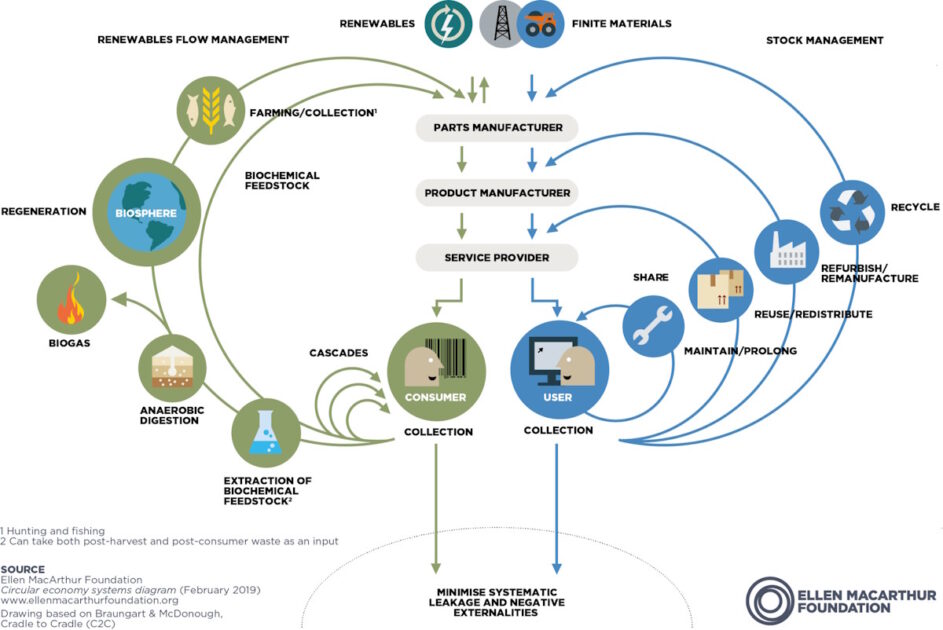
Circle House is designed not only to be built and occupied, but also to be disassembled. Design for Disassembly aims to ensure that components can be separated at the end of their useful life and reused in other buildings, preventing the demolition process from turning them into waste.
To achieve this, Circle House uses prefabricated and standardized elements and reversible connections. The structural concrete components, for example, are assembled using brackets, bolts, and screws rather than being permanently joined, a solution already being applied in the construction of the 60 homes.
The same philosophy extends to other elements of the building, such as the facades. The aim is for the different components to be separated without being destroyed and for the building’s various layers, including its structure, envelope, systems, and interiors, to have independent life cycles.
Traceability also plays a fundamental role. The project includes the digital identification of components through a material passport, which preserves information about the resources used and facilitates their recovery when the time comes to disassemble them. In this way, the building can be understood as a material bank: a temporary repository of components that can retain their value and become part of other buildings.
Other examples of circular buildings already constructed
Brummen Town Hall, Netherlands
Brummen Town Hall was completed in 2013 and conceived with a relatively short useful life of around 20 years. Rather than constructing it as a temporary building destined to become waste, it was designed to be disassembled so that materials and components could be returned to their manufacturers. It also includes a material passport to record its assets.
HasleTre, Oslo
This office building uses a timber structure designed to be disassembled, demonstrating that this material can also be used to create reversible structures through mechanical connections.
The project includes a specific disassembly guide to facilitate its future reuse.
Loblolly House, United States
The house by KieranTimberlake, built using prefabricated components, was designed to be assembled and disassembled relatively easily, keeping its elements intact for potential reuse. The system uses components such as frames, panels, and cartridges that are mechanically assembled.
Circle House FAQs
What is Circle House?
Circle House is a 60-unit social housing project in Aarhus designed according to the principles of the circular economy and Design for Disassembly.
When will Circle House be completed?
Following several delays, including the bankruptcy of the original contractor, the homes are expected to be ready for occupancy in spring 2027.
What does Design for Disassembly mean?
It is a strategy that allows a building’s components to be disassembled without destroying them so that they can be reused at the end of their useful life.
Which elements of Circle House can be disassembled?
The project uses prefabricated and standardized elements and reversible connections, such as brackets, bolts, and screws in the structural concrete components.
What percentage of the materials can be reused?
The project’s goal is for up to 90% of its construction materials to be reused without any appreciable loss of their construction value.
Photographs | Sweco, Vandkunsten, Ellen Macarthur Foundation