



Table of Contents
Author | Jaime Ramos
When we think of solar power, we tend to imagine a roof or a facility covered with solar panels. But, what if this were not the only way to use the energy potential of the radiation emitted by our star?
During the last two decades we have witnessed the consolidation of solar power. According to the International Energy Agency (IEA), electricity generation reached an all-time high in 2021, exceeding 1,000 TWh in the world. After wind power, solar power is the second most important renewable in terms of production and its contribution is expected to increase in the coming years.
This trend can be seen in cities too. Solar cells are being incorporated into buildings and, as part of this adaptation, new technological applications which immense potential have emerged, which have already been tested in laboratories a while back. One of them set to take center stage are solar windows.
What are solar windows?
The concept of solar windows is simple and refers to the incorporation of transparent panels with solar cells into windows to capture the energy provided by the light spectrum, while enabling light to pass through in order to see through them.
At a technical level, the innovation is based on the Grätzel solar cell or dye-sensitized solar cells (DSC), which dates back to 1991. Made up of a semiconductor, it is capable of generating a cyclic electric current by capturing light through an organic colorant.
Advantages, benefits and disadvantages
Apart from the obvious benefit of generating electricity, the advantages of solar windows include:
- Their full integration into windows. So they do not occupy any extra space, as solar panels do.
- Installation is not too expensive or complicated. Furthermore, they can be adapted to all types of infrastructures, including vehicles.
- The photovoltaic film properties (chromatic, flexible and able to take on any shape and size) enable it to be easily adapted and customized.
- They have better thermal and acoustic insulation properties than conventional windows.
Are solar windows more efficient than solar panels?
However, this technology has some disadvantages that, to date, have prevented its wider use. The most significant is a lower efficiency than conventional solar panels due to their semi-transparent nature, with an efficiency rate of less than 10% compared to solar panels, which stands at an average of around 20%.
However, there are recent developments that promise to increase this performance. Such is the case of the work of the École Polytechnique Fédérale de Lausanne (EPFL), which has managed to raise it to levels of between 15% and 30%.
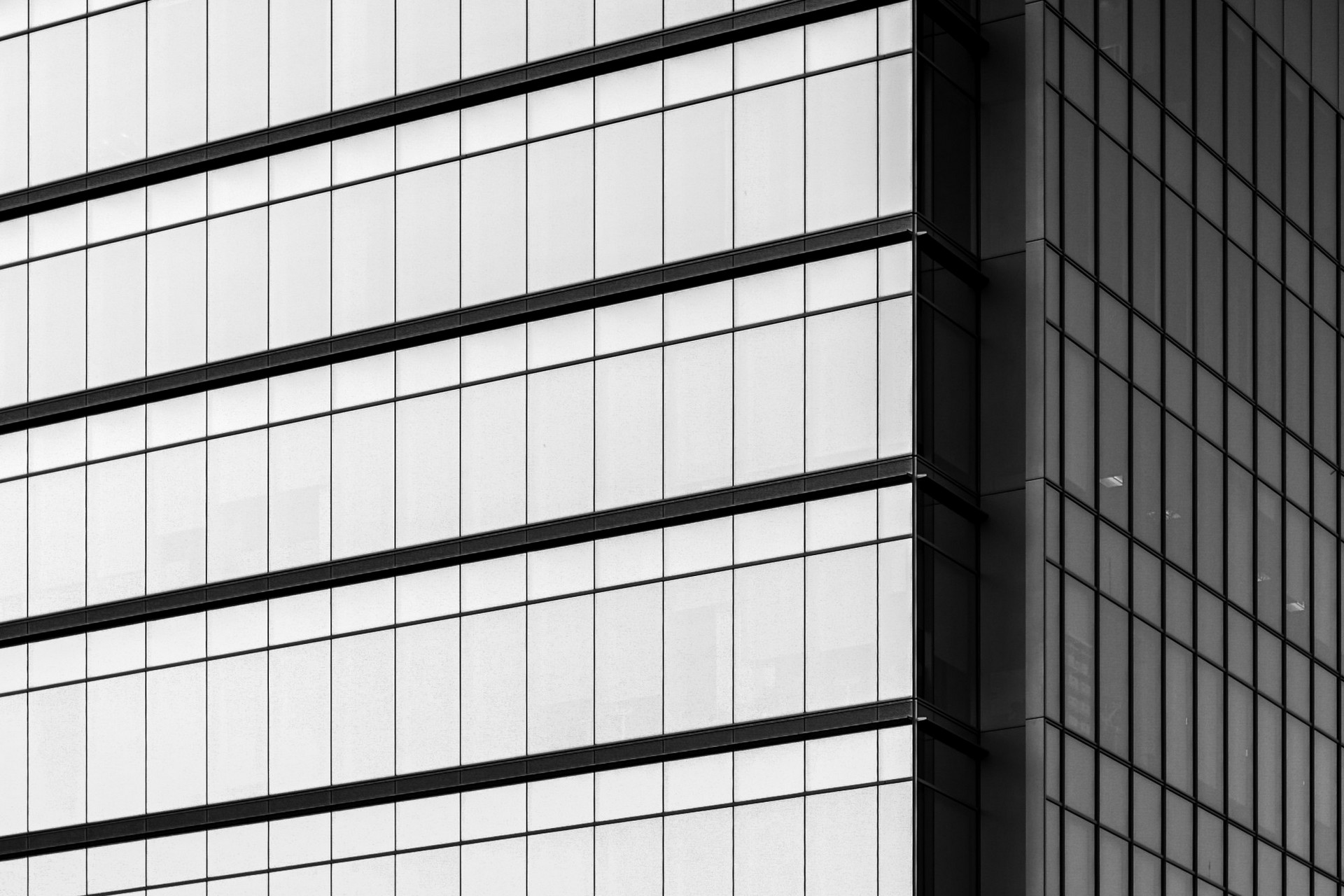
Given these circumstances, solar windows cannot yet replace traditional solar panels on a single-family house or a building with only a few floors. If anything, they could be an interesting complement to rooftop panels. However, in high-rise buildings, with far more glazed surface than roof space, economies may be more favorable towards solar windows.
Urban examples of the use of solar windows
The first example of this technology being integrated into architecture is in the aforementioned EPFL, in its SwissTech Convention Center. Its colored windows incorporate this technology across its 300 square meters.
In numerous markets, including the North American and European markets, solar windows have been slow to take off. However, an increasing number of companies are now including them in their portfolios and offer solutions at various scales, such as Ubiquitous in the United States.
In Australia, the company ClearVue has integrated solar windows into numerous public and residential buildings and even greenhouses in and around its birthplace of Perth. Its success has led to an early expansion in just a short time and it is getting ready to launch in the U.S. market.
Unlike other photovoltaic solutions, such as solar roads, the potential of solar windows is more versatile. If this trend takes off, we are likely to see them integrated into large windows in all types of buildings.
Images | Freepik/wirestock, Flickr/LLE Photography