This is a guest post by Lucía Bellocchio, founder and executive director of Trend Smart Cities. Lucía has extensive experience working on urban innovation, and has written in leading media outlets in South America like La Nación, El Observador, Clarín or TN.
The urban world is in a process of constant transformation and evolution; a transformation guided by the accelerated development of technologies, and in turn, by the goals of the 2030 Agenda and a necessary decarbonization that allows us to face the climate crisis.
It is estimated that 66% of the fulfillment of these global goals depends on action in cities, where more than half of the world’s population already lives today.
In this context, there is something unquestionable: the great challenges we have in cities can only be addressed – and scaled – with the help of technology.
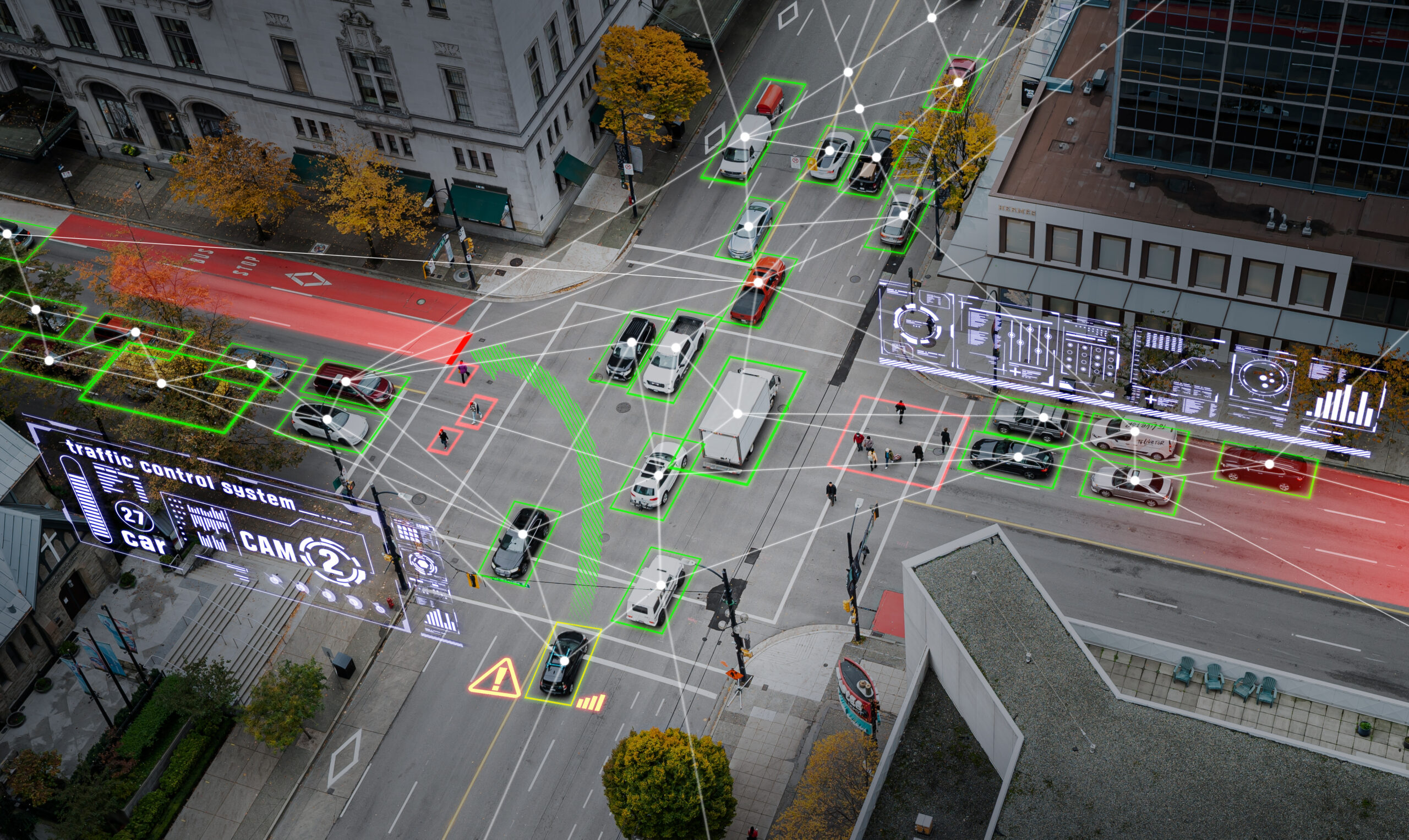
Today we cannot have a conversation about how an urban space can be more innovative, more efficient, and more sustainable, without talking about data, connectivity, automation, artificial intelligence or IoT. This is when the ‘UrbanTech‘ world comes into play, as that intersection between the urban and technologies.
What does the concept ‘UrbanTech’ refer to? This concept covers all technology-based solutions that make possible the design, planning and construction of more sustainable, intelligent and efficient cities, that is, companies that work to improve the quality of life in some of the spheres of the urban world.
As Bryan Boren explains, designing urban technologies refers to digitally driven products and services that affect how cities are seen and made sense of, how they are shaped and built, and how urban spaces are inhabited.
What sectors does UrbanTech cover? Sotnly Baptiste from Urban Us Capital explains that, although they initially included topics such as “Civic & Administration, Resources & Built Environment and Transportation, Mobility & Logistics” within the UrbanTech portfolio, they later expanded their definition to the themes that can be seen in the image below:

A concept already consolidated in the investment world. For investors this does not seem to be a “new concept; for a few years now, solutions that seek to solve urban problems have been looked upon favourably in this environment; technologies and solutions with impact.
Several venture capital firms cover this sector such as Omidyar Network, Ekistic, Tusk Ventures, Urban Innovation Fund, Govtech Fund, Urban Us, Fontinalis, BMW iVentures, Alliance, Trucks, Builders, Fifth Wall., Metaprop, Congruent, etc.
A growing number of generalist and corporate venture capital funds have been active in this space, including Alphabet, Amazon, Social Capital, NEA and First Round.
There are also specialized acceleration programs such as Urban Future Lab, DreamIt, Tumml and URBAN-X as well as initiatives such as the European Union’s Urban Tech Project (2022) to accelerate initiatives on GreenTech, Smart City and HealthTech.
We also find university programs offered by the University of Chicago, Harvard University and MIT, or the Urban Tech Hub of the Jacobs Technion-Cornell Institute at Cornell Tech that generate applied research and technological education to build a better world by increasing access and capabilities in this area.
UrbanTech opportunities. Recently, we have seen how the concept is beginning to resonate more and more in other areas, such as government, construction, academia, etc., and is positioned with the potential to generate the ecosystem necessary to make the notion of smart cities viable.
At the same time, the global market forecasts for this industry are attractive, with growth of 15.2% expected by 2028.

This growth of the industry, the interest of the investing world, the need for governments to meet certain expected global goals, and the generation of knowledge and research from universities and study centres gives us a sign that in this area the future could be promising and UrbanTech solutions find growth opportunities.
New job and professional opportunities arise that require new skills, based on technology, sustainability and a good knowledge of urban phenomena and trends, so UrbanTech solutions are amazing ways for entrepreneurs to do business while having a positive social impact.
Top image | Jorge Ramirez