



Text | Raquel C. Pico
Airports are one of the hot spots of urban mobility. Those in certain cities, in particular, are also at the center of rather surprising stories, shaped by topography, geography, or sometimes by risky construction decisions made at their inception. This is the case with Japan’s Kansai Airport, which was built on the sea and is gradually seeing how the ocean, so to speak, is eating away at its foundations.
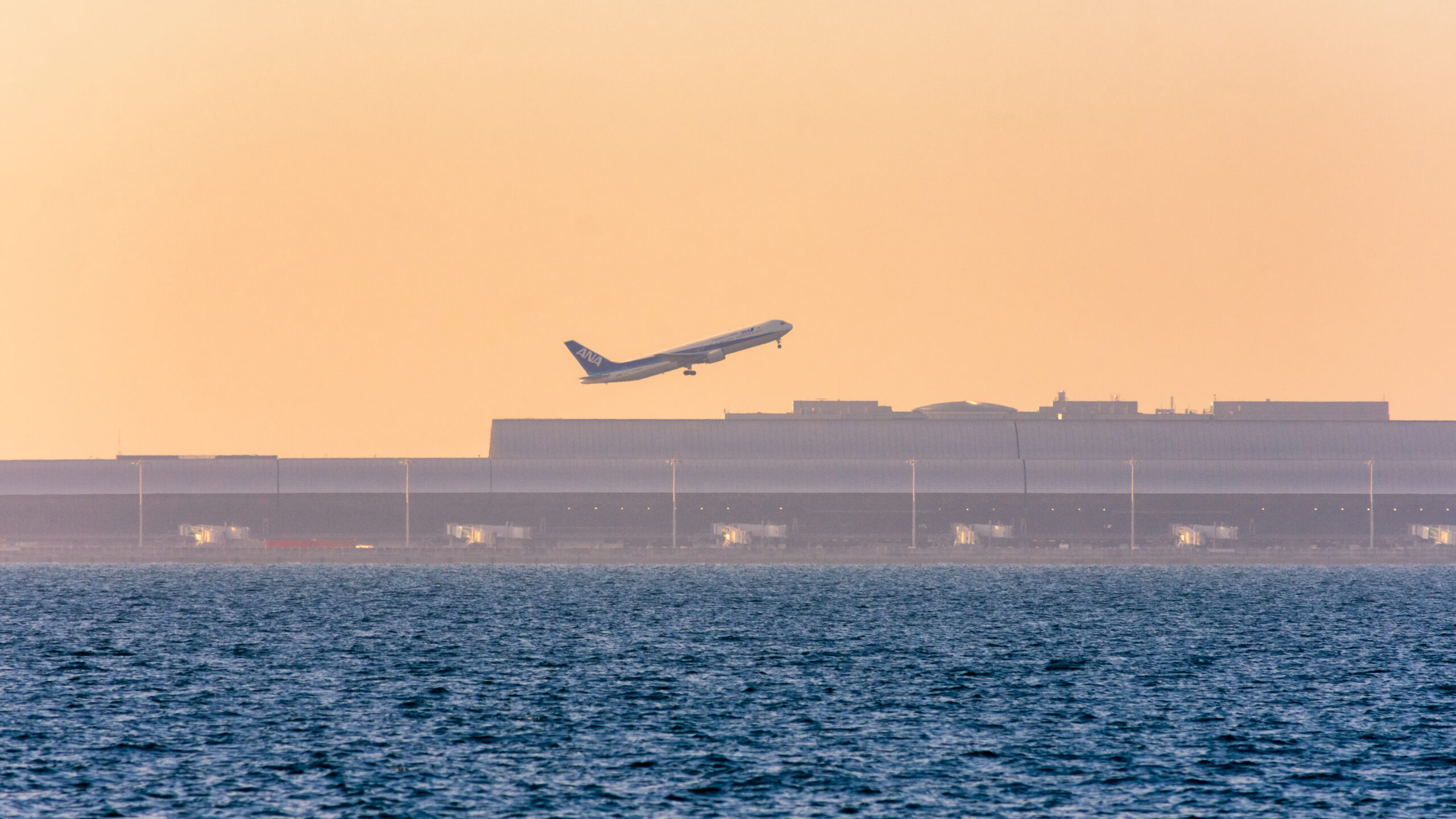
Kansai Airport is a record-breaking airfield. Its terminal is the largest in the world. It also holds the coveted distinction of being the airport that has never lost a suitcase. In fact, in 2024, it received one of the World Airport Awards from Skytrax precisely for its excellent baggage management: not only does it never lose luggage, but it also manages to get it onto the baggage claim belt within 15 minutes after the plane lands.
However, what is truly impressive is that it manages this despite its enormous scale of operations. It is open 24 hours a day and is a key hub for both international and domestic air traffic in Japan. Official statistics from the company that manages it report that 28 million passengers pass through its facilities each year.
However, what makes this airport headline-worthy is that the artificial island it sits on is gradually sinking into the sea.
Why build an airport at sea
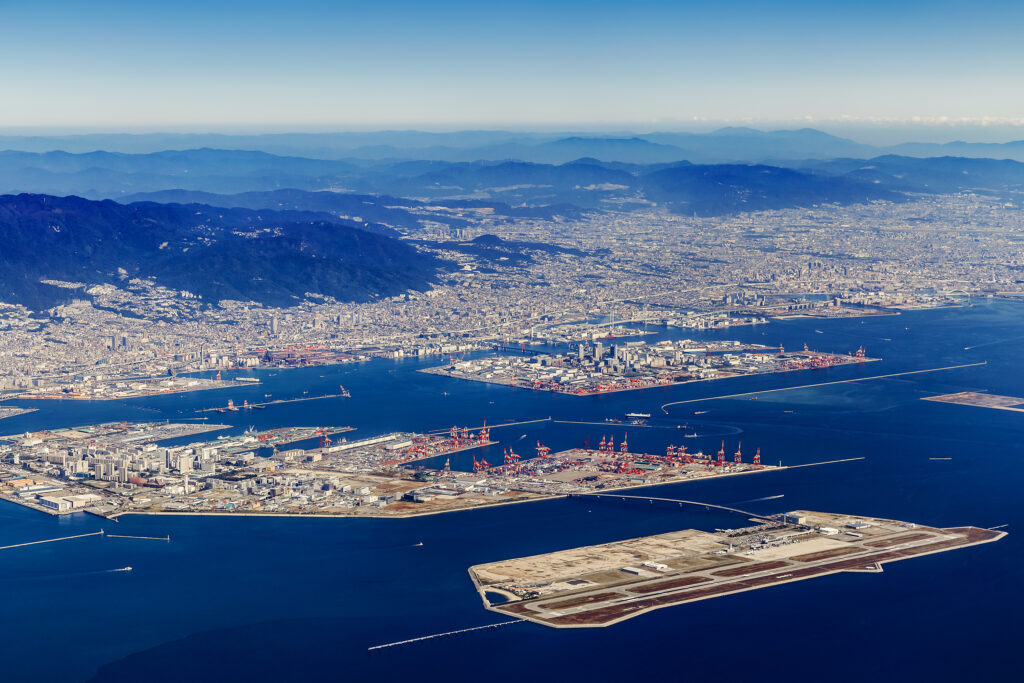
At the dawn of commercial aviation, the idea of building airports at sea was not exactly surprising. In the 1920s, there were plans for seaplane airports, where planes would land on water, intended to create networks of destinations across key areas. However, the story of Kansai International Airport is much more down-to-earth, and the reasons it was built in the ocean have more to do with 20th-century air traffic congestion than with the futuristic ambitions of a century ago.
Osaka International Airport, also known as Itami Airport, had reached its traffic limit. It was already congested in the 1960s, but expansion was impossible due to the surrounding urban environment (the airport was too integrated into the city and surrounded by buildings) and local noise pollution regulations. The decision was then made to build a new airport in a location where it was assumed it would bother no one: in the sea.
The idea of placing an airport in Osaka Bay was futuristic and innovative, but it required a solid structure to support it. In other words, the airport needed firm ground. While other sea-based construction projects have used floating islands, Kansai Airport was built on artificial (and real) islands. Initially, it was a single island, constructed over a decade in the 1980s by dumping materials onto the seabed.
The problem lay in the seabed itself, which had a top layer of clay that would give way under pressure. The initial project was aware of this, but estimates suggested the process would be slow enough to be manageable. This was not the case: reality did not match the projections, and the island began sinking much faster than expected. In its first eight years, it sank 12 meters, forcing the project to be adjusted to slow the process.
Kansai Airport thus became one of the most expensive construction projects in the world. Some estimates indicate that by 2008, around $20 billion had been invested in building the islands and the airport and, above all, in preventing the sea from swallowing them.
How to solve the problem
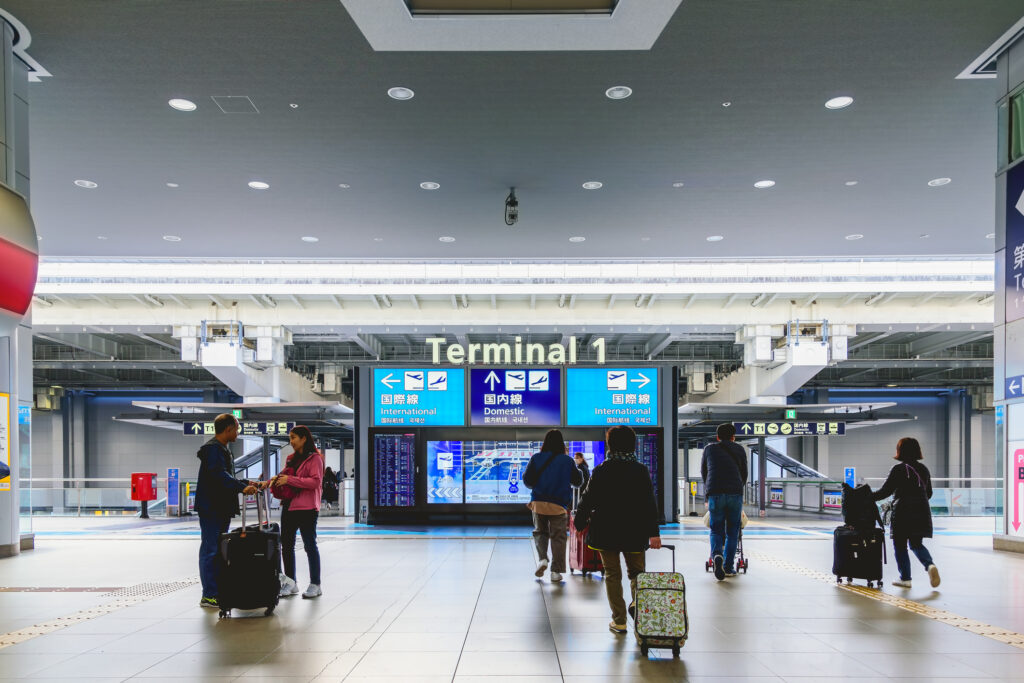
But why not abandon an airport that is sinking along with the artificial island it sits on? Right now, that would be impossible. Kansai Airport is one of Japan’s main air hubs, so engineers and innovators have focused on solving the problem rather than throwing in the towel. In fact, since its opening in 1994, the airport has already been expanded.
The solution has relied on technology, both to monitor the situation and to slow it down. They use monitoring systems that collect real-time data and help predict what will happen. Pumping systems are also employed to redirect water pushed onto the island by waves and to remove water from the airport’s surface during heavy rains. The long-term goal is to change the seabed foundation on which the island rests. They therefore also pump sand from the seabed to help the clay harden more quickly, as explained on the airport’s official website.
All the information generated by this airport helps to better understand the challenges of this type of construction and has already been applied to another airport project in Japan, Chubu Centrair International.
When will Kansai Airport sink into the sea?
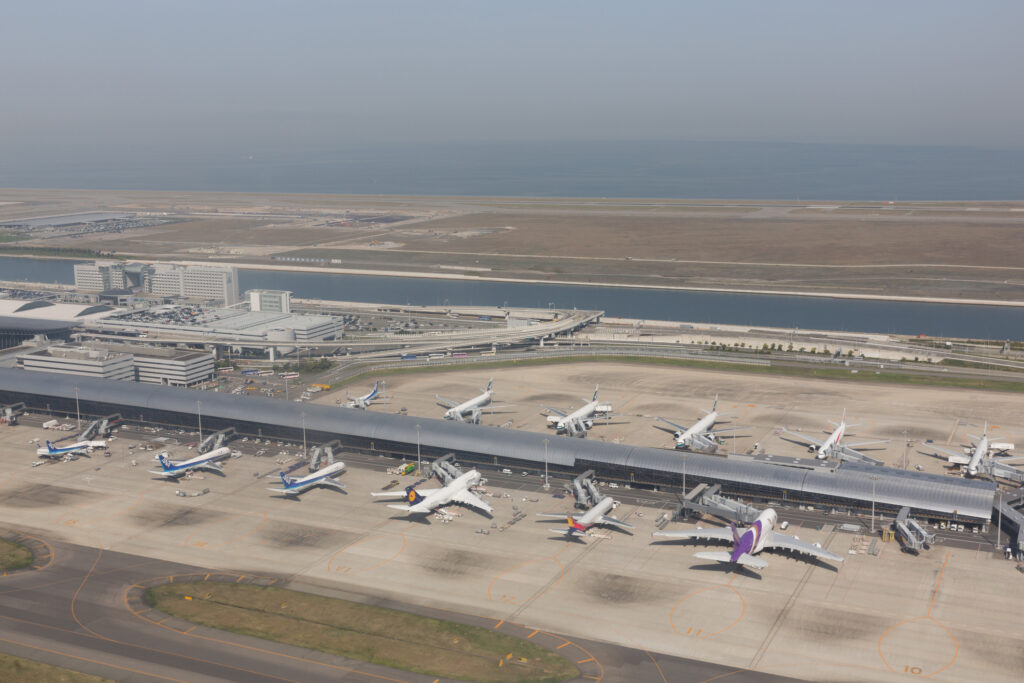
The big question is whether it will be enough. A 2015 study conducted by American engineers (and criticized by their Japanese colleagues, who felt it did not consider the measures being taken to slow the trend) predicted that the infrastructure will eventually succumb to the waters: by 2058, at least one of its two runways will be submerged. As one of the airport’s officials told The New York Times, it could happen even sooner due to the effects of climate change.
Sinking into the sea is not the only problem
This last point is important because sinking due to its very construction is not the only challenge facing this artificial island. Located in an earthquake-prone area, Kansai Airport and its artificial island must be resilient to seismic events, and practical experience has already shown that they are. The Fukushima experience underscored the need for Japan to be prepared for disasters.
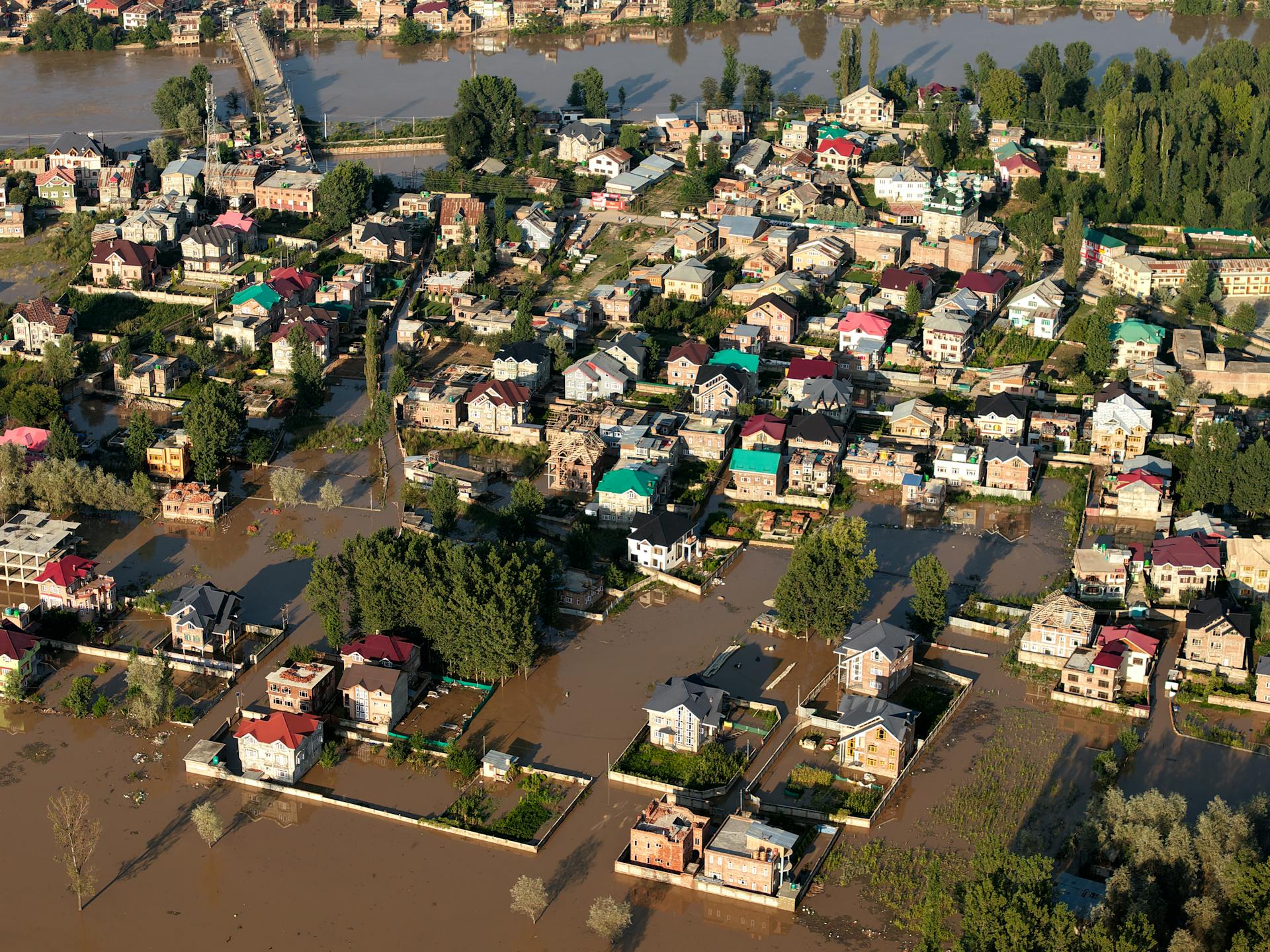
Its situation with typhoons is even more complicated. In 2018, Typhoon Jebi hit the airport particularly hard, flooding the terminal and causing seawater to invade the runway. A ship collided with the bridge connecting the airport to the mainland, damaging it and leaving passengers in a precarious situation. As one traveler told the press at the time, “we were trapped.” As extreme weather becomes more common due to climate change, the airport will likely face similar challenges in the future. Adapting to climate change is one of the major challenges for 21st-century cities.
Similarly, the effects of Typhoon Jebi were seen as a warning not only about extreme weather but also about the potential cost of rising sea levels. In this, Kansai Airport is not alone. A quarter of the world’s busiest airports sit just 10 meters above sea level, according to a study by Airports Council International and OpenFlights.
Photos | coward_lion/iStock, winhorse/iStock, Torjrtrx/iStock, Mirko Kuzmanovic/iStock