



Autor | Jaime Ramos
In a very short period of time, the concept of generative artificial intelligence has inundated media and social media platforms promising a revolution, particularly in terms of content generation, from academic and functional content to creative and artistic content. Although this is its most visible aspect, the implications of its development go beyond this. How can it affect cities?
What is generative artificial intelligence?
Generative artificial intelligence is a form of artificial intelligence focused on the production of content under unique criteria and parameters. As they are built on the basis of automated learning, they constitute autonomous, plastic and evolutionary digital models that learn and are able to train by themselves and self-perfect their answers.
Some of the leading and most well-known examples of generative artificial intelligence are ChatGPT, Bing AI, Dall-E or Midjourney, content generators capable of emulating centuries of human artistic work in seconds to create original images, music, text or videos.
How are generative artificial intelligence models developed?
In simple terms, they are structured around algorithms which, when a series of inputs or prompts are introduced, generate tailor-made output. To do so, they are based on the methodology known as deep learning.
These machine learning algorithms have conquered the complex and platonic route of designing neuronal network systems capable of resembling human representative models and "adopt them as their own". If machine learning functions under human imposed criteria, deep learning allows generative AI models to no longer need humans to give external instructions on how to do their tasks.
Artistic and image generating generative AI: how it works
A perfect example of this is the now popular AI image generators. These break down the information we give them, their basic elements, they process the patterns used in their creation and are capable of autonomously applying a whole host of new formulas to reformulate the result.
Midjourney or Dall-E are very easy to use. Users provide a bot with a series of words that function as a prompt to produce an image. Based on this, the AI first codes the information. It then processes the information to determine the characteristics of a new request and decodes the message creating new images.
Generative AI and smart cities

These trends have now started to change the way art is understood, with a direct impact on professional circuits of major cities. Apart from this, the expected urban implications are somewhat theoretical, but promising.
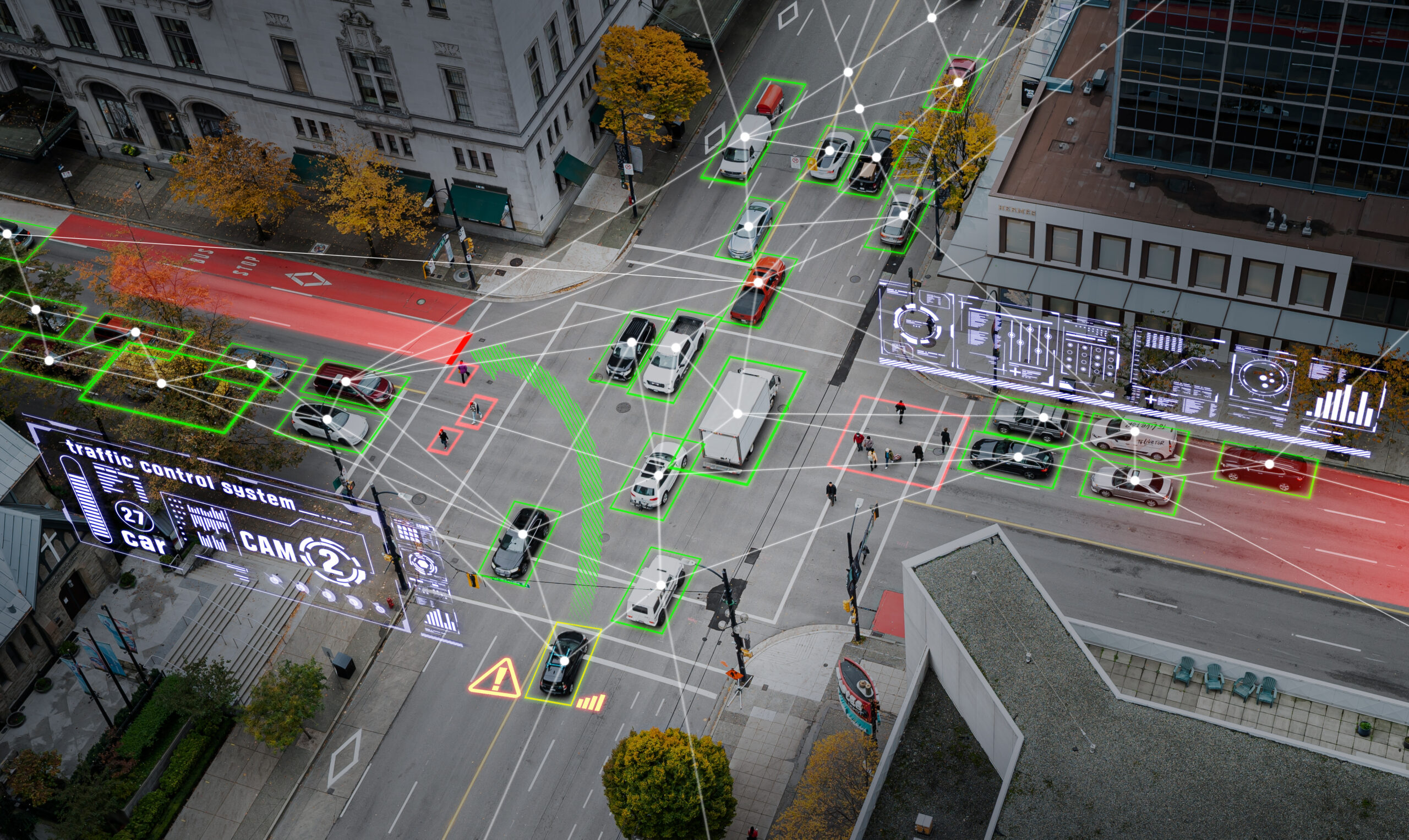
The potential introduced by these generative tools is encouraging because they could complement the work of planners and engineers in cities.
Benefits and urban limitations of generative AI
For example, in terms of designing green public areas or transport networks, they have the potentialto make decisions based on empirical analysis thanks to a vast amount of information that takes into account a whole range of factors: from soil quality to other more complex and qualitative factors, such as the effects on communities.
This report by American researchers highlights what can be gained by developing more creative and sophisticated urban models, with algorithms that take energy efficiency to a new level, or tools that allow interaction between AI and planners. They conclude that, "AI-assisted urban planning offers an innovative solution to create sustainable, resilient, and equitable urban spaces".
However, the legal and transparency framework also needs to be strengthened so that generative AI can be applied in cities in a balanced manner and we can guarantee the benefits of its potential.
Images | Freepik/freepik, Freepik/tohamina