Table of Contents
Author | Elvira Esparza
Generative artificial intelligence plays a pivotal role in the development of smart cities, offering innovative solutions across a wide range of sectors. Linker Vision, through its GenAI Observ platform, is leveraging Vision Language Models (VLMs) and Large-Scale Vision Models (LVMs) to develop cutting-edge applications. These technologies power AI-driven video analysis agents, offering transformative solutions for smart cities. The goal is to improve city living through advanced analysis and intelligent systems.
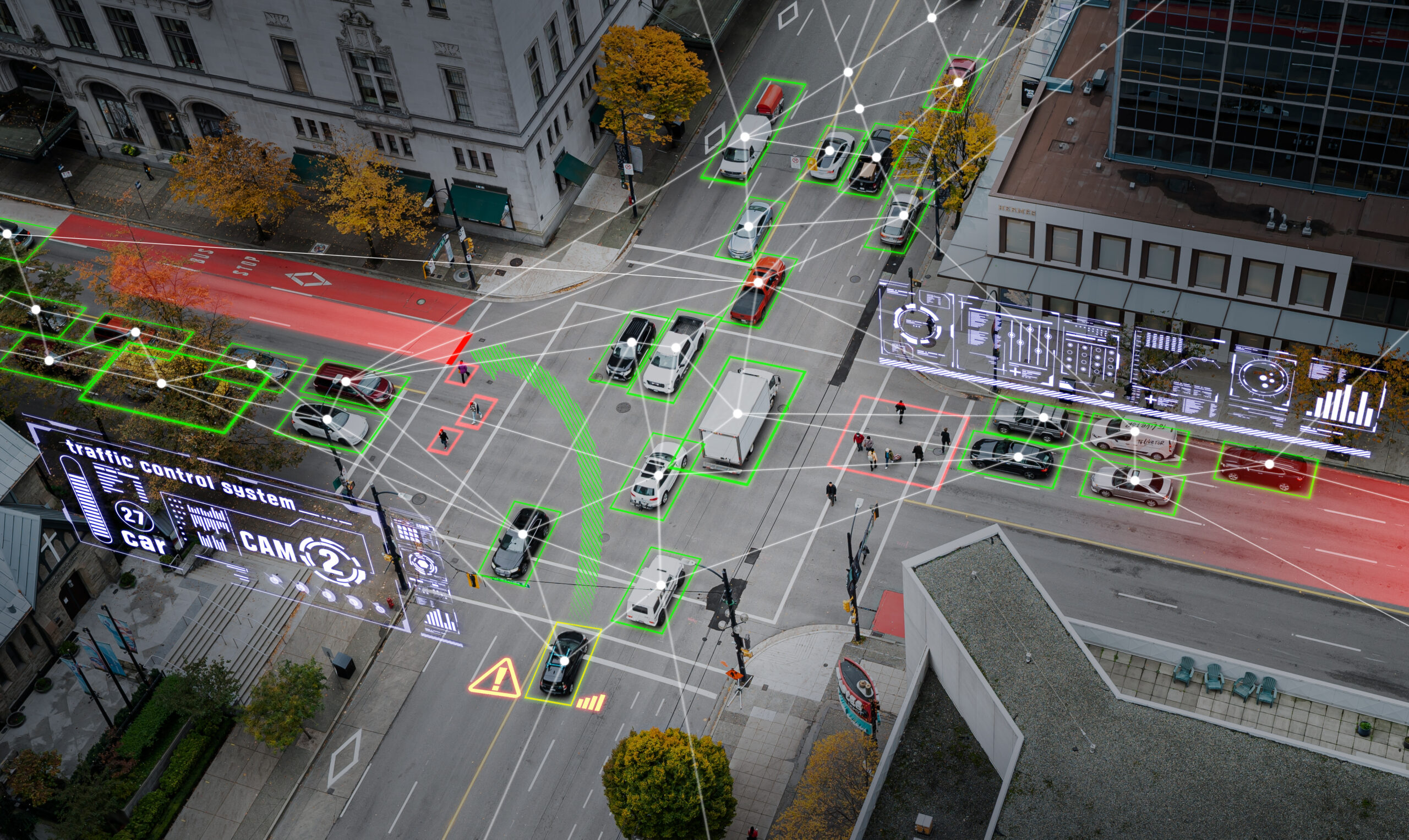
The Observ platform’s video analysis system integrates with NVIDIA AI Blueprint to enable video search and summarization, leveraging large language and vision models for advanced image analysis. These tools can perform customized analyses based on user-defined subtitle instructions, generating structured results through Linker’s Observ inference system. These technologies enable the Observ platform to process vast amounts of data in real time, with applications in smart transportation, industrial monitoring, and incident prediction.
Smart transportation
VLMs are AI-driven systems capable of handling tasks that combine images and text, including image captioning, visual question answering, and text-to-image generation. The advantage of VLMs is their unified approach while, previously, these tasks required separate and specialized models.
LVMs are AI-driven systems specifically designed to analyze and interpret visual information, including images and videos at large scale and with high precision. They leverage deep learning and extensive datasets to generate highly accurate and reliable results. LVMs have the capacity to seamlessly integrate visual information with other modalities, such as natural language and audio, enabling a holistic understanding of data.
Linker has demonstrated that VLM and LVM technologies facilitate smart decision-making and provide intelligent support for smart transportation. The GenAI Observ platform, for example, utilizes VLM technology to power intelligent traffic systems, enabling real-time traffic image analysis. The system can identify accident types, coordinate emergency responses, and suggest optimal access routes. By leveraging AI-powered analysis, this technology reduces incident response times and enhances collaboration between agencies.
Generative AI applications in smart cities
Generative AI applied to urban planning creates sustainable designs, including energy-efficient buildings, resilient infrastructure capable of withstanding natural disasters, smart transportation networks to reduce pollution, and accessible public spaces that enhance livability.
These are some examples of applications of generative AI in smart cities:
Access to city services
In Kelowna, Canada, generative AI is being used to enhance access to city services and provide residents with a better understanding of construction permit regulations. By streamlining processes, the technology improves efficiency, transparency, ethics, and security.
Previously, residents interested in building on their land had to visit the City Council in person to consult with an agent about zoning laws and permit regulations. Now, thanks to the Zammo application powered by Azure, residents can access all specific documentation for their property online. The generative AI tool guides applicants through the permit approval process, streamlining procedures and accelerating the development and sale of homes and apartments.
Digital twin cities

Singapore has implemented digital twin technology to develop Virtual Singapore, the world’s first-ever fully integrated virtual replica of a city. It replicates the entire city, including buildings, roads, and public services, while integrating environmental data and pedestrian traffic patterns. The digital twin is continuously updated to reflect real-time changes in the city. This assists authorities in urban planning, disaster management, and resource allocation. The goal of this digital twin is to enhance sustainability adapting to a growing population within Singapore’s limited space.
Digital twin cities enable the development of strategic and efficient responses to the city’s needs, based on available resources, while also allowing for simulations to assess the impact of public policies, infrastructure changes, and emergency management. Infrastructure, transportation, and public services can be monitored in real time, enabling greater maintenance and efficiency. These systems enable the projection of urban tree cover, the development of new city plans, disaster simulations, and traffic analysis. For example, construction projects, infrastructure changes, and new services can be analyzed in advance to assess their impact on residents’ lives, ensuring better planning and enhancing urban livability before implementation.
Autonomous trucks
In the United States, the cities of Dallas and Houston are leveraging generative AI to improve mobility, including the deployment of autonomous trucks trained with AI-driven technologies. These autonomous vehicles are equipped with LiDAR sensors, which measure the distance to objects and continuously generate a 3D map of the vehicle’s route. This enables them to predict events up to 10 seconds ahead. These AI-powered autonomous trucks help reduce supply chain delays, lower carbon emissions, and address labor shortages.
Citizen information
In 2019, Buenos Aires launched Boti, a WhatsApp-based chatbot that has become the city’s primary communication channel, with an average of 5 million conversations per month. Using generative AI, Boti processes user messages and provides accurate, real-time responses to their queries. Boti provides information on urban mobility, recycling, health, security, culture, events, public spaces, and tourism.
During the pandemic, Boti served as the official government channel for vaccination campaigns. Today, it has expanded to include social assistance services and information on shared bicycle programs.
Images | Linker Vision Alesia Kozik