



Author | Lucía Burbano
Artificial intelligence is broadly transforming smart cities: it optimizes services, manages resources, and anticipates potential problems in real time. Through data analysis, digital twins, and predictive systems, AI improves mobility, energy, waste management, and citizen participation, turning cities into more efficient, sustainable places focused on the needs of their residents.
What Is the Role of AI in Smart Cities?

Artificial intelligence (AI) plays a fundamental role in the creation of smart cities due to its ability to transform large volumes of data into information that substantially changes the urban management paradigm.
Its scope of application is as broad as one can imagine, improving the management of public health, the production, supply, and consumption of resources such as water and energy, sanitation, security, and even social policies.
Definition and scope: beyond automation to intelligence
Beyond automation, it is intelligence that allows AI to learn, reason, and adapt, giving it real strategic value. Unlike automation, intelligence focuses on decision-making and is characterized by:
- It is based on data and probabilities.
- It is context aware.
- It is predictive and adaptive.
- It constantly improves through learning.
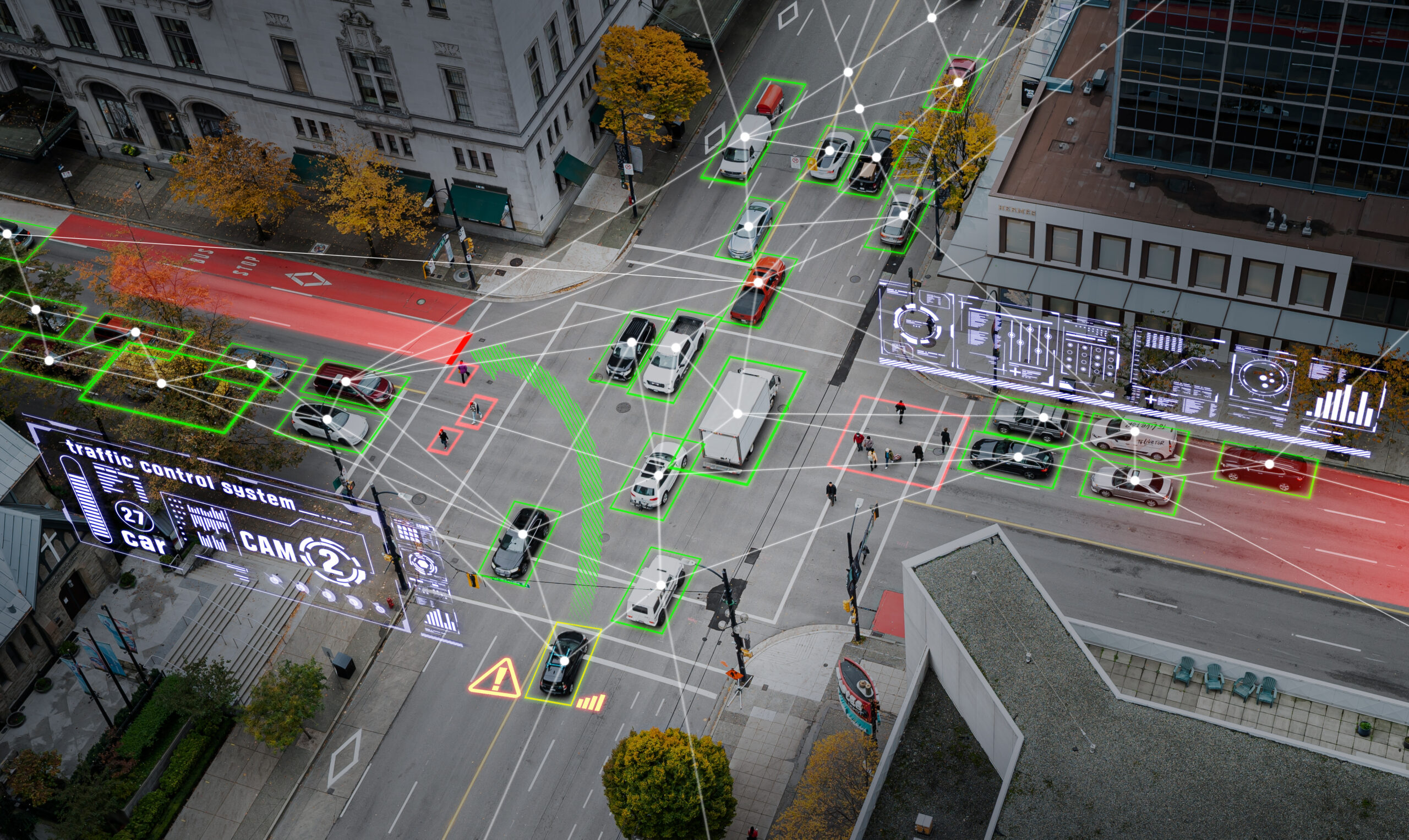
For example, an AI-powered traffic system can predict congestion 20 minutes in advance, dynamically adjust signal timing, reroute traffic, and learn from its own experience.
Why AI is essential for data-driven urban planning
AI is essential for urban planning because, unlike traditional analytical tools, it enables cities to turn complex, large-scale data into actionable information, forecasts, and decision-making support.
Key applications of AI in urban development
Machine learning for traffic, mobility, and logistics
Machine learning is essential in traffic, mobility, and logistics, because, although these are dynamic and highly interdependent systems and activities, they have traditionally been managed statically. AI changes this by enabling optimized real-time predictions and adaptive decision-making.
In the case of traffic, machine learning models learn patterns from traffic sensors, cameras, GPS signals, and historical data to predict and manage traffic flow.
For mobility, it helps understand how people move, why they choose certain modes of transportation, and how demand changes over time.
Finally, urban logistics involves deliveries, service vehicles, waste collection, and emergency response. Machine learning optimizes routes and scheduling, improves last-mile delivery efficiency, and manages sidewalks and loading and unloading zones.
AI in energy efficiency, waste management, and resource use
In energy efficiency, AI is applied to smart grids, smart building management, and forecasting energy demand based on patterns related to weather, events, and user behavior.
In waste management, AI improves the collection, sorting, and processing of waste, while also reducing emissions through optimized collection routes and automated waste sorting. According to this study, AI can also reduce operational costs by up to 30%.
Regarding resources, it enables intelligent water management by detecting leaks in pipes through sensor analysis and optimizes agriculture and urban parks through soil management, adjusting irrigation and fertilization.
Predictive analytics for public safety and emergency response
In public safety, AI-based predictive models help cities anticipate crime. For example, the Los Angeles Police Department uses predictive policing software (PredPol) to forecast where crimes are likely to occur based on historical crime patterns.
In the field of emergencies, AI predicts natural disasters such as floods, hurricanes, or wildfires using satellite imagery, sensor networks, and weather data. Its real-time capabilities also help prioritize emergency response routes and allocate hospital resources.
AI-driven governance and citizen engagement
AI enables municipal governments to analyze citizen feedback, optimize services, and enhance transparency, moving toward more responsive and inclusive governance. Applications such as virtual assistants and chatbots handle citizen requests 24/7.
User-Centric and Sustainable AI Innovation

The goal is to design AI systems that meet users’ real needs, are accessible, transparent, and reliable, and enhance human decision-making rather than replace it.
A sustainable approach ensures that AI development and operation minimize environmental, social, and economic costs, including energy consumption, carbon footprint, equity, and long-term social impact.
Designing equitable, transparent and ethical AI for cities
This involves AI that serves all citizens, especially vulnerable populations, while respecting privacy, civil liberties, and social norms. To avoid bias, it must be trained on diverse and representative data.
Additionally, AI tools and services should be accessible to people of all abilities, languages, and socioeconomic backgrounds.
Tomorrow.City’s unique approach
Showcasing global AI use cases in urban transformation
With a global reach that connects cities, industry, and technology providers across continents through its various digital content divisions and events such as conferences, exhibitions, and networking, Tomorrow.City is a benchmark for cities that embrace both challenges and opportunities.
Within the broad field of AI, this global network also connects stakeholders and showcases innovative examples related to this technology.
How to choose AI solutions for smart cities

To address this question, urban objectives must first be established based on the following criteria:
Scalability
The ability of an AI solution to grow in scope and data volume without losing performance, adapting to the city’s development or the complexity of its urban system.
Interoperability
When AI systems and their components can communicate, share data, and work with other urban platforms and services.
Ethical Standards
Ensure that AI solutions respect human rights, privacy, transparency, fairness, and accountability.
Common mistakes to avoid in AI-based projects
- Incomplete, biased, or low-quality data.
- Lack of clear and measurable objectives.
- Limited interoperability.
- Ignoring ethics, transparency, and fairness.
- Underestimating technical complexity and costs.
- Lack of citizen engagement.
The future of AI in smart cities

Generative AI
AI systems capable of creating new content from existing data and contributing to the planning, simulation, and design of intelligent urban solutions.
Edge Computing
Improves AI response times in critical applications such as managing autonomous vehicle traffic.
Digital Twins
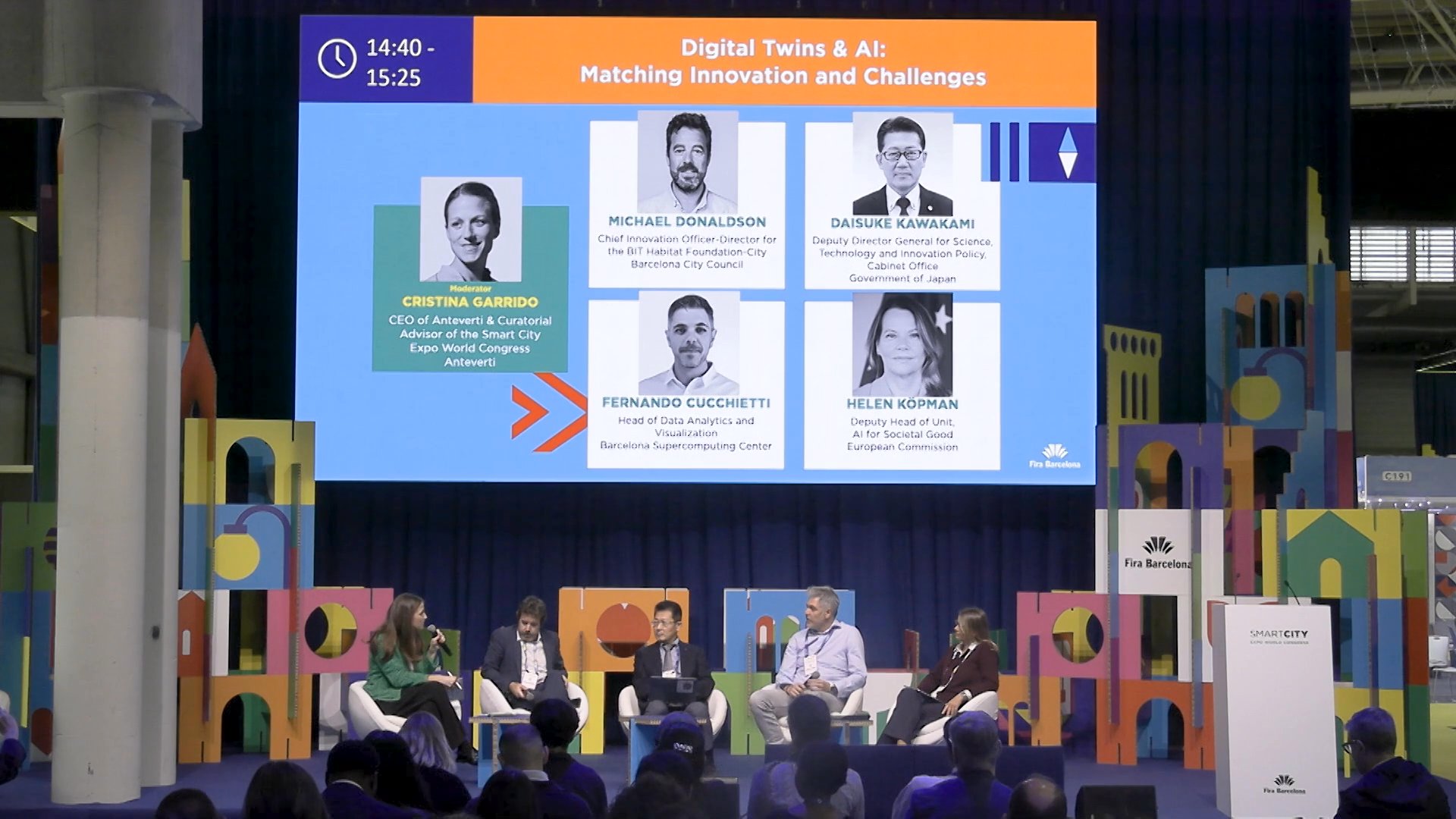
Dynamic virtual representations of cities will continue to be implemented globally. A recent analysis indicates that up to 70% of large cities could use digital twins by 2030.
The role of Tomorrow.City in accelerating AI-driven urban change
Tomorrow.City serves as a global platform that turns knowledge about AI and urban technologies into concrete action, connecting governments, companies, and experts to accelerate the transformation of cities toward smarter, more sustainable, and inclusive models.
Images | Freepik/rawpixel.com, Freepik/stockgiu, primeimages/iStock, alvarez/iStock, XH4D/iStock