Cities are not ready (yet) for self-driving cars: these are the key aspects holding them back

Why are our cities not yet ready to welcome self-driving cars? In this post we tell you all about it and analyze what progress we still need to make.
The challenge of redesigning cities to adapt to an ageing population

Urban environment is primarily designed for young people of working age. How are cities meant to cope with an ageing population?
City Forest Credits: How much is a tree worth to a city?

City Forest Credits has been listed in Terra50, a new global, pioneering initiative spotlighting the 50 most impactful solutions addressing today’s most pressing climate challenges in cities. This article was written by Ana Villagordo Vegara, Project Manager and Explorer at Terra50. Click here for more details on City Forest Credits. How much is a tree worth? We can calculate […]
Sponge Parks and Digital Twins: Proactive Modeling of Climate Extremes

Water is one of the major concerns facing 21st-century cities. There are many reasons for this: water scarcity has become a burden that has already subjected cities around the world to periods of drought and even water rationing, while major storms and flooding have a negative impact on their infrastructure, businesses, and quality of life. Finding solutions to such a wide range of problems may seem difficult, but this is precisely where sponge cities are emerging as a solution.
Latitudo40: when earth observation helps cities make better decisions
Discover how Latitudo40 uses earth observation, satellite data and AI to help cities identify climate risks, prioritise interventions and make smarter urban planning decisions.
Sovereign Data Spaces: Why Trust Is the New Currency

Sovereign data spaces are a key component in enabling companies, public administrations, and industries to collaborate and exchange data without compromising security, privacy, or ownership of the information. In this context, trust that this data can be managed in accordance with privacy and responsible use standards has become essential.
Circle House: Denmark’s first circular social housing project
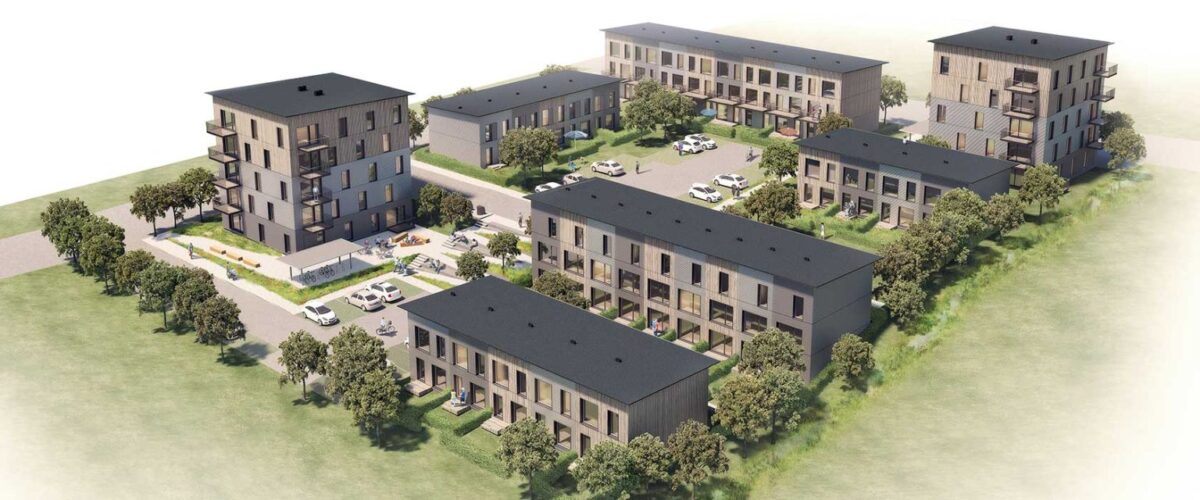
When completed, expected in spring 2027 after several delays, Circle House will mark a turning point in sustainable architecture in Denmark. The project comprises 60 social housing units built in Aarhus, based on the principles of a circular economy. This means, among others, it can be disassembled and its elements can be recycled without losing their integrity.
When Agentic AI Meets the Citiverse: How the Cities of the Future Are Being Planned

Agentic AI is already shaping urban planning. In a short time, we have moved from an Artificial Intelligence model that assisted urban planners to one that researches, simulates, compares, and recommends actions.
Kamikatsu: Why zero waste is about more than recycling

Kamikatsu recycles nearly 80% of its waste without high-tech plants. Discover how citizen participation and civic design, not just tech, make it work.
How the Netherlands Cracked Urban Data Sharing — and Why Europe Should Use It

Europe’s cities can accelerate housing, mobility and climate solutions through trusted urban data sharing. Learn how the Dutch PDX model works.