



Table of Contents
Authors | Esther Fuldauer, Lucía Burbano
Technology is evolving at lightning speed, highlighting the changes taking place across every industry. Robotics, automation, computer based learning, and artificial intelligence have advanced at a pace that has completely transformed sectors such as logistics and manufacturing, where smart factories now integrate processes such as AI driven predictive maintenance, digital twins, and simulation.
Many jobs will see how they benefit from new tools, and new skills will be necessary, but at the same time, many jobs will go. The changes taking place in the workforce are unprecedented and the future of work, uncertain.
The beginning of the Fourth Industrial Revolution
The term “Fourth Industrial Revolution” was first introduced by the founder of the World Economic Forum, Klaus Schwab in 2015 in an article in Foreign Affairs. As with the three other industrial revolutions, the changes will speed up production, but they will also mean significant challenges to people.
Other industrial revolutions were nothing like this one, which has no precedent in terms of speed and breadth of change. Can people adapt at the same pace as technology evolves?
Technological evolution of the Fourth Industrial Revolution
Over the past decade, Industry 4.0 has taken a massive leap forward. So much so that the Fifth Industrial Revolution is already being discussed.
These are the most recent advances experienced by Industry 4.0:
Real world robotics and AI deployments:
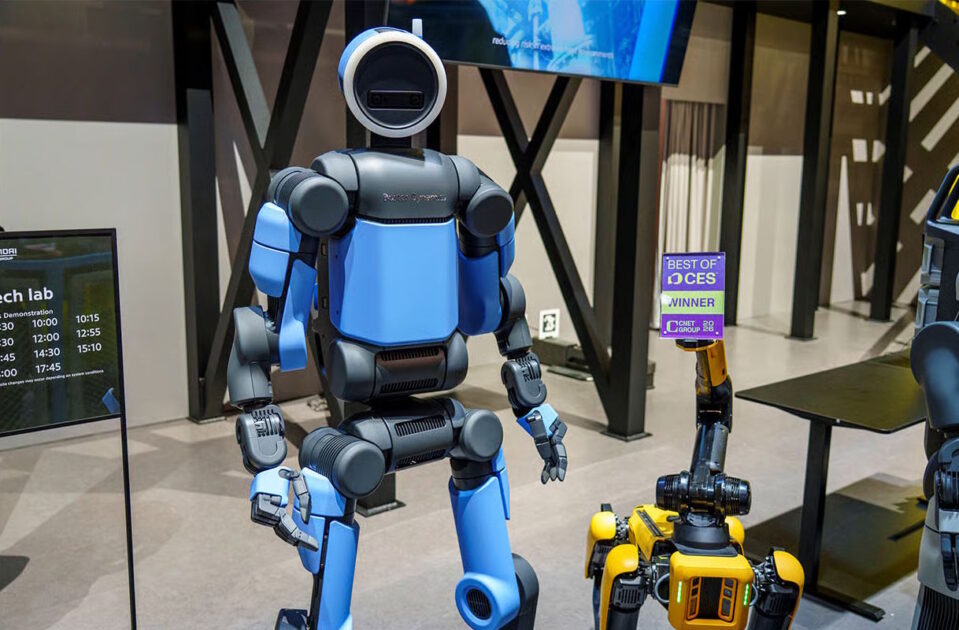
Companies such as Hyundai Motor Company are accelerating their robotics and AI strategy, with plans to deploy their humanoid robot Atlas in US factories by 2028.
Robotaxis, which combine robotics with autonomous driving technology, are becoming increasingly visible in cities around the world.
Impact on industry and the workforce
So confident is he in advances in robotics and AI that Elon Musk predicts they could make traditional work optional within the next 10 to 20 years, highlighting the broad social implications of automation.
In turn, McKinsey foresees a future economy built on collaboration between people and intelligent machines, requiring new skills and new work models.
Finally, it is worth noting that global demand for robots in factories is doubling as they take on routine manual production tasks such as machine maintenance, various assembly line operations, packaging and palletizing, and loading and unloading materials. Asia, especially China, is leading this growth.
Market trends and deployment in Industry 4.0
Industrial robots now exceed 4 million units in operation, with installations steadily increasing due to falling costs and enhanced AI capabilities that improve flexibility and autonomy.
Service models and robotics as a service are reshaping the economy, as robotic platforms are increasingly offered through subscription based models (RaaS), lowering barriers to entry and accelerating real world adoption.
This shift is driven by labor shortages, rising operating costs, and rapid advances in computer vision, AI models, and automation infrastructure.
Companies that have successfully moved from prototyping to full scale deployment are shaping the early robotics as a service ecosystem, a business model in which automation is delivered through subscriptions or usage based services rather than direct hardware sales. This approach reduces upfront costs for users while generating recurring revenue for providers.
Growth of automation in warehouses and logistics
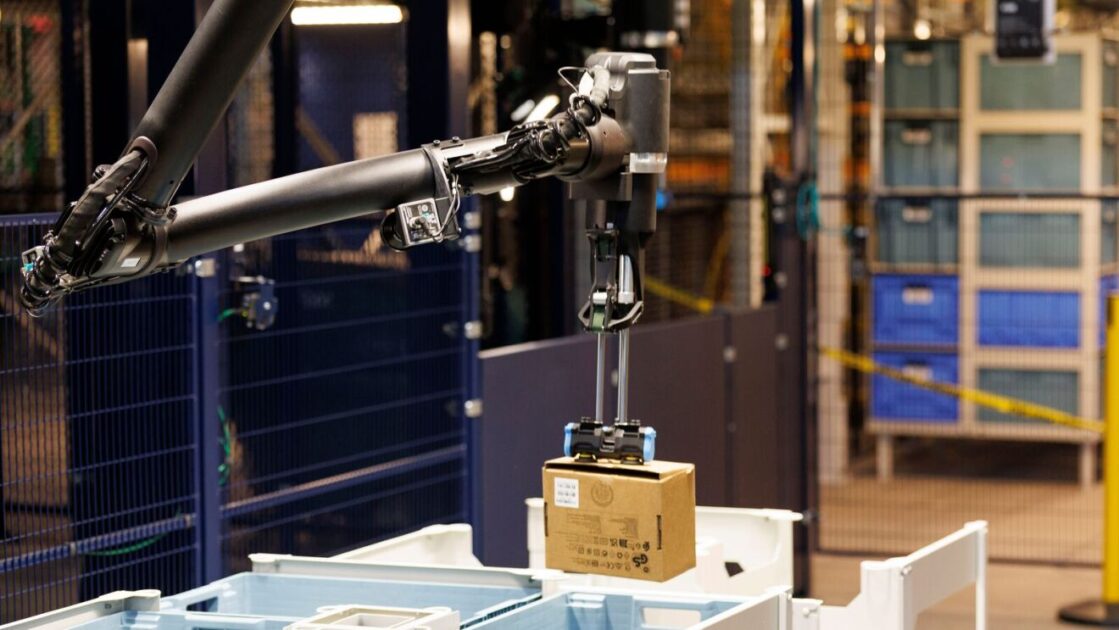
Distribution centers are transitioning from manual operations to highly automated, AI driven environments, where fleets of autonomous mobile robots and automated guided vehicles handle the movement, picking, sorting, and palletizing of goods with minimal human intervention.
Advanced computer vision systems and machine learning algorithms enable robots to identify items, optimize picking routes in real time, and adapt to changing inventory conditions, while warehouse management systems integrate operational data to balance workloads and reduce bottlenecks.
The tax incentive to devise new strategies
In recent years, there has been a vast stagnation of incomes for workers and households. Since advances in AI and robotics tend to reduce employment rapidly, it also looks inevitable that there will be a severe erosion of tax revenue coming from workers.
Take Amazon as an example. Its pursuit of productivity has driven it to expand automation and the use of robots, as well as to refine its ability to avoid taxes. Although it has the largest workforce in North America, they are also pushing robotics to replace the workforce.
In 2013, Amazon had 1,000 robots; just three years later, that number had risen to 45,000. By mid-2025, the figure had reached one million. And although the company is currently undertaking one of the largest re-skilling initiatives ever conducted, the trend is clear: more robots and fewer people in warehouses. And fewer workers mean lower tax revenues.
How can states recover the possible loss of tax revenue that AI and robotics may cause while improving income distribution? Countries will need to consider whether robots should also be taxed, as companies could otherwise easily avoid taxes through automation.
And If people are not going to work to pay taxes, countries will need to make sure that there is a fair distribution of wealth. Governments will also need to make sure that there’s a chance for everyone, perhaps with the aid of a universal basic income. Entrepreneurs such as Elon Musk, Mark Zuckerberg, and the venture capitalist Marc Andreessen have all expressed support for the idea.
FAQs about robots, AI, and automation in the Fourth Industrial Revolution
What is the Fourth Industrial Revolution?
It is the integration of AI, robotics, IoT, and data into production processes to create intelligent, connected, and automated systems.
Will robots replace workers?
No. They automate repetitive tasks, but they also create technical jobs and shift skill requirements to meet evolving labor market demands.
Which sectors are most affected?
Primarily manufacturing, logistics, automotive, healthcare, and ecommerce.
What are the benefits of automation?
It increases productivity, reduces errors and costs, and improves safety by eliminating hazardous tasks.
Which skills will be most important?
Digital skills, data analysis, critical thinking, and human skills such as creativity and communication.
Images | Hyundai, Amazon, Unsplash