



Table of Contents
This article was originally published by the World Resources Institute Ross Center for Sustainable Cities. It has been updated and republished here with permission. Written by Aklilu Fikresilassie, Hellen Njoki Wanjohi-Opil, Eden Takele and John Nduru.
The thirteenth session of the World Urban Forum (WUF13) convenes last month in Baku amid converging geopolitical and economic shocks: conflict-driven energy spikes, rising debt burdens and persistent inflation. Around the world, these shocks are squeezing public budgets and household incomes alike.
The crisis is felt most sharply in the Global South. The International Monetary Fund has downgraded growth forecasts for emerging economies, warning of a prolonged period of instability as countries grapple with higher costs of food, fuel and finance. What has emerged is what many policymakers now describe as a “permacrisis“: a cycle of overlapping disruptions that erode the fiscal and institutional capacity needed for long-term investment.

Nowhere is this more visible than in cities. Globally, housing costs have outpaced incomes, turning shelter into one of the sharpest edges of the cost-of-living crisis. In fast-growing African cities, the consequences are especially stark: rising rents, expanding informal settlements, and increasingly unsustainable commutes that redefine access to opportunity. Across the continent, workers are being priced out of central areas, enduring hours-long daily travel as formal housing markets drift further out of reach.
It is in this context that the Nairobi Declaration was recently adopted by the African Union at the Second Africa Urban Forum (AUF2). Unanimously adopted by member states, the Nairobi Declaration signals a much-needed shift from aspirational urban policy toward measurable, time-bound implementation on housing, infrastructure and urban finance, reframing housing and urbanization as central to structural transformation.
The Declaration’s core contribution is its focus on execution amid the housing crisis plaguing the continent, with African governments committing to “measurable, time-bound action” on affordable, inclusive and climate-resilient housing, while embedding urbanization within fiscal frameworks, national development plans and investment strategies.
This is a decisive departure from fragmented, sectoral approaches that have long undermined the effectiveness of urban policy across the continent. Below, we outline four elements that stand out for Africa’s strategic positioning on the global stage at WUF13.

Housing as Economic Infrastructure
By linking land reform, infrastructure provision and capital markets, the Nairobi Declaration recognizes that housing delivery is inseparable from macroeconomic policy and financial systems. This aligns with growing evidence that Africa’s housing deficit is a systemic coordination failure across land, finance and governance. As such, Africa is likely to push for a reframing of housing within global development finance as a growth multiplier at WUF13.
Together with UN-Habitat and the Lincoln Institute for Land Policy, WRI is contributing to The State of African Cities Report 2026, which includes the latest assessment of land valuation tools from more than 10 African cities and analyzes how these tools are helping provide much-needed boosts to municipal financing.
Multi-Level Governance and Fiscal Decentralization
The Nairobi Declaration positions cities as investment actors, requiring predictable fiscal transfers, creditworthiness and access to capital markets. This is a critical intervention in global urban discourse, which has often underplayed the institutional constraints facing cities in the Global South. Africa’s stance is clear: without empowered municipalities, the New Urban Agenda cannot be implemented.
Cities’ voices and their role as frontline responders in the climate crisis must be centered within national and global agendas, including NDCs and COP processes. Platforms such as CHAMP — a coalition for greater multilevel cooperation in producing countries’ climate plans — offer a valuable opportunity to ensure that much required financing for climate-resilient housing and infrastructure can flow downwards to subnational governments, including cities. In Africa, CHAMP is set to support subnational governments in Kenya to accelerate access to municipal climate finance.
Elevating Informality
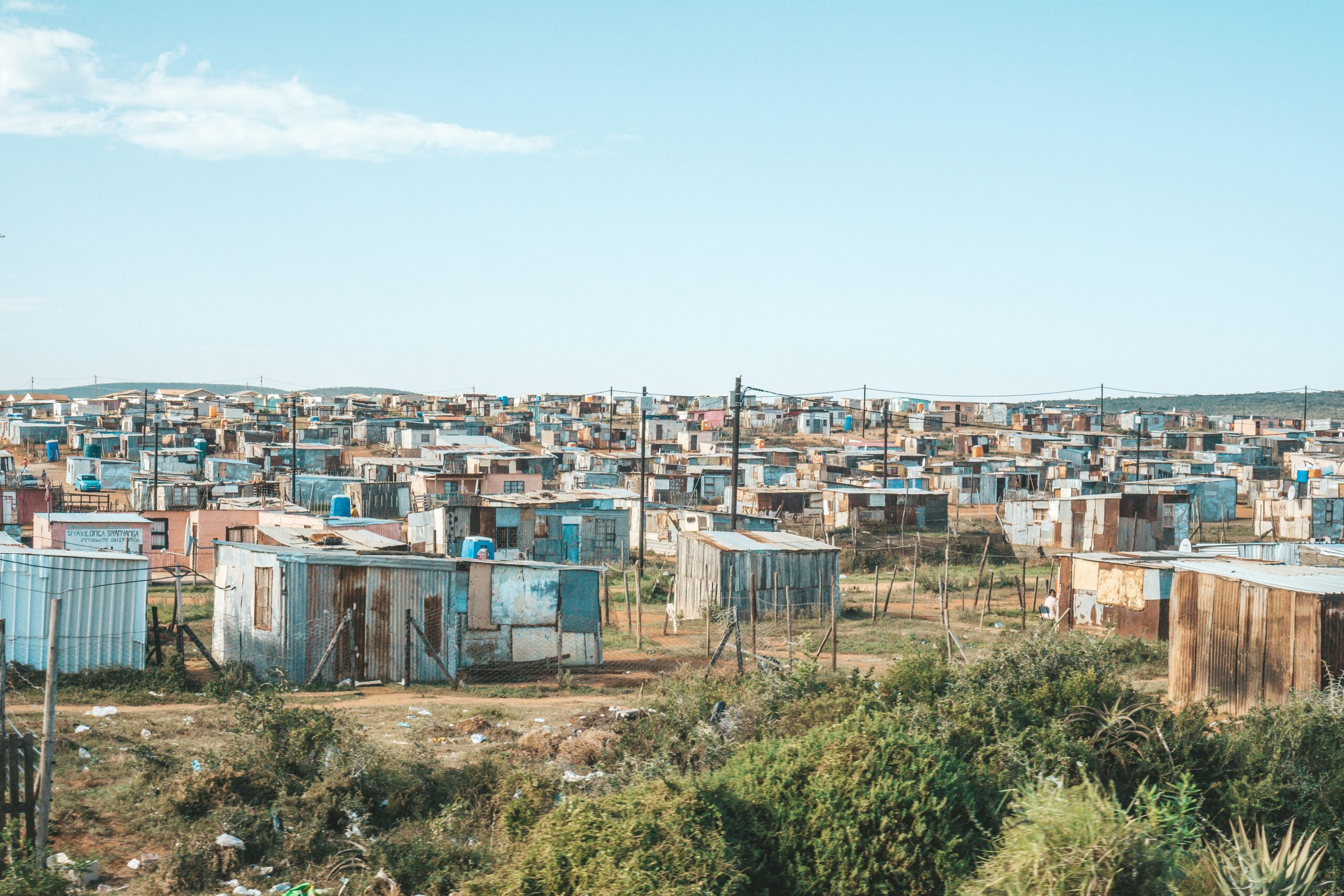
By underscoring the critical role of informality, the Nairobi Declaration aims to advancing thoughtful, data-driven actions to mitigate its challenges while maximizing its opportunities. The Declaration features a special focus on informal settlements and calls for their integration into planning systems through tenure security, participatory upgrading and targeted investment.
This positions Africa to challenge dominant planning paradigms at WUF13 that remain overly reliant on formal, capital-intensive models ill-suited to rapid urban growth. Platforms such as the REHOUSE (Resilient, Equitable Housing, Opportunities and Urban Services) initiative are bringing together the sector’s biggest players to shift the global conversation around informality.
WRI champions climate change adaptation and mitigation actions that reduce risks and expand opportunities for the most vulnerable through initiatives such as Scaling Urban Nature-Based Solutions for Climate Adaptation in Sub-Saharan Africa (SUNCASA). Through this initiative, WRI and partners work with cities across the continent to build resilience to climate change and improve quality of life for the urban poor.

Better Data for Better Systems
Fourthly, the Declaration responds to a longstanding gap in African urban policy: the absence of consistent, high-resolution data to guide planning, track delivery and unlock finance. In practice, most cities are operating with fragmented or outdated datasets, particularly on informal settlements, land tenure and service access. This lack of data affects decisionmakers’ ability to prioritize investments or demonstrate impact.
The Nairobi Declaration’s emphasis on monitoring and accountability points to the need for integrated urban data systems that combine geospatial mapping, administrative records and community-generated data. Through initiatives like the Cool Cities Lab, WRI and Google.org are delivering granular data on heat risks and disparities directly to cities, placing tangible, actionable data on the potential of solutions at city officials’ fingertips. Cool Cities is already providing insights for multiple African cities, including Addis Ababa, Ethiopia; Kisumu and Nairobi, Kenya; and Cape Town, Durban and Johannesburg, South Africa.
With these four levers: housing as economic infrastructure, multilevel governance and fiscal decentralization, informality as an integral part of urban systems, and the opportunities that good data provides — African governments, through the Nairobi Declaration, are poised to bring the urgency of sustainable and climate-resilient housing to the global stage, and to shape the solutions Africa needs for its expanding urban future.
Photos: WRI, Filiz Elaerts, Amani Nation.