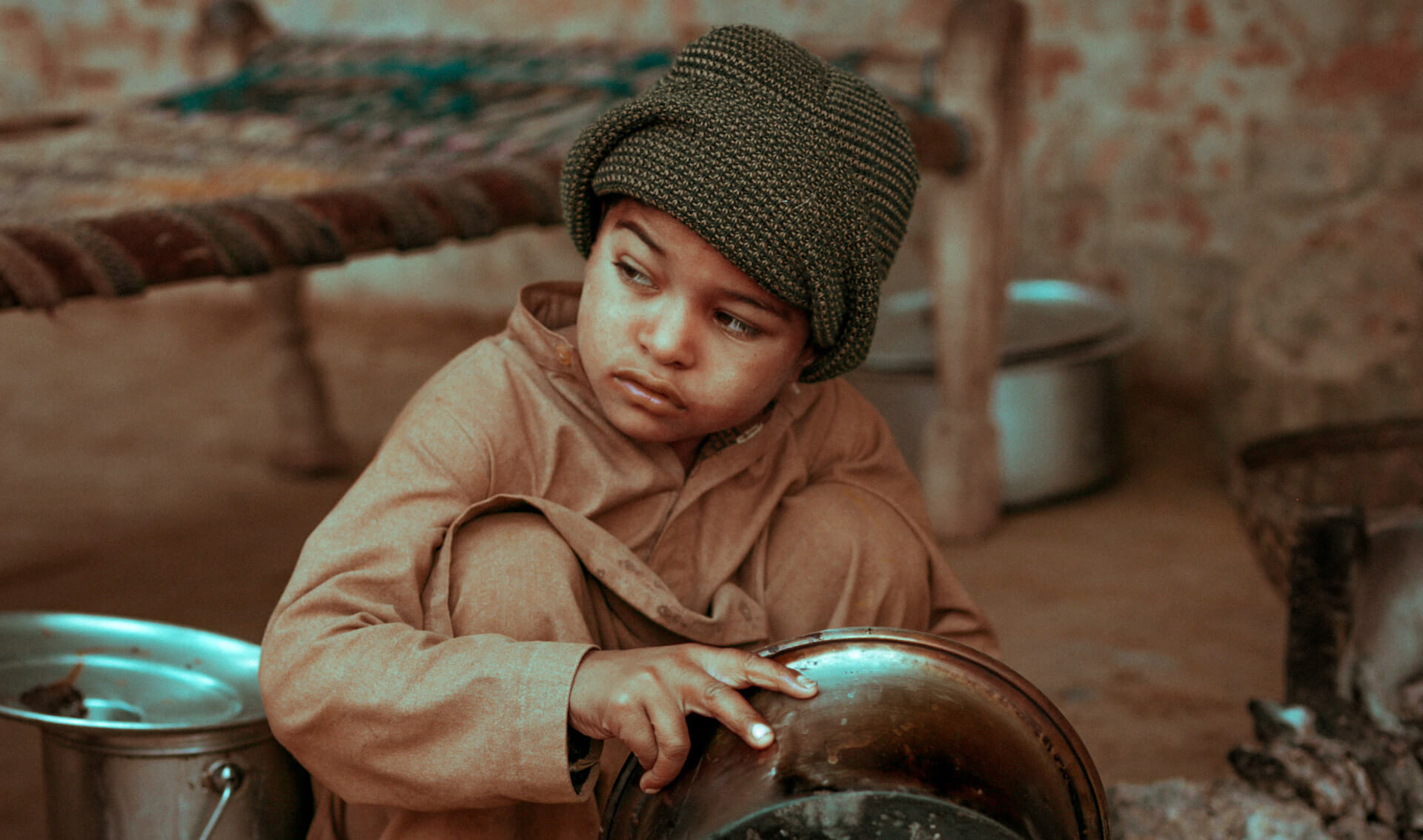




Author | Patricia M. LicerasIt may seem like stating the obvious, but children should be children, i.e., they should be entitled to access quality education and develop through the power of play anywhere in the world. However, some live in disadvantaged contexts in which they are forced to work so they and their families can survive.According to the International Labor Organization (ILO), around 152 million children between the ages of 5 and 17 are victims of child labor in the world. Most work in farming, followed by the services and industrial sectors, particularly in mines. Figures which, as the ILO itself and UNICEF warn, could increase due to the poverty related to the COVID-19 crisis.Technology is proving to be a great ally in the fight against this form of exploitation. A growing number of companies that are firmly committed to sustainability, as demanded by their consumers, are trying to guarantee the ethical source of their products, which involves monitoring their supply chains to avoid abusive practices.
Blockchain solutions to combat child labor
Some examples include car manufacturers such as Volkswagen and Ford and the technology giant IBM, the South Korean cathode producer LG Chem and the Chinese supplier of cobalt Huayou Cobalt. All of them have joined the Blockchain pilot to verify that the cobalt used in lithium-ion batteries that power electric vehicles is responsibly extracted.The main producer of this mineral is the Democratic Republic of the Congo, a country accused of violating the human rights of workers in the mines and even of child exploitation.Most of the cocoa beans used to make chocolate comes from Africa, using children to obtain them.Nestlé itself has recognized that.“No company sourcing cocoa in the Ivory Coast can guarantee that child labor has been removed from the supply chain”. In 2012, the multinational launched its Child Labor Monitoring and Remediation System, which covers all the cooperatives in the Ivory Coast from which cocoa is obtained and in 2016, it extended to Ghana. The program uses local links to raise awareness among families and prevent children from working on the plantations; it identifies children at risk of exploitation and provides solutions adapted to each child and their family circumstances.In collaboration with Accenture, Tony’s Chocolonely, the Dutch slavery-free confectionery company, has also developed a pilot using blockchain that enables its supply chain to be traced in real time, from the cocoa bean to the bar of chocolate. State-of-the-art technology providing the transparency sought to solve any problem without having to resort to third-party audits.
Greater agricultural technification to reduce child labor
Apart from the use of technology to combat child labor, some studies suggest that greater technification of agriculture in poor countries would reduce the dependency on child labor. This is the case of the study carried out by researchers from the Missouri State University and the Southern Illinois University, and which focuses on the rural areas of India. It concludes that, with a more advanced agricultural sector, there would be less need for labor, which would allow children to go back to school. It is also more productive and profitable and it would improve the economic situation of families, generating more education opportunities, particularly for women and children.Putting an end to child labor is included in the UN Sustainable Development Goals for 2030. Along the path to achieving these goals, all efforts by governments, companies and citizens will be essential in order to eradicate the unacceptable exploitation figures.Images | Muhammad Muzamil | Roman Nguyen | bill wegener