



When we refer to urban planning and infrastructures, we normally focus on bridges and roads, railway lines and utilities. Port management, however, is something that is rarely given the attention on a par with its economic importance, to a large extent because these facilities have a high degree of autonomy, and their expansion, when required, does not seem to generate any form of reaction, which may be the case with the expansion of an airport.Perhaps that is why many citizens are not really aware of the fact that large commercial ports are basically cities within cities; an aspect explained in great detail by those attending the Smart Ports seminar at the Smart City Expo World Congress 2019. Very often these facilities have their own power generation plants, quarantine areas and health facilities.But how can German vans be sent to the United States for parts to assemble them following Just in Time (JIT) methods? How can Peru easily export perishable goods to Spain? The key lies in an extraordinary resource optimisation normally only found in the most avant-garde factories.
Rotterdam: the power of the cloud and the IoT as an exportable product to other countries
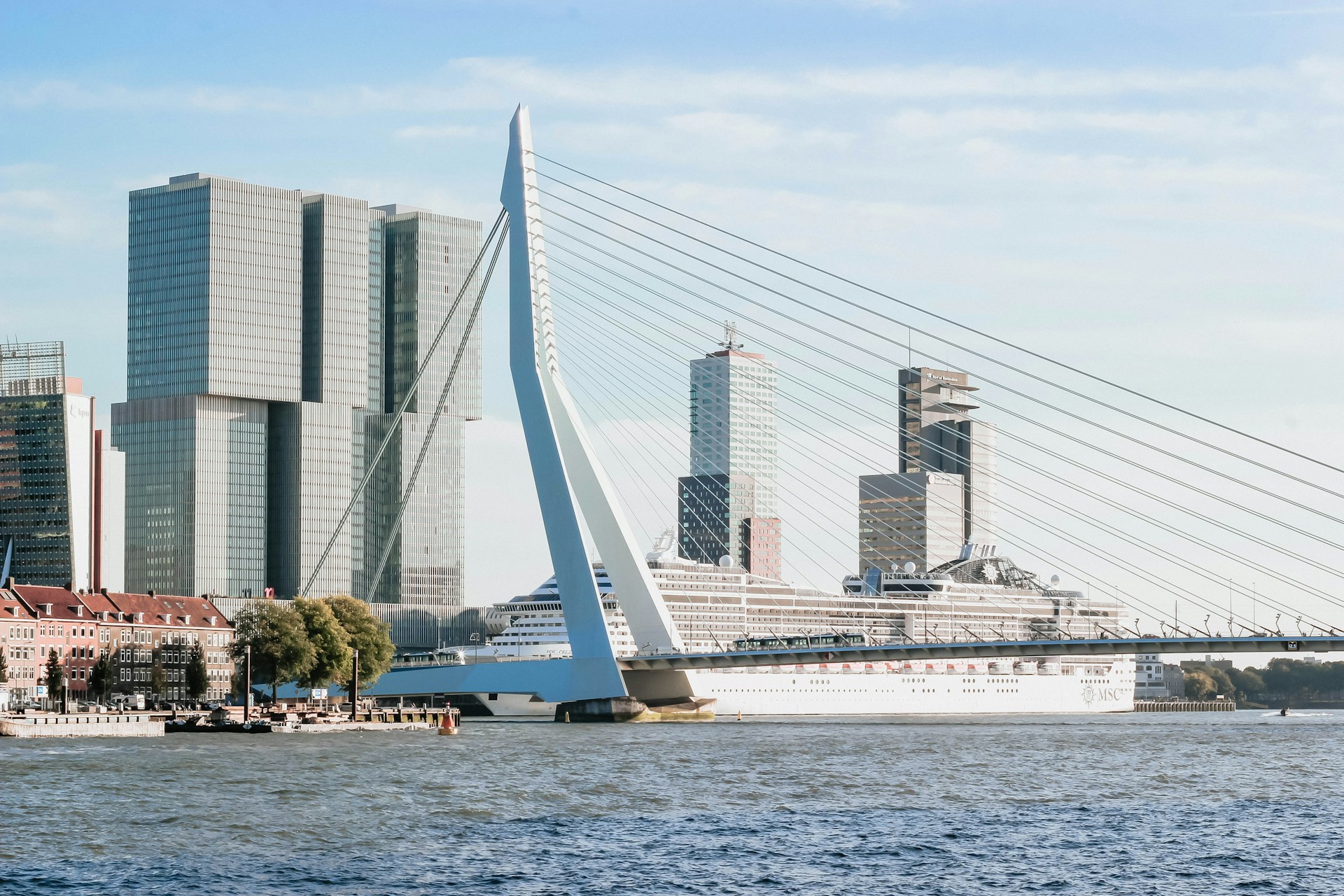
https://youtu.be/GectkAOwBWEThe Port of Rotterdam in the Netherlands, is the largest in Europe and it was the most active in the world for four decades. It stands out not just because of its area covering more than 100 square kilometres and the enormous volume of goods processed daily, but also because of its extremely high level of automation and the use of wind turbines to cover part of its energy requirements.Innovation forms part of the culture of this fundamentally important port for global trade. One of its most recent and most interesting projects receives the name of Container 42. Thea de Vries, head of communications at the Port of Rotterdam, outlined how this smart implementation of the Internet of Things works.Container 42 is currently on a round-the-world data collecting mission, to obtain information about maritime traffic and the most suitable conditions for loading and unloading goods. Thanks to this initiative, the exact time required for a container to be put into circulation can be established and the forces that intervene during the journey can be measured to help distribute the cargo more efficiently.The IoT project in the Port of Rotterdam enables its authorities to manage incoming and outgoing ships continuously and without interruption. Sensors to monitor the depth of the loading docks enable the authorities to precisely establish the number of containers that can be loaded on each ship, saving time and money, while the automated tracking of the containers prevents the loss of goods.An essential aspect of the Port of Rotterdam, explained Thea de Vries in her speech, is a culture of innovation that is normally only seen in private companies. So much so, that advances developed in situ, as is the case of its powerful cloud management system, are offered to other ports around the world in the form of software as a service (SaaS).
Montreal: artificial intelligence and image recognition for a greener transportation alternative
The Port of Montreal, in turn, is another major centre for receiving goods. Its geographic location (it is the commercial port on the shortest direct route between North America, Europe and the Mediterranean Basin), has a strategic importance for facilities seeking to reduce their environmental footprint and increase their profitability through efficient management.Daniel Olivier, head of innovation at the Port of Montreal, gave some clues as to how they are achieving this. While other ports still need stevedores to organise the loading process from start to finish, in Montreal, advanced artificial intelligence systems recognise the container codes to organise them with utmost efficiency, saving handling time.This system is also capable of controlling the integrity of the seals to prevent theft and contraband and to identify damage caused by oxide, sending a warning signal. Once alerted, the port workers can notify the incident and request an inspection or dismiss the warning as a false positive.“A fluid port is a green port” explained Olivier. But it is also a more economical port. For major maritime transportation firms, every hour of a journey costs money, therefore, maintaining an activity without interruption enables ports like those of Montreal and Rotterdam to continue being the preferred choice and, therefore, facilitating the trade that moves the economy of modern cities. Images | Port of Rotterdam, chuttersnap