



Author | Marcos Martínez
The past is a fantastic place to find all types of proposals, particularly in terms of what Smart Cities should be like. Whether or not they are a wise choice is another matter. Futurology or prospective studies and, in some areas, hard science fiction, have tried to address this subject, but only successfully on a few occasions. Thanks to this outpouring of imagination and the evidence of previous errors, today we can use our imagination to visualise what a city of the future could be like, even though it will still be decades before we have the technology.
Floating cities for climate migrants
Floating cities in the middle of the ocean are a dream that began centuries ago. However, today we are closer than ever to actually floating them. In 2002, the largest floating breakwater was built in Algeciras (Spain). It took 14 days to be towed to Monaco and it is spectacular: it is 350 metres long and weighs 160,000 tonnes. The operation could easily be repeated.
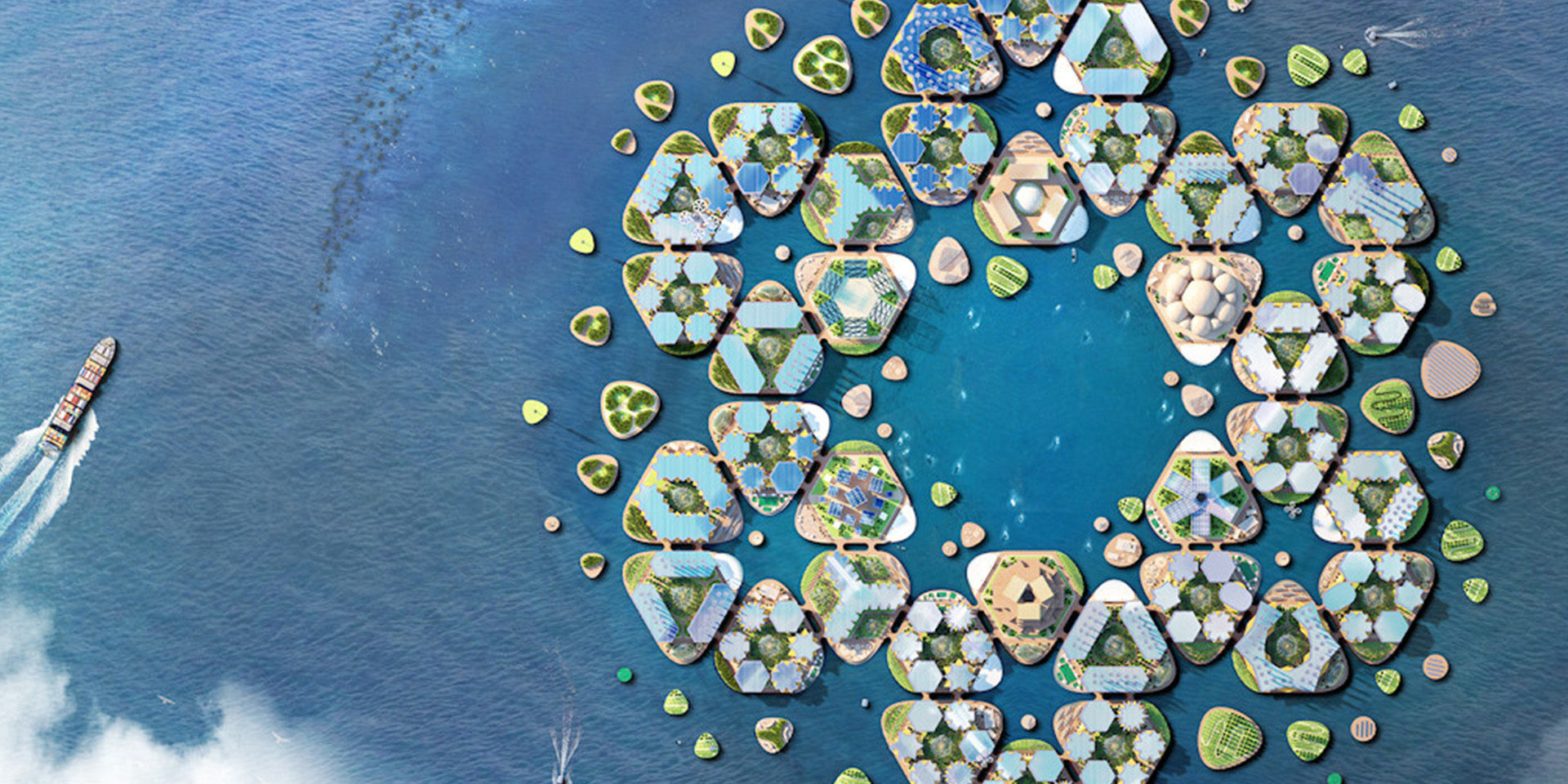
Oceanix city project
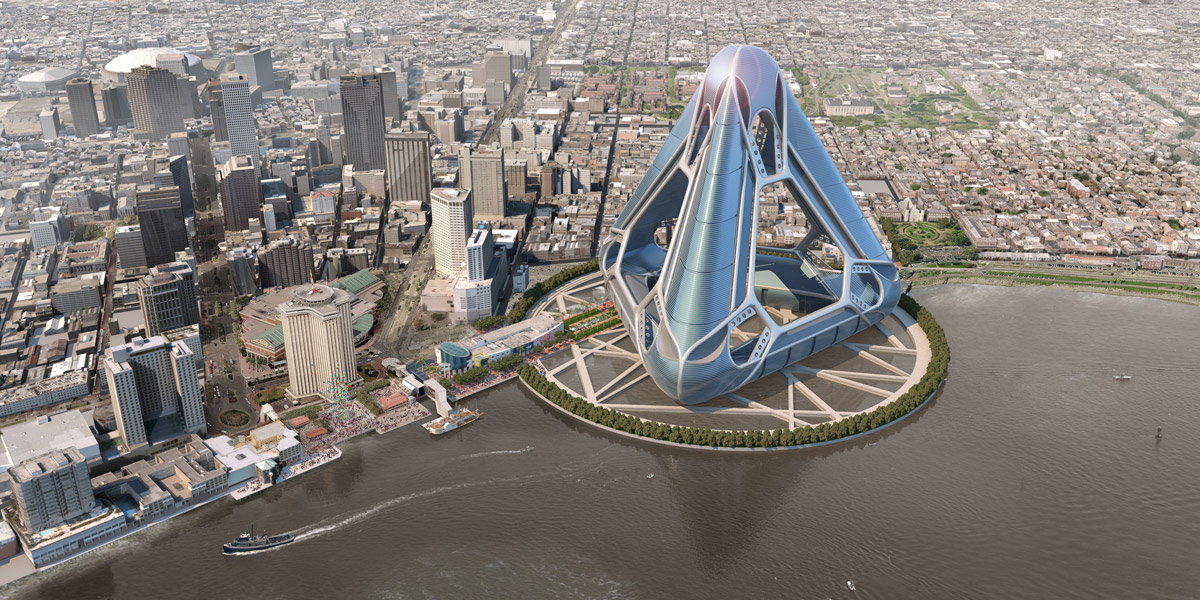
Oceanix City, which opens the article, by Bjarke Ingels, is one of the most recent designs of a floating city. Although it is not the only one —a few years ago the architect Vincent Callebaut designed the Lilypad, a city intended to provide shelter for future climate change refugees—, which has helped the UN to promote these types of projects. In the book, ‘Seasteading’ (as well as the institute that goes by the same name), Joe Quirk captures the vision of this future.
Underwater Smart Cities

Underwater cities follow the same trend as floating cities. Water covers 71% of the Earth’s surface, but if we compare the land on which we walk with the volume of the oceans, the percentage of dry land is rather small.
Proponents of underwater cities claim several benefits, including increased knowledge of our planet derived from deep-sea exploration and the fact that submarine communities should be extremely efficient to be sustainable. Even if experimental at first, they should push science to advance in fields such as hydroponics, fish farming and even geoengineering, mirroring the advances seen in material science, medicine and rocketry during the space race.
Is it possible to build a city underwater?
A few years ago, the Japanese company Shimizu Corp unveiled the concept for Ocean Spiral. These engineers had thought of everything, food, CO2 emissions, resources, energy… We could say that it is feasible with our existing technology, but the cost would be prohibitive and obviously it is not of interest yet.
One-kilometre tall vertical cities

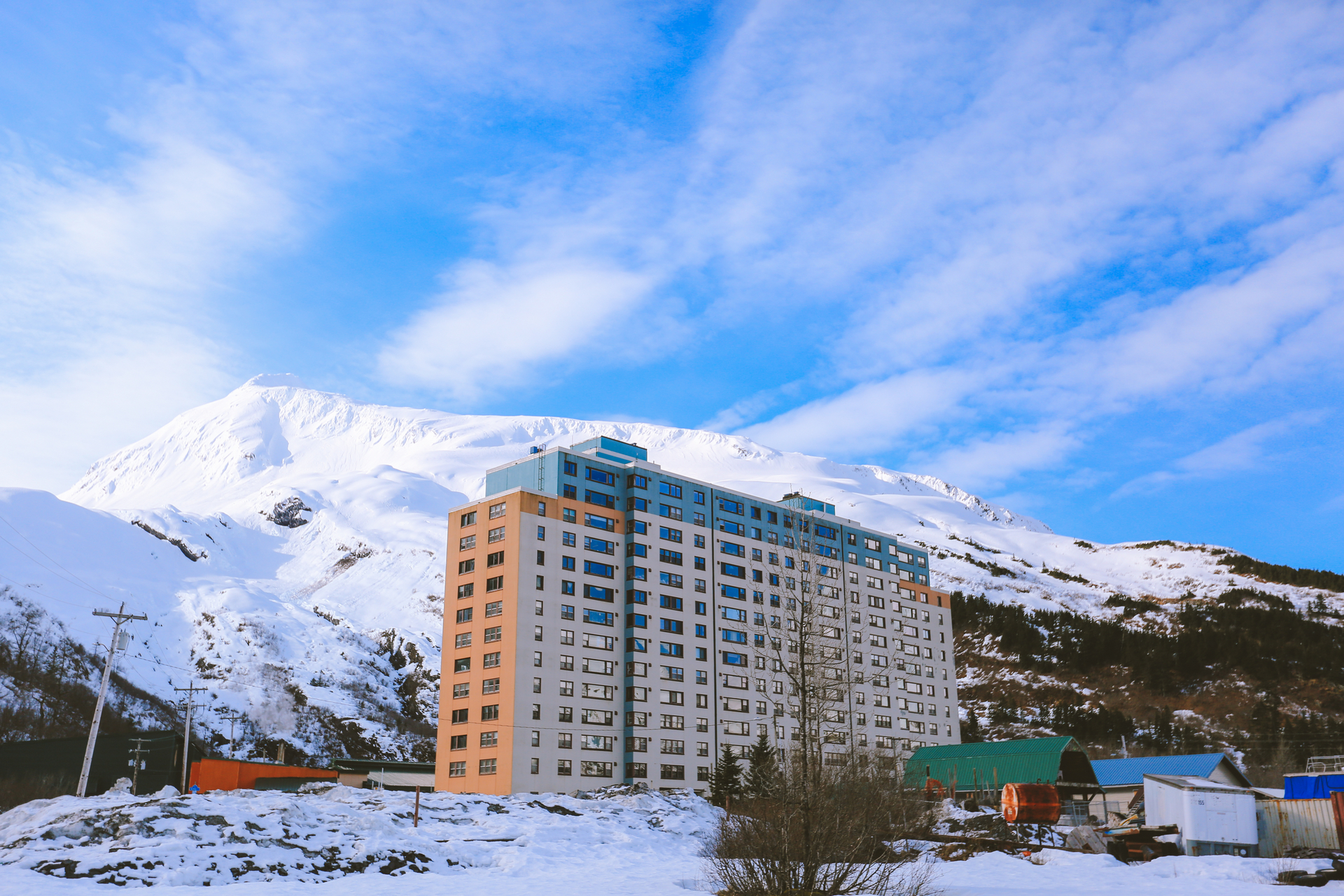
At the moment the building trend appears to be looking more to the skies than to the sea, and each year records are being beaten in terms of height. In 1997, work began on the ‘Bionic Vertical Space’ which led, in 2001, to the ‘Bionic Tower’. This imaginary, yet feasible, building is 1,228 metres tall, with 300 storeys and 12 neighbourhoods, each measuring 80 metres.
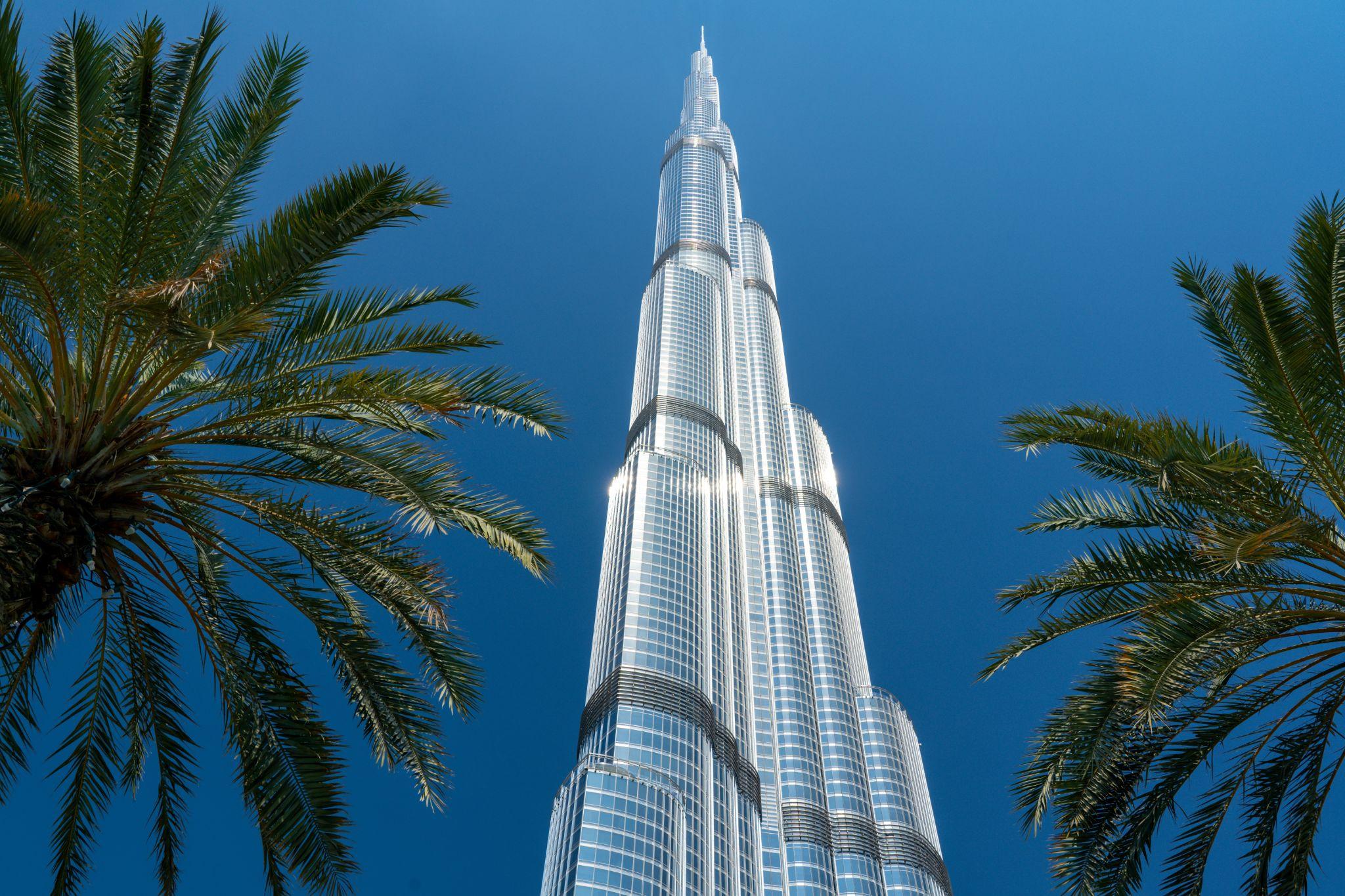
The tallest building in the world is the Burj Khalifa (828 metres, completed in 2010), so the idea was not too far-fetched. But the idea behind the Bionic Tower and other similar projects, is to generate self-sustainable environments from known natural mechanisms.
Living cities for 2050
In 2017, Tellart presented an interesting future: cities capable of growing and self-regulating like an organism. A rich colony of “live materials” or biomaterials. Organic desalination plants, bacteria auto-farms and robots… It seems absurd, but the idea was presented in the Museum of the Future in Dubai under the supervision of a panel of experts on climate change.

The O’Neill cylinder: humanity is going to space
It will probably be centuries before we colonise space, but the cylindrical or toroidal colonies, were designed in 1970. NASA presents some of the designs. Today they are known as ‘O’Neill Cylinders’ and they are enormous space stations that generate artificial gravity inside as they gently rotate. This takes us to the hardest and most speculative form of science fiction.

We know that these structures are physically feasible and, furthermore, they are probably a better environment than low-gravity or toxic planets such as Mars. However, we cannot even remotely contemplate this type of “city”. To put it into context, the International Space Station has been under construction since 1998 and it can hold a maximum crew of six persons. The creation of habitats at this scale would not be possible before the implementation of multiple technological or even industrial revolutions.
Space is a long way away, and it is doubtful that we will live underwater, but the climate crisis resulting from greenhouse emissions is going to sharpen our imagination for designing cities and their smart buildings. Maybe the O’Neill Cylinder is still a long way away, but the idea of building self-contained habitats as a response to these challenges should not be discarded.
Images | Oceanix City, Ocean Spiral, Tellart, NASA, Javier Gómez Pioz