



Author | Raquel C. Pico
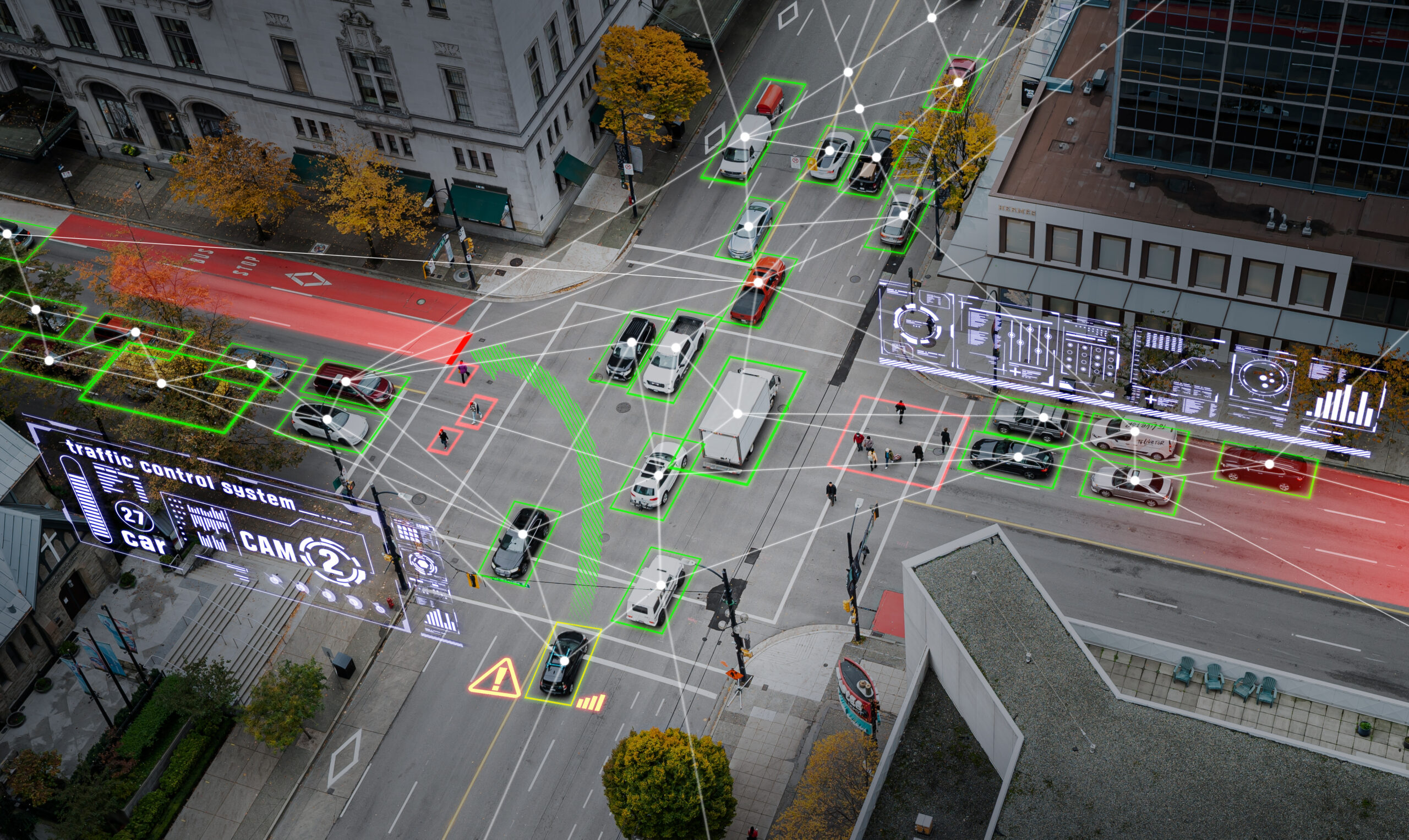
Can artificial intelligence completely change the day-to-day life of cities? While the more recreational uses of AI—like editing a photo or answering everyday questions—are what tend to capture the general public’s attention, the potential of this tool goes far beyond that. In fact, this is exactly what is starting to catch the attention of city managers, and it is the focus of their investment in AI technology. The goal is to integrate AI into governance and establish it as a lever for a more efficient and responsive administrative system.
In fact, some cities are already experimenting with the use of artificial intelligence for managing municipal permits. Lancaster, USA, has become one of the first practical examples.
How Lancaster has integrated AI
Lancaster—a city north of Los Angeles with just over 100,000 residents—has become one of the pioneers in the United States in using AI for urban permit management.
“Lancaster has always been a city that sees possibility where others see roadblocks” says Mayor R. Rex Parris. “Together, we’re transforming regulatory complexity into an engine for economic growth, speeding up innovation and delivering better services for our residents and businesses,” he adds.
The city has implemented Labrynth, a regulatory native AI specialized in permit management. The idea behind the integration is that using AI can streamline processes and increase transparency.
Uses of Artificial Intelligence
In a way, cities are following in the footsteps of businesses by integrating AI technology into administrative tasks: part of what is called the Fourth Industrial Revolution. In those settings, AI is already handling task automation, resolving issues, and assisting in selection processes by screening, identifying value, or helping prevent biases.
For cities, the applications are similar but in slightly different areas. Some U.S. cities have already created digital twins, they use AI technology in public safety, or promote affordable housing development through their adoption of artificial intelligence. Now, they are using it to improve bureaucratic efficiency, such as business licenses, building permits, or urban planning approvals.
It is no surprise, then, to see the ways Lancaster plans to use its AI technology. AI will handle the initial review of permit applications, flag errors (such as missing documentation), and assist applicants throughout the process. This will free up municipal staff time and resources and provide faster updates on the status of requests. The workflow will become more streamlined, and waiting times will be reduced.

In fact, although Lancaster is a pioneer, it is not the only U.S. city experimenting with, or planning to experiment with, the integration of AI into its administrative systems. Los Angeles, Honolulu, and Austin are also adding AI to their urban planning departments. In these cases, the solutions chosen differ: While Lancaster opted for Labrynth, Austin and Los Angeles use Archistar, and Honolulu will use Clariti.
These cities use AI for specific tasks. Austin applies it to the review of residential permits, while Los Angeles uses it for construction permits (AI ensures compliance with zoning plans and building codes). Honolulu plans to integrate it as a tool to simplify the permit application process for residents.
All of these projects share one common element: transparency. The use of AI technology is expected not only to optimize administrative systems but also to make it easier for the public to navigate them, helping people understand what to expect and why certain decisions are made. AI acts as a neutral actor.
Other pioneers: Diella, the Albanian “minister” created with AI
It is precisely this potential neutrality of artificial intelligence and the focus on transparency that have made AI technology increasingly interesting to public administrations. It is important to remember that the potential of AI technology may still hold untapped possibilities. There is still a long way to go, and many areas left to explore. In fact, artificial intelligence could also be applied at the national level or within supranational organizations.
One of the most talked-about initiatives in recent months has come from Albania. The Balkan country has appointed an AI minister. Her name is Diella, and she is not a politician with expertise in artificial intelligence, but rather a minister created using the technology.
Diella will be responsible for public tenders and procurement, acting as a highly neutral manager of public services. Albanian Prime Minister Edi Rama told the media during her introduction that this will make public procurement “100% free of corruption.” The process will be fully traceable. This is particularly significant for the country, as its global public image has long been associated with corruption.
AI biases
That said, even though AI cannot be bribed, we should not fall into the trap of assuming that artificial intelligence is inherently neutral or entirely impartial. AI technology can also be biased because it is trained on data generated by humans, who themselves carry biases. This means that its use, particularly in public and civic contexts, should be guided by ethical and legal experts and critically evaluated.
A clear example of the risks of using AI without a critical perspective can be found in the justice system. Algorithms have been advising the U.S. courts on sentence lengths and the granting—or denial—of sentence reductions. At first glance, this seemed like a perfect way to avoid human bias, since the AI was “blind.” However, an investigative report revealed that the AI exhibited racial biases, resulting in lighter sentences for white individuals and harsher sentences for those who were not.
Photos | fusionphoto/iStock, Marek Studzinski/Unsplash