



Author | Raquel C. Pico
For several years now, Bhutan’s public image has been linked to happiness. The country itself has included the well-being of its citizens among its official statistical measures (and prioritizes what it calls Gross National Happiness over the traditional GDP, the Gross Domestic Product). It was also the driving force behind the United Nations designating March 20 as the International Day of Happiness. Now, Bhutan could also become known as the nation of blockchain.
Starting next year, Bhutan will use a system based on Ethereum as its citizen identification platform. In short, it will use blockchain for its national ID cards. The Asian country is the first in the world to make such a large-scale move involving something as complex and sensitive as the identity of its own citizens.
“Bhutan celebrates a historic milestone, becoming the first country to anchor its national identification system on Ethereum,” said Aya Miyaguchi, president of the Ethereum Foundation, on social media following the launch ceremony.
Bhutan’s blockchain leap
What exactly is Bhutan trying to do? The country’s move toward digitalization began a few years ago. In 2023, Bhutanese Prince Jigme Namgyel Wangchuck became the nation’s first “digital citizen.”
At first, Bhutan used other identification standards in its effort to create a digital identity system, but later migrated to Ethereum, a blockchain platform. Although blockchain is commonly associated with cryptocurrencies, its potential goes far beyond that. Thanks to its block-chain structure, it enables identification that is potentially tamper-proof. It also operates without relying on a central system. “By migrating to Ethereum, we are strengthening the security of our digital identity,” Jigme Tenzing, secretary of the public agency GovTech, told the national press.
By 2025, the identity system has already been integrated, and it is expected to be fully operational as a citizen identification tool by the first quarter of 2026. That will mark the completion of the migration to Ethereum. This will allow decentralized verification of a person’s age, residency, or nationality status, and provide access to public services. Nearly 800,000 citizens of the country will thus have a blockchain-based ID card.
The benefits of this digital identity
Bhutanese public administrations argue that adopting this form of digital identity will increase privacy and give citizens greater control over how their data is used. For example, it will prevent the need to share more information than necessary when accessing services, such as checking into a hotel. Likewise, at the state level, they believe it will enhance sovereignty, trust, and security, creating a framework that fosters innovation.
A deep-rooted connection
This point may well be the key to understanding the country’s leap into blockchain. Bhutan is investing heavily in cryptocurrencies as a potential economic engine to help tackle some of the serious challenges it faces.
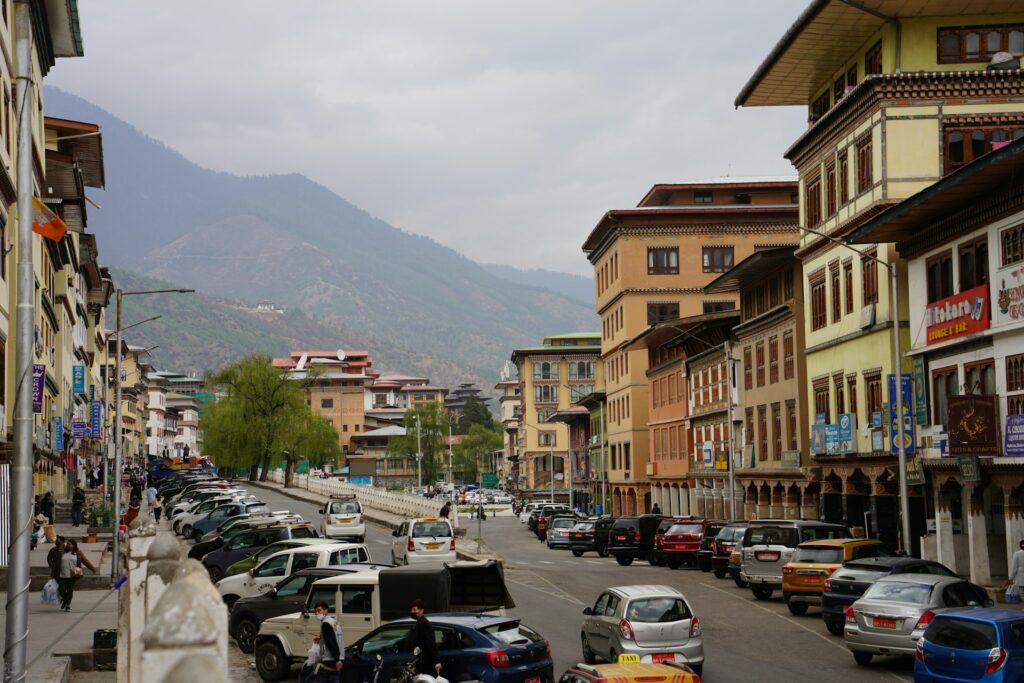
Bhutan is a mountainous country with complex terrain that makes everything from mobility (its airport is one of the most challenging in the world to land at) to something as fundamental as agriculture difficult. Its economic maneuverability is therefore limited. At the same time, Bhutanese law restricts what can and cannot be done in the country. Economic growth must adhere to certain standards, such as maintaining forest cover at 60% of the country and focusing on both ecological conservation and the happiness of its citizens, and foreign investment cannot conflict with these principles. Bhutan is currently a carbon-neutral, net zero country.
Tourism is a source of income (around 10% of GDP), but Bhutan limits access to the country to protect its sustainability and prevent mass tourism. The COVID-19 pandemic also disrupted visitor flows and had a broader negative impact on the country. The country struggles with high youth unemployment. Some statistics indicate that between 2022 and 2023, 10% of the young Bhutanese population emigrated to other countries in search of work.
It is in this context that Bhutan is investing in cryptocurrencies.
A wealth in crypto mining

Bhutan began mining cryptocurrencies in 2020, aiming to generate wealth and create jobs. Like any economic investment, this mining must comply with Bhutanese regulations. The country claims it has succeeded, having managed to mine cryptocurrencies in an environmentally friendly way.
To achieve this, they rely on two key elements for green mining. The first is renewable energy. One of Bhutan’s major economic assets is hydroelectric power (they even export electricity to India). In the summer, river flow increases, boosting electricity generation capacity. This surplus is used to power the mining infrastructure.
The second is its temperature. Beyond high electricity consumption, cryptocurrency mining has a negative environmental impact due to the need to cool the supercomputers before they overheat from constant operation. Bhutan’s temperatures—which never exceed 30°C (86°F)—help reduce reliance on cooling systems.
How much money has Bhutan already accumulated in its public cryptocurrency funds? There is no official answer, although some specialized sources have made estimates. The most recent, published by The Wall Street Journal in June, estimates that the Asian country’s crypto wealth is already worth $1.3 billion, equivalent to 40% of its GDP. Unlike other countries, which include in their public crypto funds, assets bought on the market or seized in criminal operations, Bhutan’s holdings are said to have been entirely mined domestically.
Bhutan already used those funds for something more tangible in 2023: it sold $100 million worth of cryptocurrency to fund a two-year salary increase for its public employees.
Photos | narvikk/iStock, Pema Gyamtsho, Jakub Żerdzicki