



Author | Lucía Burbano
The sustainable, technological and connected cities of the future are here right now and they can be visited. Some of them, at least. For the rest, we will still have to wait a little, but for now let’s take a look at a small selection of some of the most interesting ones.
Futuristic cities that you can visit right now
Hong Kong: mobility of the future
The Hong Kong government’s commitment to mobility translates into numerous tech-based initiatives that already make it a futuristic city. Some examples are:
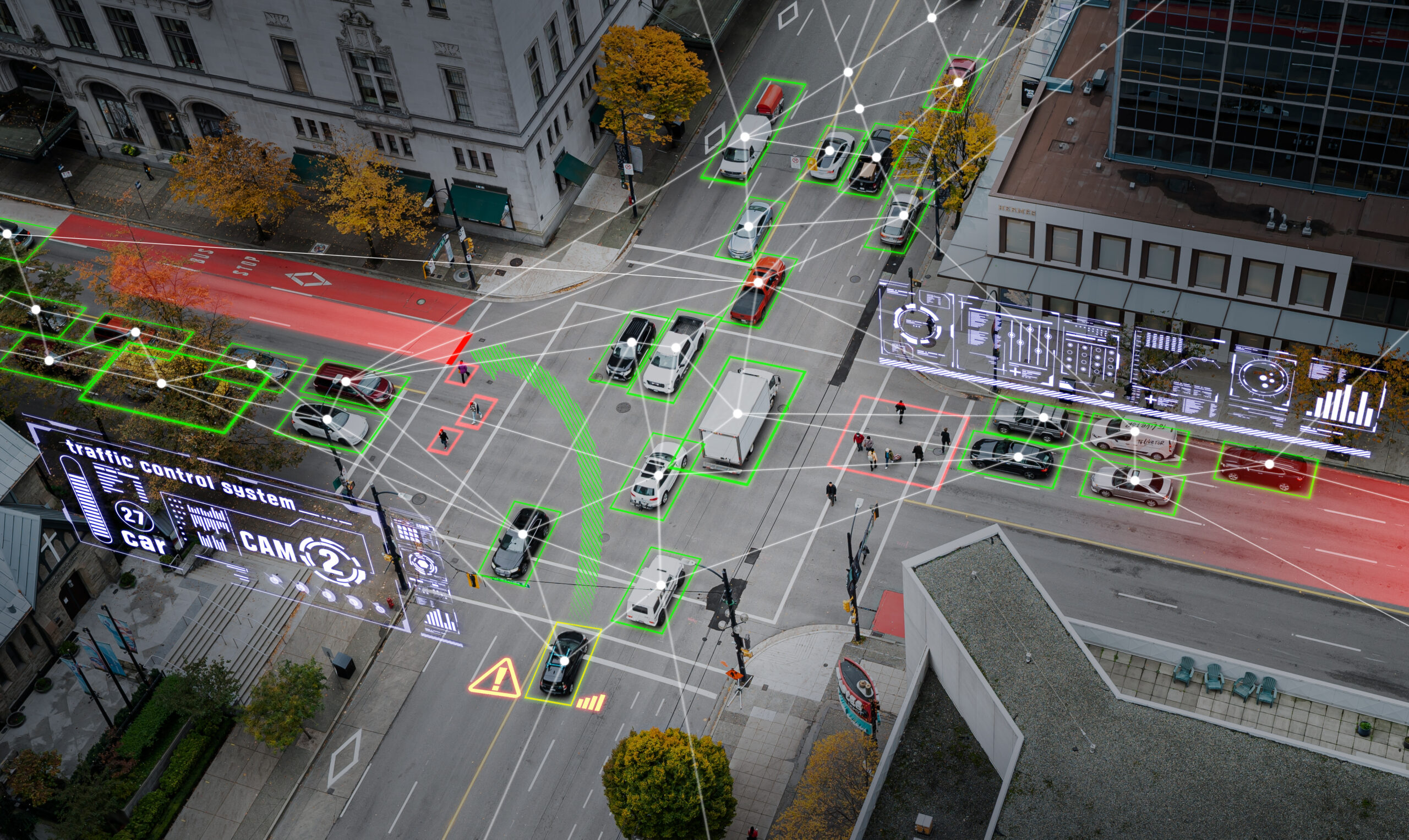
Smart transport and traffic management system
- Installation of 1,200 traffic detectors across main roads and strategic routes to provide additional real-time traffic information
Smart airport
- The application of automation, video analysis and the Internet of Things in airport operations.
Singapore: the future is green

The most eco-friendly city in Asia, according to the Environmental Performance Index, sustainability is at the heart of Singapore’s vision of the future.
As a classic example, we can visit the Gardens by the Bay, a nature park spanning 101 hectares built on reclaimed land and a key element of the futuristic urban plan that aims to become a "garden city".
Masdar, a smart city based on renewable energies
The project designed by the Foster and Partners studio has been completing stages since construction began in 2008. Among the projects already completed in Masdar City is the Eco-Villa, the first zero-emission home in Abu Dabi. It uses approximately 72% less energy and 35% less water than a conventional home of the same size in the region.
The use of renewables is precisely the focus of this smart and futuristic city. With one of the largest clusters of LEED Platinum buildings in the world, Masdar City is home to the only R&D center designed specifically for this purpose.
Futuristic cities that you will be able to visit soon (if all goes well)
Telosa, social, environmental and economic sustainability
Telosa, the smart city of the future in the United States aims to incorporate social, economic and environmental sustainability.
Some of its measures include:
● Protecting air quality by banning vehicles powered by fossil fuels.
● It is firmly committed a circular economy model, since this will minimize the need to extract additional natural resources.
● Principle of equity: its residents will be co-owners of land in Telosa.
The Line, the promise of a change of paradigm
The future of urban life. This is how The Line promotes itself, a Saudi city that is only 200 meters wide, but 170 kilometers long, without roads, cars or emissions. It will run on 100% renewable energies and 95% of its land will be preserved for nature and only two minutes away.
Residents will also have access to all facilities within a five-minute walk, exceeding the limits of 15-minute cities and its services will be automated thanks to artificial intelligence.
Oceanix Busan, the solution to rising sea levels
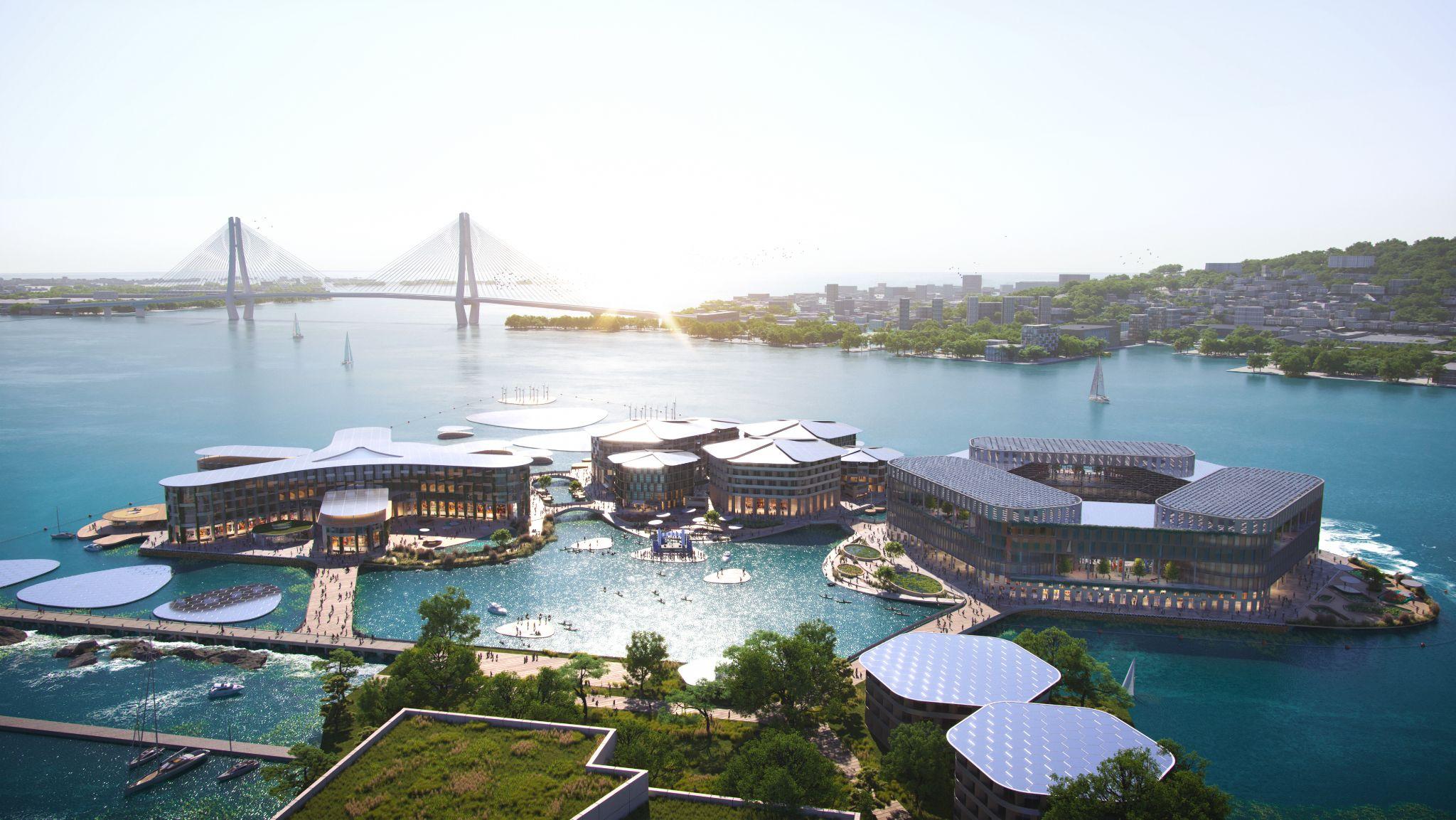
Oceanix Busan is the world’s first prototype sustainable floating city, a project run by UN-Habitat,, the Busan Metropolitan City of the Republic of Korea, and Oceanix, a blue tech company specialized in floating cities.
The Korean prototype, which is planned for 2025, will measure 6.3 hectares, accommodating a community of 12,000 people. Thanks to its location in a sheltered lagoon, the floating city will be able to withstand extreme weather events.
Chengdu Sky Valley, ‘parameterizing’ the future

A proposal submitted by the architecture studio MVRDV as its entry for the Future Science and Technology City competition in China that fuses technology with nature, urban with rural, and modernity with tradition.
To achieve these objectives, the project team collaborated with the in-house tech taskforce MVRDV NEXT, in the development of a parametric design to analyze and add to the existing landscape.
Photographs | OCEANIX/BIG-Bjarke Ingels Group, Unsplash/ Sergio Sala, MVRDV