



Author | Lucía Burbano
The proposal to build a floating park at Royal Victoria Dock in London is an example of how cities are reclaiming underused postindustrial waterfront areas and adapting them to current urban needs without using additional land.
In this case, this future floating park is part of the Vision for Royal Victoria Dock West, which will be the largest development of the Royal Docks since they were closed to commercial traffic in late 1981 and will transform the area with a design that enhances green spaces, community uses, housing construction, and tourism.
The project for London’s future floating park
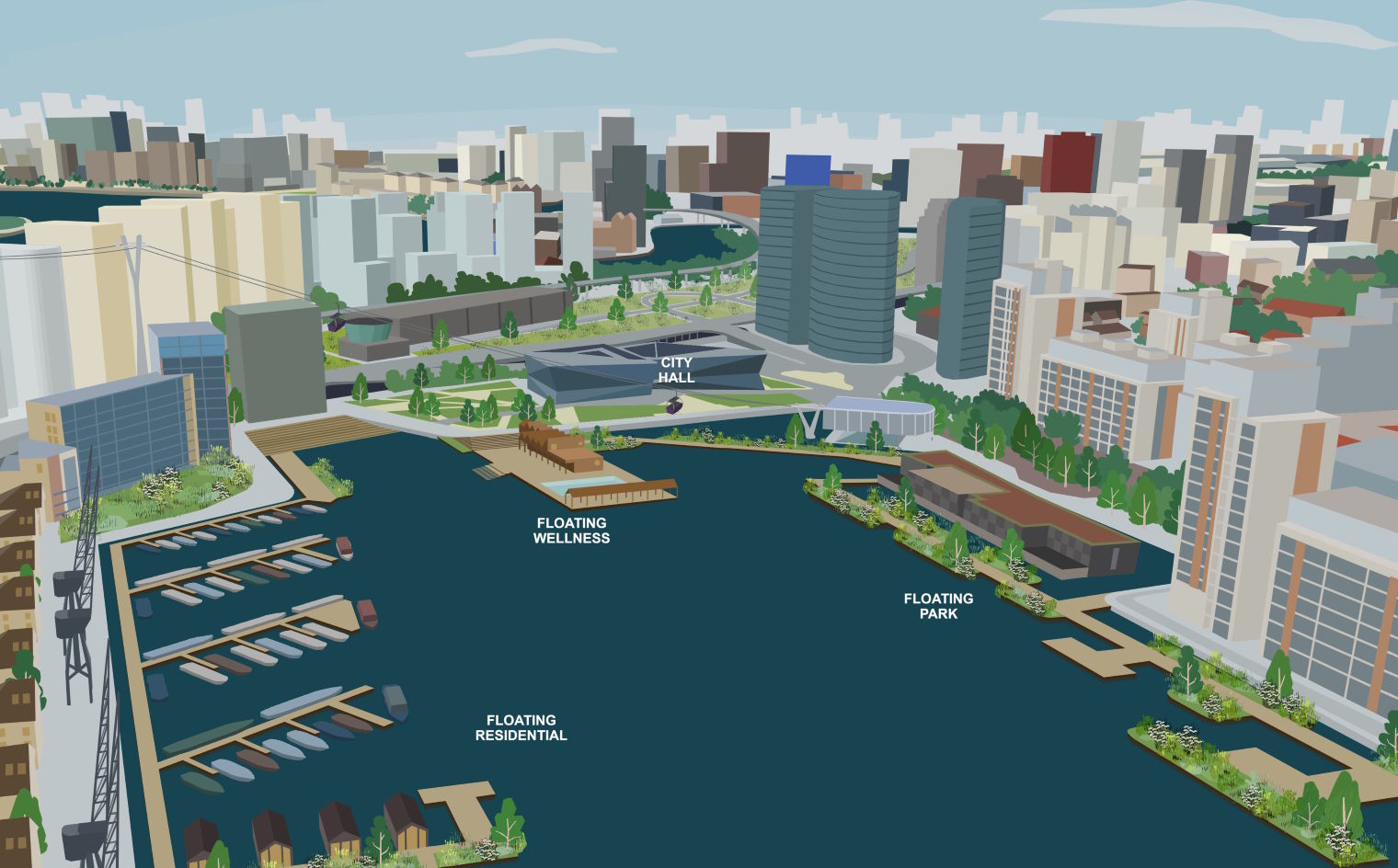
The project for the historic Royal Docks will transform the area into a valuable asset for the British capital, increasing public space in the borough of Newham, in East London by 5%. This urban regeneration will revive a currently underused river infrastructure that is key to the city.
This transformation is part of a broader redevelopment project for the Royal Docks, a 500 hectare area made up of Royal Albert Dock, Royal Victoria Dock, and King George V Dock, which will be regenerated over the next 20 years through a public private investment of 5 billion pounds.
The Vision for Royal Victoria Dock West is divided into three main projects:
Green space
The floating park will enhance biodiversity across the entire dock area by introducing new habitats to support wildlife. This includes floating planting beds, habitat structures, and a nature based design to improve air and water quality and strengthen the dock’s climate resilience.
It will provide shade, shelter, and vegetation to help the dock adapt to increasingly hot summers and manage flood risk.
Wellbeing
A commercial area will feature a heated swimming pool along with free and inclusive services for wellbeing, leisure, and community use, with improved public access to the dock that meets the needs of both the local community and visitors.
The aim is to establish a new benchmark for accessible wellbeing and reconnect Londoners with the city’s waterways over the next decade.
Residential
An area of the historic Royal Victoria Dock has been identified as suitable for the development of floating homes, although feasibility studies still need to begin, as these homes would be floating and would include shared social and community facilities to serve residents.
Project phases
Royal Docks Waterways, the developers of the project, have launched a public consultation period on the overall vision to incorporate local needs at an early stage. Procurement processes for the residential and wellbeing projects have also begun.
The Vision for Royal Victoria Dock West consists of the following stages:
- Planning (2026–2027): Public consultation and engagement with residents and stakeholders, further design development, identification of private partners and operators, and the start of the procurement processes.
- Design and permits (2027–2028): Technical development of the floating projects, environmental assessments, and urban planning procedures and permits.
- Initial works (2028–2030): If everything proceeds as planned in the early phases, construction of the three projects mentioned above would begin: the floating park and the residential and wellbeing areas.
The expected impact of the Royal Victoria Dock West floating project
The first positive impact is that London will have more public space without the need to use additional land or increase the density of the existing urban fabric.
Economically, the floating project is expected to establish itself as a destination for tourism and local leisure and to generate jobs across various sectors. It will also revive London’s relationship with its docks, aligning with the global trend of repurposing underused waterfronts for social infrastructure.
Environmentally, the goal is to increase biodiversity within these floating habitats, improve water management, and strengthen climate adaptation.
The docklands area aims to become a new model for urban growth, repositioning itself as a new urban hub from the city’s outskirts, as seen with other areas of London such as Canary Wharf, while establishing itself as an innovative waterfront district.
Five frequently asked questions about London’s future floating park
- What is London’s future floating park?
A system of platforms on the water that will create green spaces, leisure areas, and public activities without using land.
- Where will it be located?
At Royal Victoria Dock, as part of the regeneration of the three Royal Docks in East London.
- When will it be ready?
The first phases could open between 2029 and 2030, depending on permits and investment.
- What will it include?
Walkways, gardens, open water swimming, and possibly floating homes.
- Why is it important?
Because it reuses water as public space, expanding the city without using more land while improving sustainability and quality of life.
Photographs | Unsplash/Hubert Buratynski, Unsplash/Robert Bye, RoDMA Royal Docks Management Authority