



Author | Lucía Burbano
Abu Dhabi has become the first city outside the US or China to deploy a fleet of robotaxis, i.e., a type of autonomous vehicle specifically designed to provide passenger transportation services without a human driver on board, joining both countries in leading autonomous vehicle development.
This move is strategic, as when it comes to mobility, driverless vehicles are more sustainable and efficient. The sector is also a hub for investment, talent, and technology, in a market currently valued at $273.75 billion.
Abu Dhabi and its commitment to level 4 autonomous taxis
Is it significant that the capital of the United Arab Emirates (UAE) is the first city outside the US and China to allow autonomous robotaxis on its roads?
Yes, because:
- It confirms its leadership in the race to operate fully autonomous taxis commercially.
- This positioning is attractive to investors and helps diversify the economy of a region heavily dependent on oil.
- It attracts tech startups and major mobility companies.
- It drives industries needed to develop robotaxis, such as AI, sensors, software, cybersecurity, 5G, and testing facilities.
- It improves urban traffic efficiency and reduces emissions.
- In terms of safety, approximately 90% of traffic accidents are caused by human error, including mistakes while driving, distractions, and driving under the influence of alcohol or drugs.
In this case, the deployment of autonomous taxis is being carried out by WeRide, a Chinese company that develops autonomous driving technology, with a presence in over 30 cities across 11 countries. But it is not alone, as it collaborates with Uber, a partnership that began in September 2024 and received permission to operate commercially in October 2025.
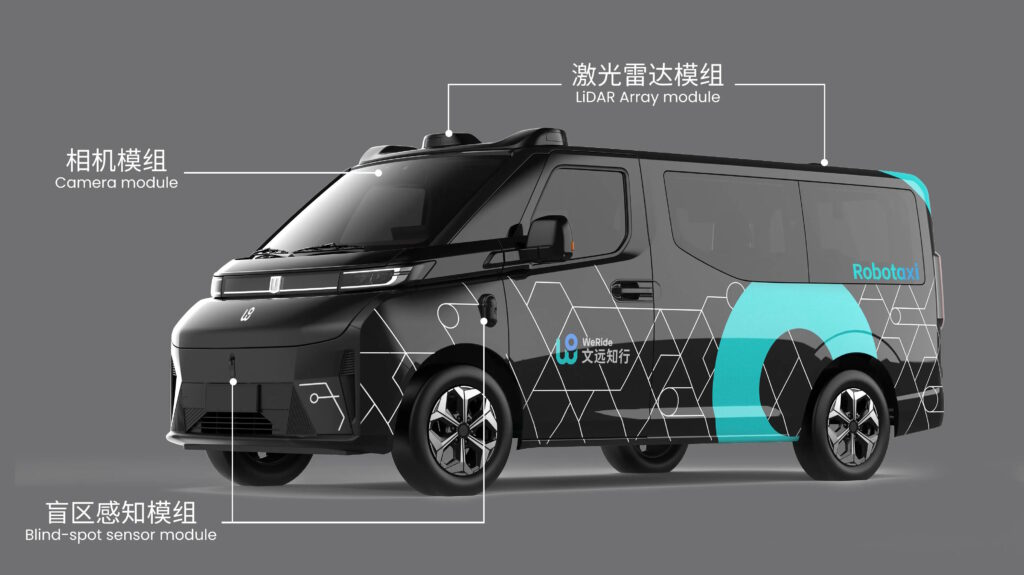
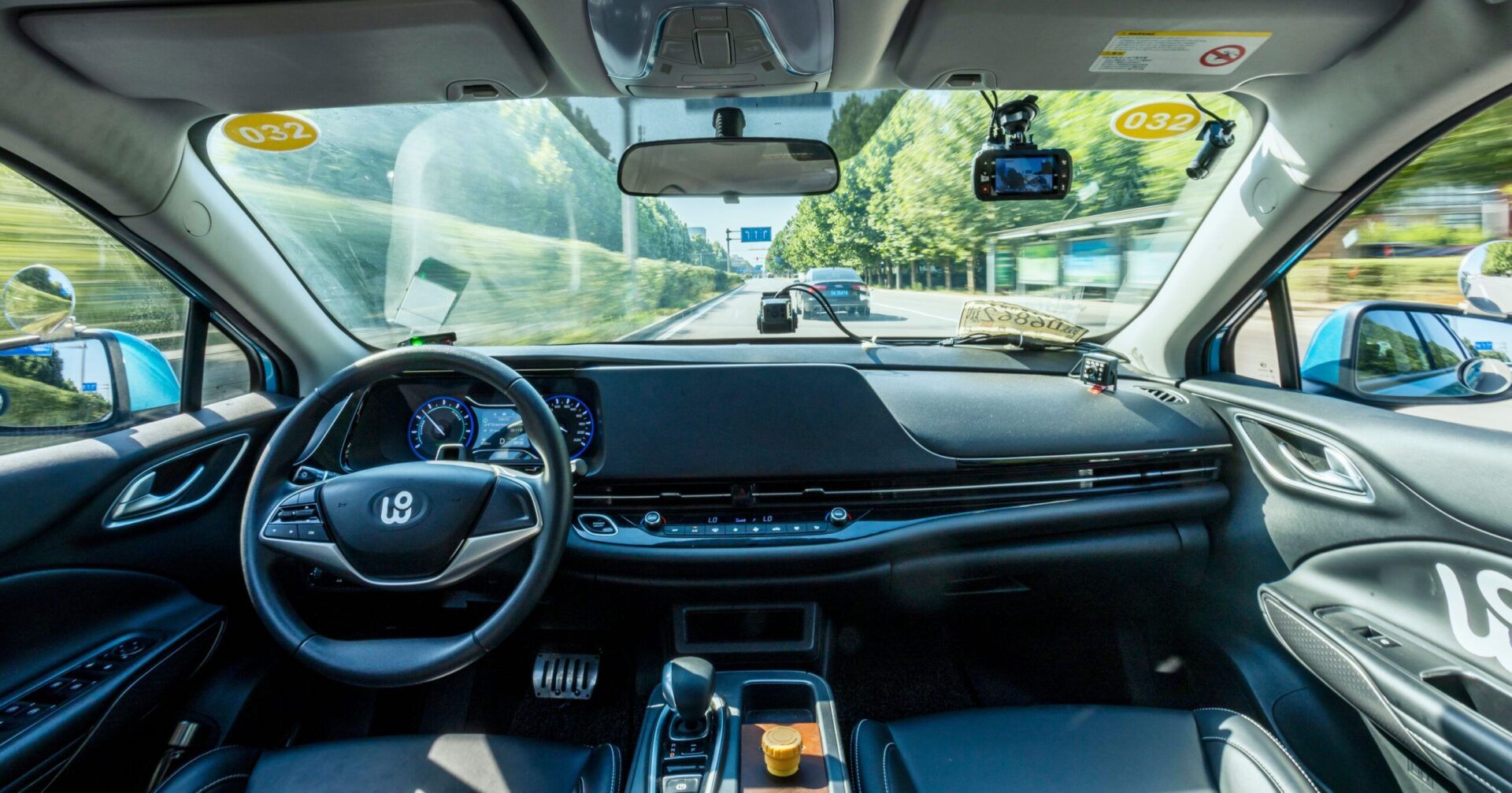
After completing a rigorous testing process that began in 2021 and covering nearly one million kilometers in the city, Abu Dhabi users can now book a WeRide robotaxi through UberX or Uber Comfort.
Legal framework in Abu Dhabi for autonomous vehicles
The commercial deployment of fully autonomous or Level 4 vehicles in Abu Dhabi is regulated at the emirate level by the 2023 law ‘Regulating the Operation of Autonomous Vehicles in the Emirate of Dubai’, and at the federal level since 2024 by a decree-law that includes provisions for autonomous vehicles such as vehicle classification, obligations for the driver/operator, operating permits, insurance, inspections, and more.
To operate a robotaxi in Abu Dhabi, a specific permit issued by the relevant transport authority is required, in this case, the Integrated Transport Centre.
The first services were launched in specific areas of the city, such as Yas Island, and companies with permits to operate autonomous vehicles must provide real-time data to the authorities for continuous monitoring.
Level 4 autonomous vehicle features
Level 4 autonomy in vehicles represents a very high level of automation, as defined by SAE International, and is characterized by:
- Full automation within ODD
The system controls steering, acceleration, braking, and navigation within an Operational Design Domain (ODD). - No human intervention required
The driver does not need to pay attention or be ready to take control, as the vehicle operates autonomously within its designated area. - Geofenced operation
Driving is limited to specific areas, such as urban centers, university campuses, or transport routes. It cannot operate everywhere - Fault management
If the system encounters an issue, such as adverse weather, it can navigate to a safe location without assistance.
- No steering wheel or pedals
Some Level 4 vehicles, such as robotaxis, eliminate these controls entirely. - Typical applications
Driverless taxis, buses on fixed routes, and goods transport in restricted zones.
There is a higher level, Level 5, whose main difference is that it can operate under any condition and in any location, without requiring human intervention at any time. This is full autonomy.
Only a handful of countries have passed laws for advanced autonomous driving (Levels 4 and 5, the highest): UAE, China, the United States, Germany, Singapore, and Japan. Several others are in the process, including the UK, South Korea, Australia, Canada, France, and the Netherlands.
Countries and cities where robotaxis are already operating
As of June 2025, these were the operational robotaxis by region.
United States
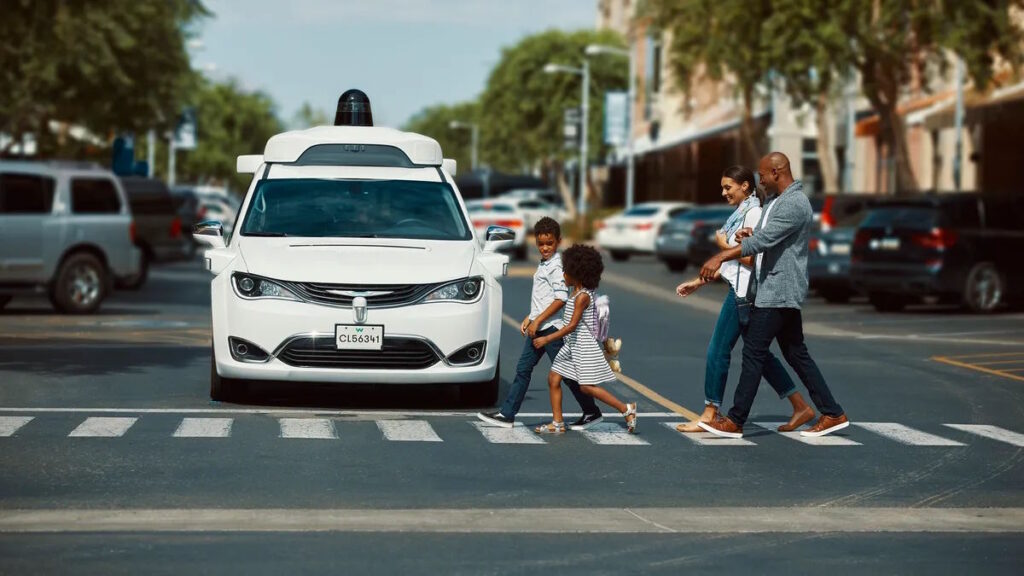
Phoenix, San Francisco, Los Angeles, Austin, and Atlanta are served by Waymo One, a company that began testing autonomous vehicles in 2009. In each city where its robotaxi service has been implemented, Waymo has gone through multiple stages of development and deployment. By the end of 2024, its robotaxis had already logged 50,083 miles across four cities (all those mentioned except Atlanta), and in 2026, it plans to deploy robotaxis in Las Vegas, Washington, Miami, and San Jose.
Tesla, for its part, has been operating in Austin since June 2025, although this is a pilot program aimed at validating its Full Self-Driving (FSD) technology and collecting real-world driving data.
In the US, there is no single federal law regulating autonomous vehicles, and each state can approve its own rules for testing and commercial operations. This is why pioneering cities or states like Arizona, California, and Texas have implemented Level 4 robotaxis without the need for federal regulations.
China
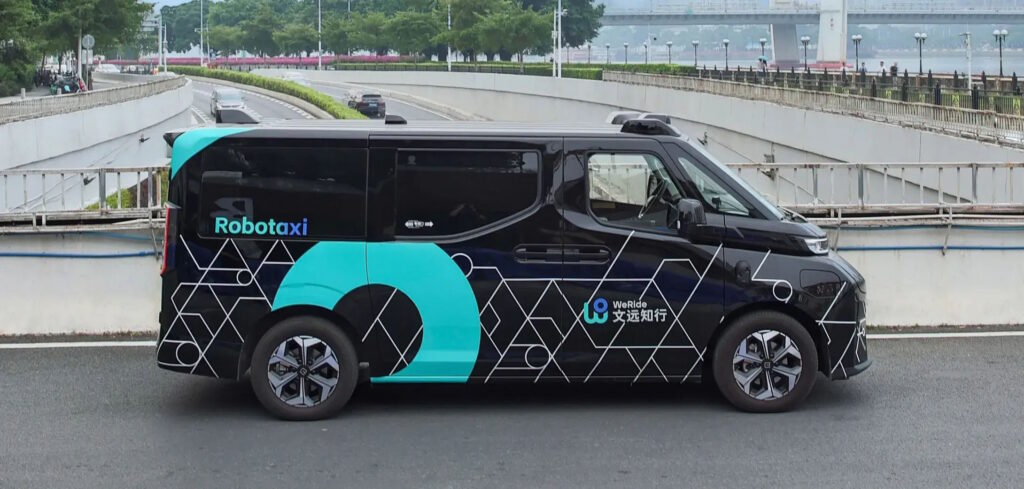
In China, the market is shared among several companies developing autonomous vehicles, including Apollo (Beijing, Shanghai, Guangzhou, Shenzhen, Chongqing, Changsha, Wuhan, Hefei, Yangquan, Wuzhen, Chengdu); AutoX (Shanghai, Shenzhen, Hangzhou, Guangzhou); Deeproute.ai (Shenzhen, Wuhan, Hangzhou); Pony.ai (Guangzhou, Shanghai, Beijing, Shenzhen); SAIC (Shanghai, Suzhou, Shenzhen); QCraft (Suzhou); WeRide (Beijing, Nanjing, Guangzhou, Suzhou, Zhengzhou, Zhuhai); and DiDi (Shanghai, Guangzhou).
In this case, China has specific regulations for each city, which are responsible for issuing permits for testing and commercial operations up to Level 4 on designated routes or areas.
For China, autonomous driving is part of its national technological innovation strategy, which is why so many companies are involved in this sector. Additionally, cities have high-definition maps and 5G connectivity for vehicle-to-infrastructure monitoring and communication, technical elements that greatly facilitate large-scale deployment.
Saudi Arabia
WeRide and Uber launched robotaxi rides in October 2025, although limited to a set of routes between Roshn Front and Princess Noura University. This is an initial rollout, which is why the vehicles have an operator on board and are not yet fully autonomous.