



Table of Contents
Author | Jaime RamosThe transport sector expects a great deal from the air. Air transport has remained more or less stable over the last decades. However, technological innovations emerging in various areas, are threatening to change this scenario. This is illustrated, for example, with the steps taken towards making flying taxis a reality.Airports are aware of this situation. Terminals are demanding the necessary adaptations in order to accommodate the new solutions. The implementation of mechanisms to create smart airports is one of the first symptoms of the change we are experiencing.
What is a smart airport?
Mid-way between the traditional concept of an airport and that shown in various works of science fiction, smart airports integrate various advances in the fields of telecommunications, robotics or the Internet of Things.The aim is to meet the future challenges of the aviation industry. We are referring to new types or variations of vehicles or a significant increase in passenger numbers. NATS, the leading provider of air traffic control services in the United Kingdom, estimates that this increase will result in passenger numbers close to 7.3 billion by 2034.According to the aviation company SITA, airports will invest 11.8 billion dollars in improving their telecommunications systems, 68% more than that used three years ago. Of course, sustainability is another essential factor in the development of smart airports.
Innovations in smart airports
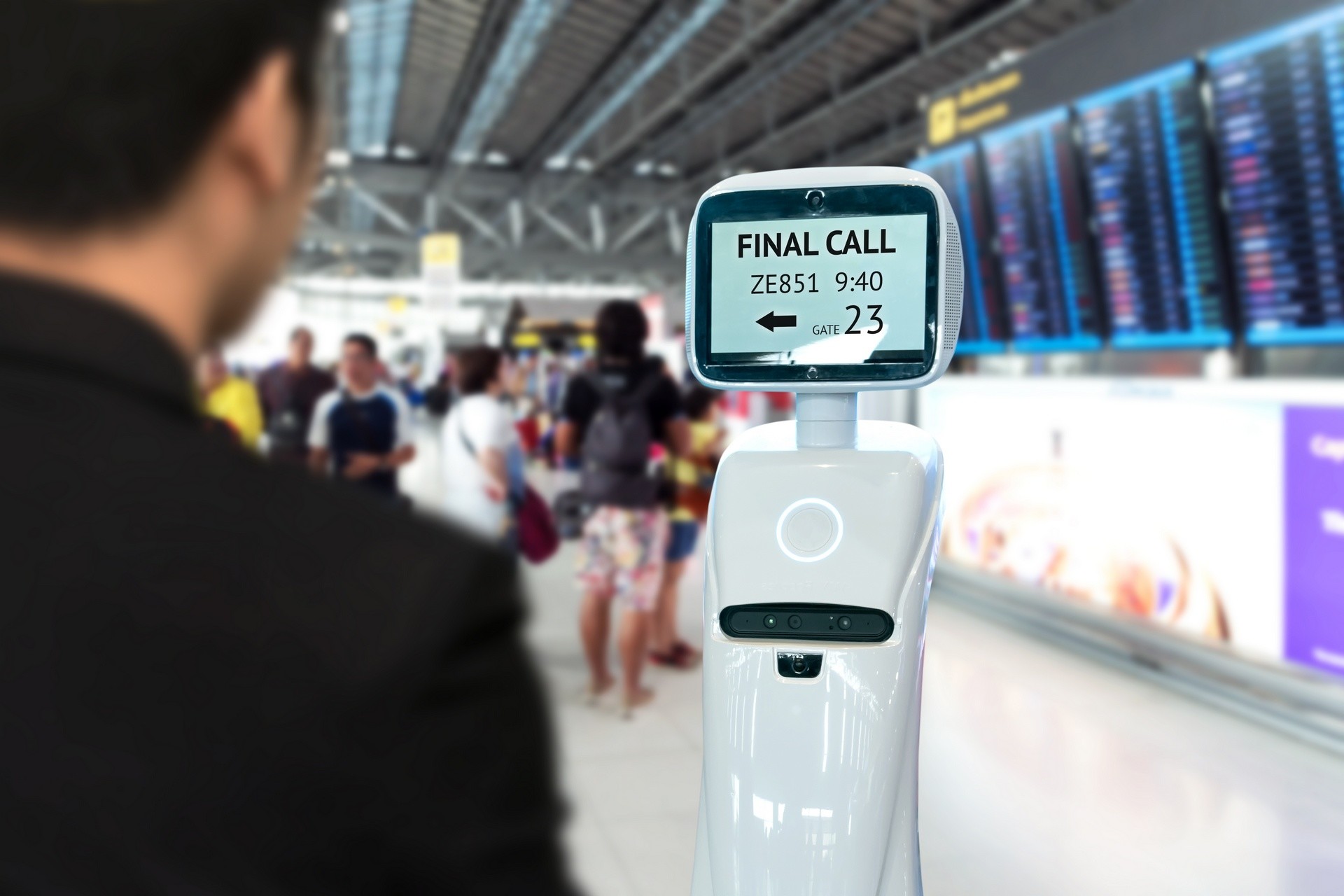
Oslo airport has set the standard in terms of innovations. During the construction of its most recent terminal (with the capacity to receive 32 million passengers each year) eco-friendly materials have been used, energy solutions to increase efficiency and improved waste management.However, in terms of innovation, the Beijing Daxing airport is perhaps the smartest airport to date. There is no shortage of new technology systems in this pioneering infrastructure. Examples of this are robots carrying out various functions and simplifying tasks. The airport inspects the electrical facilities or emergency systems using artificial intelligence systems.In terms of what smart airports will look like, one of the most striking changes will be the retirement of the iconic control towers. Future trends, already tested in the United Kingdom and in Sweden is to centralise this service remotely. This will mean a single control centre can manage the traffic from various airfields, reducing construction and maintenance costs.
What experience is offered by a smart airport?
All these changes will change the passenger experience. Passengers will spend less time in the terminal thanks to an increased level of automation and the smart deployment of the Internet of Things, with the South Korean airport of Incheon, close to Seoul, providing a good example with the automation of over 100 tasks, including, document control areas using AI, smart mobility systems and a self-check-in without any human supervision.The application of innovations promises to give each airport its own distinguishing identity. such as the cooling system in the aforementioned Oslo airport. This collects and stores snow in the winter, which is then used in summer to cool the building. Just another feature of the much-needed review of the airport concept, a fundamental pillar of the future (and in some parts of the world, existing) smart tourism.Images | iStock/ClaudioVentrella, iStock/JIRAROJ PRADITCHAROENKUL, iStock/Yelizaveta Tomashevska