



Table of Contents
Author | M. Martínez Euklidiadas
"Maybe you would have simply banned the Internet to keep the libraries open" Lawrence Robertson incorrectly stated in I, robot (2004), as if libraries were only a place in which to obtain books. What is the future of public libraries? Brilliant and necessary, as part of the urban social infrastructure.
Public library, social infrastructure
In Palaces for the People: How Social Infrastructure Can Help Fight Inequality, Polarization, and the Decline of Civic Life (2020), Eric Klinenberg praises public libraries as a critical and necessary social infrastructure. The general idea of a library is a large repository of accessible books, but they have many other essential functions to "help combat inequality, polarization and the decline of civic life" as this expert indicates.
Among other functions, public libraries provide people with shelter from the elements, which is more significant each year with the climate crisis; they are places in which to study when people do not have room or suitable conditions at home; public meeting spaces for all social classes, mixed and multi-cultural, in a polarized world; a safe place for those who cannot find it outside, in neglected neighborhoods.
The informative role of public libraries
The scriptwriters of I, robot (2004) were not able to understand the capacity of the Internet as a common space, or the importance of libraries. When the pandemic hit, "libraries stepped up and zeroed in on their passion to serve the public" according to Internet Society in an encouraging 2021 article.
This article describes how libraries can "connect those who are disconnected" and "bring information to everyone" through the examples of free Wi-Fi like in Perafita (Spain) or Wireless Ghana (Ghana).
Safe spaces surrounded by books
In Palaces of the People, Klinenberg highlights the protective function of libraries in deprived neighborhoods in the U.S. (although exportable to other regions). Marginalized populations, homeless people and other groups gather in libraries in search of safety.
According to the author, "People forge bonds in places that have healthy social infrastructures", in reference to disconnected cities as a result of the urban disintegration of the 20th century.
Libraries, intergenerational leisure spaces

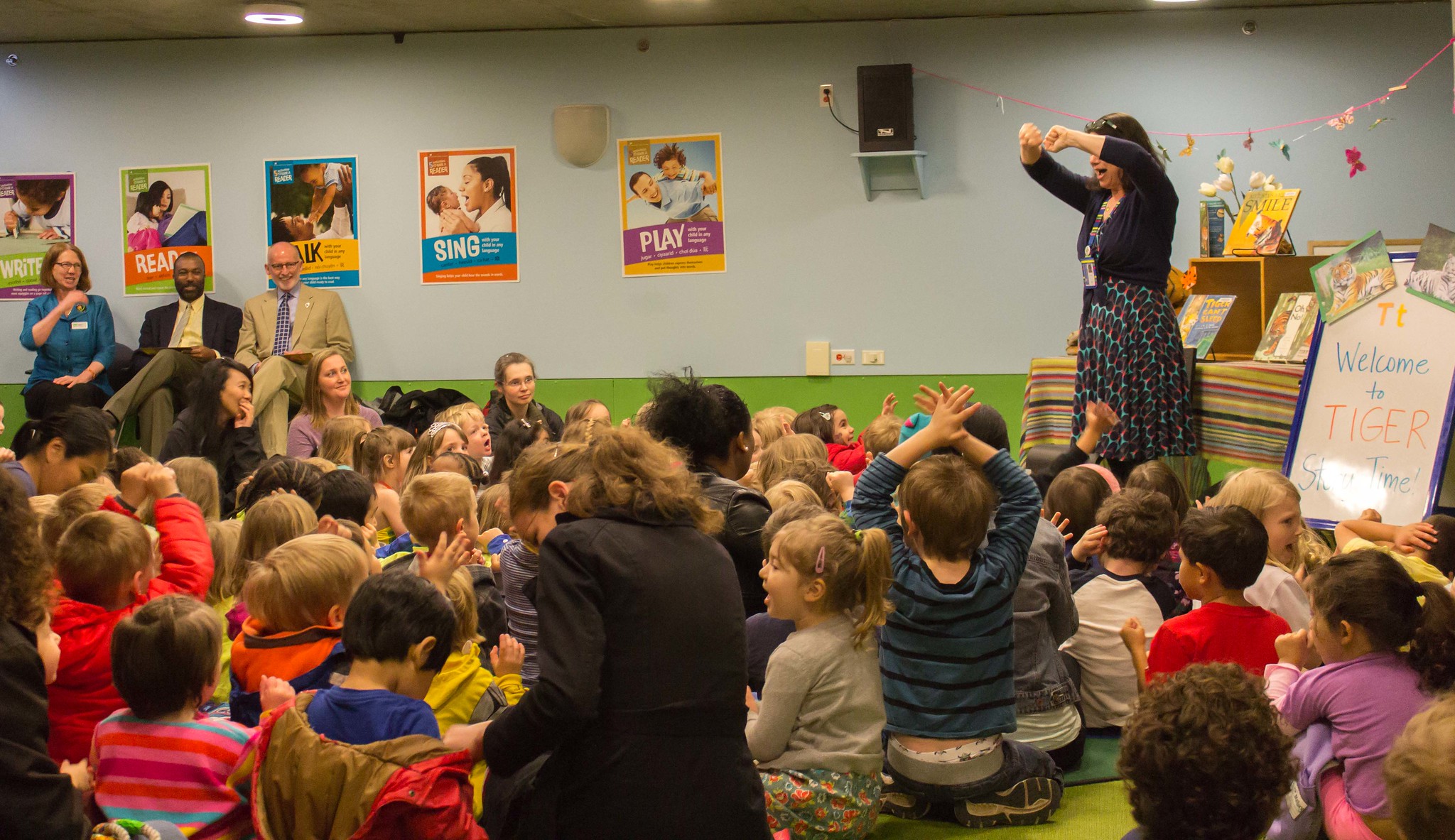
In a corner with a play-friendly carpet, a father and daughter are reading a children’s story out loud. A few meters away, a child with his mother is playing with rubber cubes. The librarian watches the scene from her desk as she welcomes in a couple sheltering from the rain. They use this moment to watch an exhibition on Pablo Neruda in the form of posters.
This scene was recorded in 2014 by the person who is writing this and did not have an office at the time. Public libraries are places where different generations can meet, spaces in which people coincide when they would never have coincided otherwise. Places of non-social segregation and acceptance of all people.
The future of public libraries
Public libraries have a brilliant future role to play in a century focused on proximity and the narrowing of social gaps, theeconomy of care or the 15-minute city, on valuing what we share and understanding inequality.
Libraries provide access to information, they become safe spaces, they provide a place of study and work for those who do not have the resources, they become meeting and leisure spaces. Yes, libraries have a very bright future, even if they are not used to take out or bring back physical books.
Images | Seattle City Council, PxHere