



Author | Elvira Esparza
The United States has devised a plan aimed at achieving zero-emission status for all new commercial vehicles sold by 2040, by establishing essential charging infrastructure along major freight transportation corridors. This pioneering initiative holds tremendous potential, particularly for a country where the majority of freight transportation, over 70% based on the goods value, relies on roads compared to other modes of transport.
What is the Zero-Emission Freight Corridor Strategy
The approved National Zero-Emission Freight Corridor Strategy in the United States aims to expedite the development of infrastructure necessary for electric and hydrogen-powered freight transportation. The primary objective is to transition commercial vehicles using major roadways to zero-emission technologies, ultimately working towards carbon neutrality and enhancing air quality, particularly in areas heavily impacted by diesel emissions. “This is a big move to deliver environmental justice, since 75% of heavy truck traffic travels on just 4% of our nation’s roads, jeopardizing the health of our most vulnerable communities”, President Biden’s National Climate Advisor said in a statement.
This strategy has been developed by the Joint Office of Energy and Transportation and the Department of Energy (DOE) together with the Department of Transportation (DOP) and the Environmental Protection Agency (EPA). The investment in zero-emission infrastructure along the busiest roads will revolutionize freight transportation, leading to reduced pollution and savings in fuel costs.
Establishing electric vehicle charging and hydrogen refueling corridors across the national road network will facilitate the realization of the goal to have 30% of all new commercial vehicles operating as zero-emission by 2030, with the ultimate aim of reaching 100% by 2040. Currently, the number of electric trucks on the roads remains low. According to the Environmental Defense Fund, since 2020, approximately 13,000 electric trucks have been deployed, which is a small fraction of the total truck volume, estimated to be around 13 million by the American Trucking Association.
How will the strategy be developed until 2040

The strategy will be developed through a phased approach spanning from 2024 to 2040. The four phases are outlined as follows:
- From 2024 to 2027: Establish priority hubs based on freight volumes.
- From 2027 to 2030: Connect hubs along critical freight corridors.
- From 2030 to 2035: Expand corridor connections initiating network development
- From 2035 to 2040: Create a national network by linking regional corridors.
In line with the National Zero-Emission Freight Corridor Strategy, the Federal Highway Administration, has designated national charging corridors for electric vehicles along the entire National Highway Freight Network. As trucks contribute 23% of greenhouse gas emissions in the transportation sector, the electric vehicle charging network will increase with these designations, to support the goal of achieving net-zero emissions by 2050.
During Biden’s presidency, there has been a remarkable increase of over 80% in public electric vehicle charging stations across the country. Additionally, the administration has invested $25 billion in the electric vehicle charging network.
Zero-emission transportation initiatives in the United States

In certain U.S. counties and cities, efforts are underway to achieve zero-emission transportation goals ahead of the national target set for 2035. These projects include:
Montgomery County is home to the largest solar charging infrastructure for buses in the United States, providing renewable energy to power the electric bus fleet known as Ride One. It consists of solar panels installed on tall canopies with charging stations and backup batteries. It will meet the full charging capacity of the depot, 70 electric buses, by 2026.
The county currently has 14 electric buses and plans to reach 100 by 2035. These buses will reduce emissions by 62%, equivalent to more than 160,000 tons of greenhouse gas reduction over the next 25 years.
In California all trucks purchased from this year onwards must be zero-emission vehicles. From 2022 to 2026, California is planning to invest $1.7 billion in heavy and medium vehicle charging infrastructure. This investment is part of the state’s ambitious goal to transition all freight transportation vehicles to zero emissions by 2035.
It is noteworthy that the ports of Los Angeles and Long Beach collectively oversee approximately 40% of the country’s imports. Replacing diesel trucks with electric vehicles holds immense potential for reducing pollution and improving the health of residents. According to the government of California, this measure could potentially prevent approximately 5,500 premature deaths.
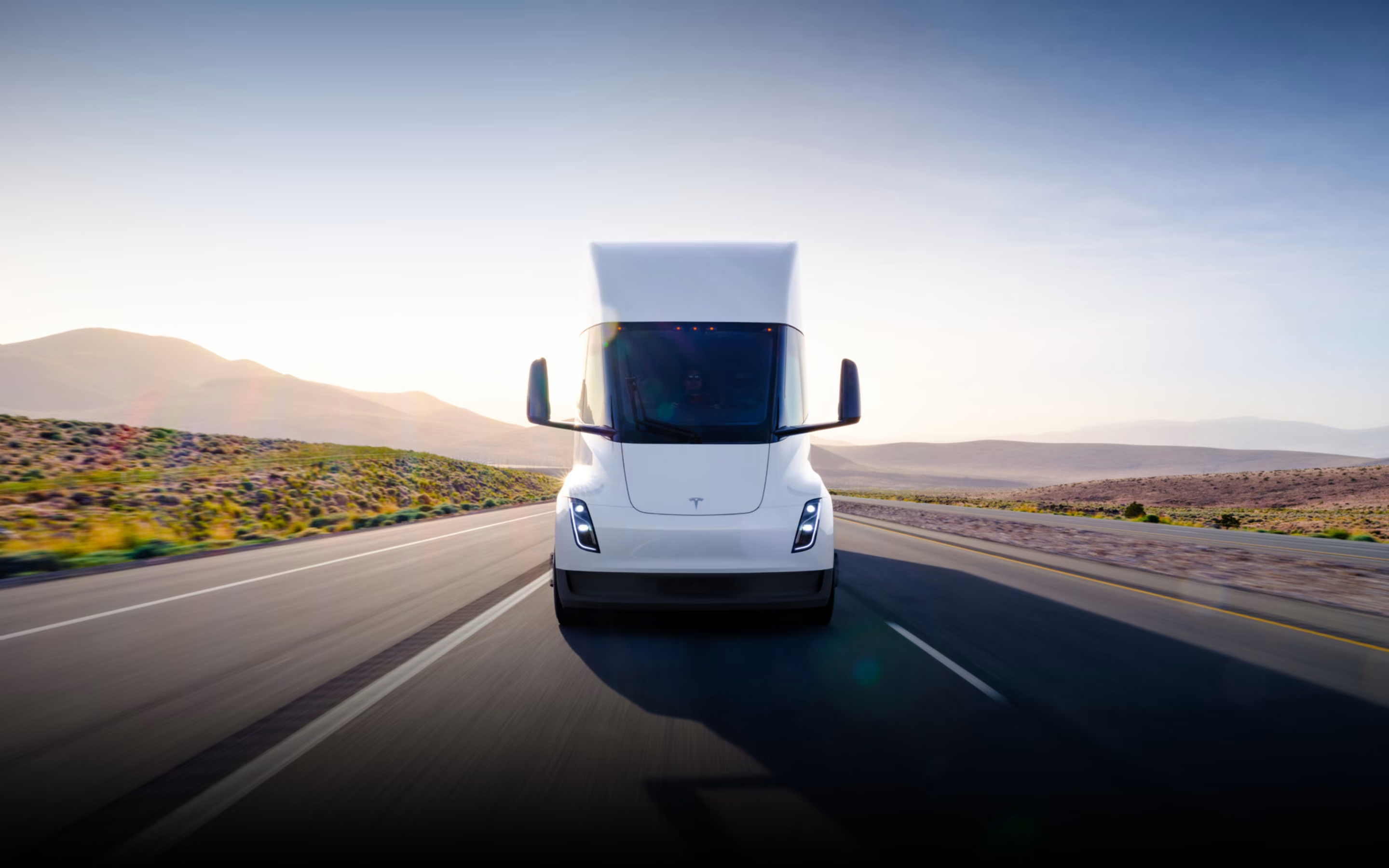
Images | Tesla Motors, Daimler Truck