Authors | Lucía Burbano, Elvira Esparza
The use of big data in urban development has transformed the way cities are designed and managed. It allows urban planners to make decisions about infrastructure, transportation, housing, and public services based on the needs of the city.
This real-time data analysis, once unimaginable, helps city administrators make better decisions, resulting in more efficient service delivery and resource allocation, creating a more sustainable urban experience.
This is how big data and smart cities aspire to change urban planning in a new way, optimize current cities and improve governance at all levels.
What Is the role of big data in smart cities?
Big data plays a key role in smart cities because it provides real-time information, optimizes public services, and enables more efficient and sustainable urban planning.
Additionally, using big data in urban planning allows for the analysis of trends and patterns to predict future needs in smart cities.
Understanding the concept: from data collection to decision-making
Big data acts as the brain of smart cities because it collects vast amounts of information, processes it through AI and machine learning, and makes decisions to optimize services.
The process begins with data collection through sensors and devices installed in streets, buildings, or vehicles via the IoT (Internet of Things). From there, AI and machine learning help design predictive models related to mobility, energy management, and city security. Finally, data platforms integrate information from multiple sources for processing using edge computing.
How data-driven insights improve city efficiency and sustainability
Data-driven insights improve the efficiency and sustainability of cities by enabling better decision-making through the use of real-time data. This is why big data and AI in smart cities support the shift from reactive urban management to predictive and proactive management.
Core Applications of Big Data in Urban Environments

Smart mobility and traffic optimization
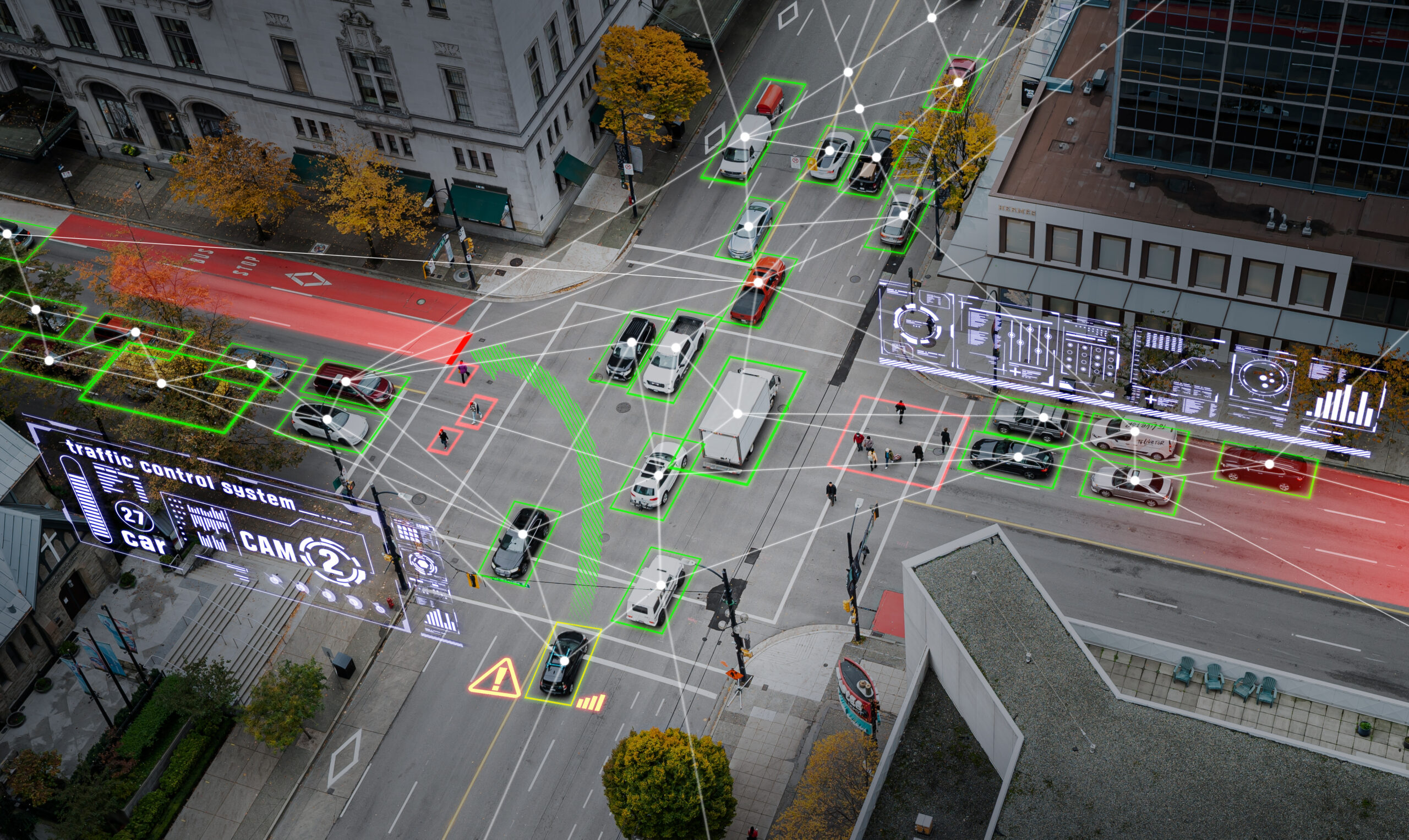
Traffic patterns are analyzed in real time using data from traffic sensors, cameras, public transportation, and mobile apps. Congestion points are identified, and routes for both public and private transport are optimized based on mobility demand by area and time. The benefits include reduced environmental pollution due to smoother traffic flow. Copenhagen combines mobility data from bicycles, buses, and vehicles to manage routes and reduce travel times.
Energy management and environmental monitoring
Smart meters and power grids enable the analysis of energy consumption patterns, the tracking of demand, and the identification of potential system inefficiencies, while also allowing for optimized energy distribution across the city. As a result of this environmental monitoring, energy use, costs, and the carbon footprint in cities are reduced. Barcelona uses sensors in public lighting and municipal buildings to adjust consumption based on occupancy and natural light, achieving significant energy savings.
Public safety, health, and emergency response systems
For managing public safety, surveillance cameras, weather and satellite sensors, social media, and emergency calls are used. This data helps in identifying temporal and spatial crime patterns, improving emergency response times, and speeding up early warning systems for natural disasters. New York, for example, analyzes crime patterns to strengthen police patrols in high-risk areas.
Urban planning and predictive infrastructure
By applying big data in urban planning, cities gather information on population density, mobility, use of urban spaces, and real estate and demographic trends. This data supports more precise zoning policies, optimizes land use, and helps anticipate housing and infrastructure needs. Paris, for example, uses AI to predict infrastructure wear, anticipate failures, and plan repairs before serious problems occur, improving safety and reducing costs.
Technologies Powering Big Data in Smart Cities

The main technologies used alongside big data in smart cities are:
IoT networks, sensors, and real-time data processing
IoT networks and sensors allow the collection of data in real time and enhance the interoperability of services and operations in smart cities.
Artificial intelligence and machine learning for city management
Artificial intelligence and machine learning process all the data to automate real-time responses and improve decision-making.
Cloud computing and data interoperability standards
Cloud computing enables the management and storage of large volumes of data, while data interoperability allows devices to communicate with each other and with centralized platforms, creating a more efficient and sustainable urban system.
Challenges and Ethical Considerations
Data privacy, security, and governance
One of the challenges facing smart cities is the invasion of personal privacy caused by surveillance through cameras and sensors. To maintain citizens’ trust, city governments must ensure secure data handling and effective data governance.
Bridging the digital divide in data-driven cities
The digital divide is a challenge in smart cities because unequal access to services can increase social inequality. This is why it is important to encourage citizen participation in the design of public applications and platforms, as well as access to broadband networks. Additionally, creating accessible and user-friendly interfaces for people with low digital literacy is essential.
The Future of Big Data and Smart Cities

In the future, big data and smart cities will move toward a more predictive and sustainable model focused on citizens, driven by AI, digital twins, edge computing, and new forms of data governance. Cities will be hyperconnected, with infrastructures capable of learning and adapting in real time.
Integrating AI, 5G, and digital twins for next-generation cities
Integrating AI with big data allows city managers to make informed decisions, visualize real-time performance of systems and citizen behavior, and predict future needs and potential system failures. Generative AI opens new ways to improve service management, as it can create new content from existing data and contribute to the planning and design of intelligent solutions for cities.
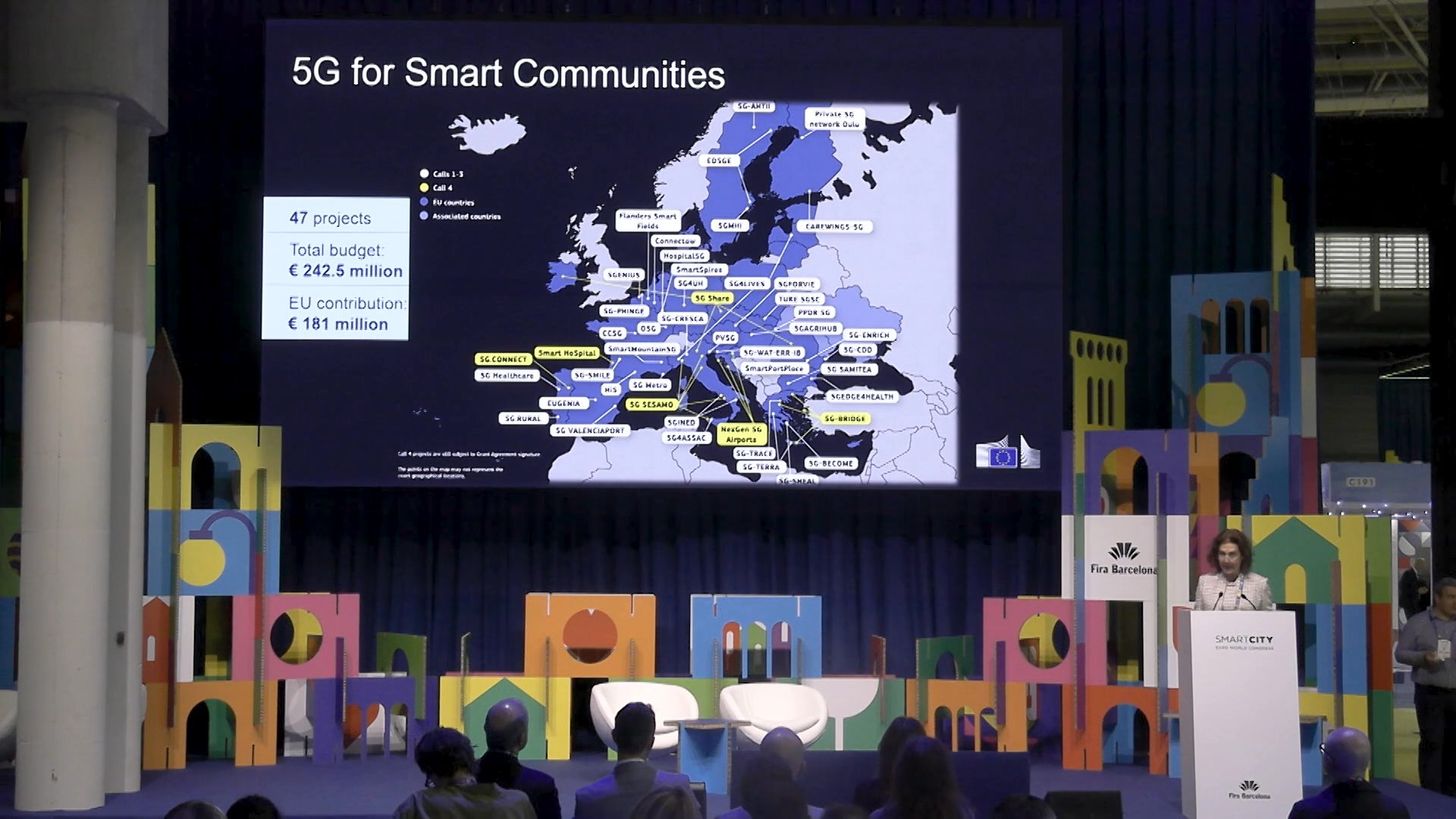
5G networks offer higher connection speeds and support millions of devices in real time, with greater reliability and immediate responsiveness, providing adaptability in the changing environments of cities. Among other services, this network improves autonomous and connected transportation as well as real-time traffic management.
Digital twins are multimodal virtual replicas of cities that update in real time to simulate different scenarios. They integrate information on mobility, energy consumption, water management, air quality, IoT sensors, and artificial intelligence. City governments use digital twins to simulate scenarios such as population growth or extreme weather events to anticipate solutions.
Photographs | Unsplash/Alex wong, Unsplash/Ryoji Iwata, Unsplash/Federico Beccari, Unsplash/Conny Schneider