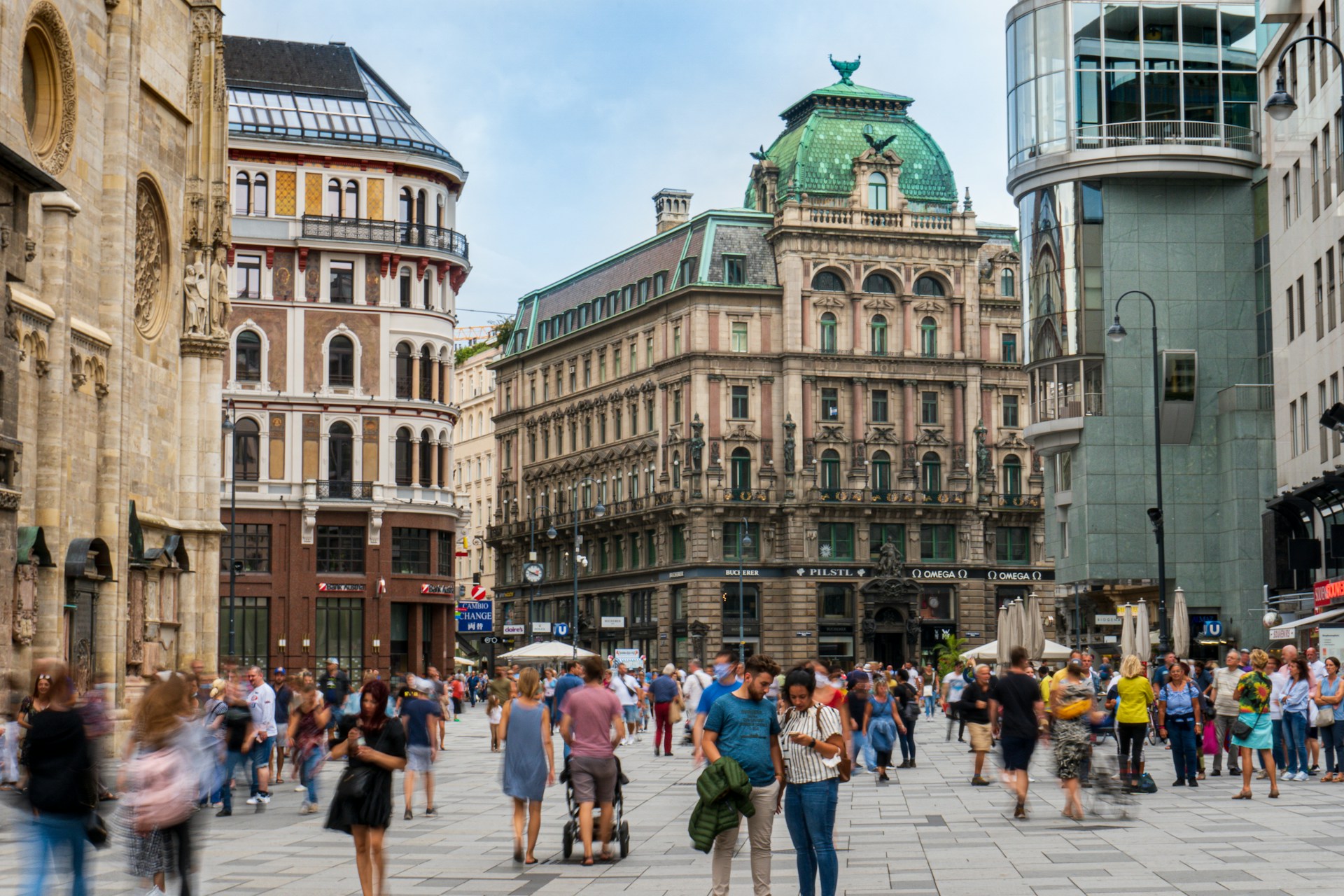




Author | Elvira Esparza
In 2020, Vienna was recognized as the greenest city in the world, mainly for its innovative, smart mobility ideas and the abundance of public parks. In Vienna, public transportation (subway, trains, trams, buses, and bicycles) covers all districts of the city.
The principle guiding Vienna’s mobility strategy is that it guarantees that anyone can move around the city without the need for a car. How has Vienna managed to become a benchmark in multimodal transportation? Here are the key factors.
From a car oriented city to a car free city
Vienna’s transformation into a global reference for mobility has taken place over the past fifty years. After World War II, Vienna, like the rest of Europe’s cities, was shaped as a car friendly city. It even went as far as to abandon its tram lines, which had been one of its defining features, in order to make more space for cars.
During those years, the city was planned around the construction of highways and parking facilities for cars. However, when in 1965 the Florianikirche church, located in the middle of Wiedner Hauptstraße in the 5th district (Margareten), was demolished to make more space for cars, the population began to perceive the threat posed by the expansion of cars in the city.
In the 1970s, the situation began to change. Vienna started to invest in more sustainable modes of transportation than the car. The construction of the U Bahn metro system and the management of on-street parking were key to this shift. From 1980 onward, the focus was placed on improving public transportation, encouraging bicycle use, and reducing car traffic. The result was a decrease in car trips from 40% to 27% and an increase in public transportation trips from 29% to 39% between 1993 and 2015.
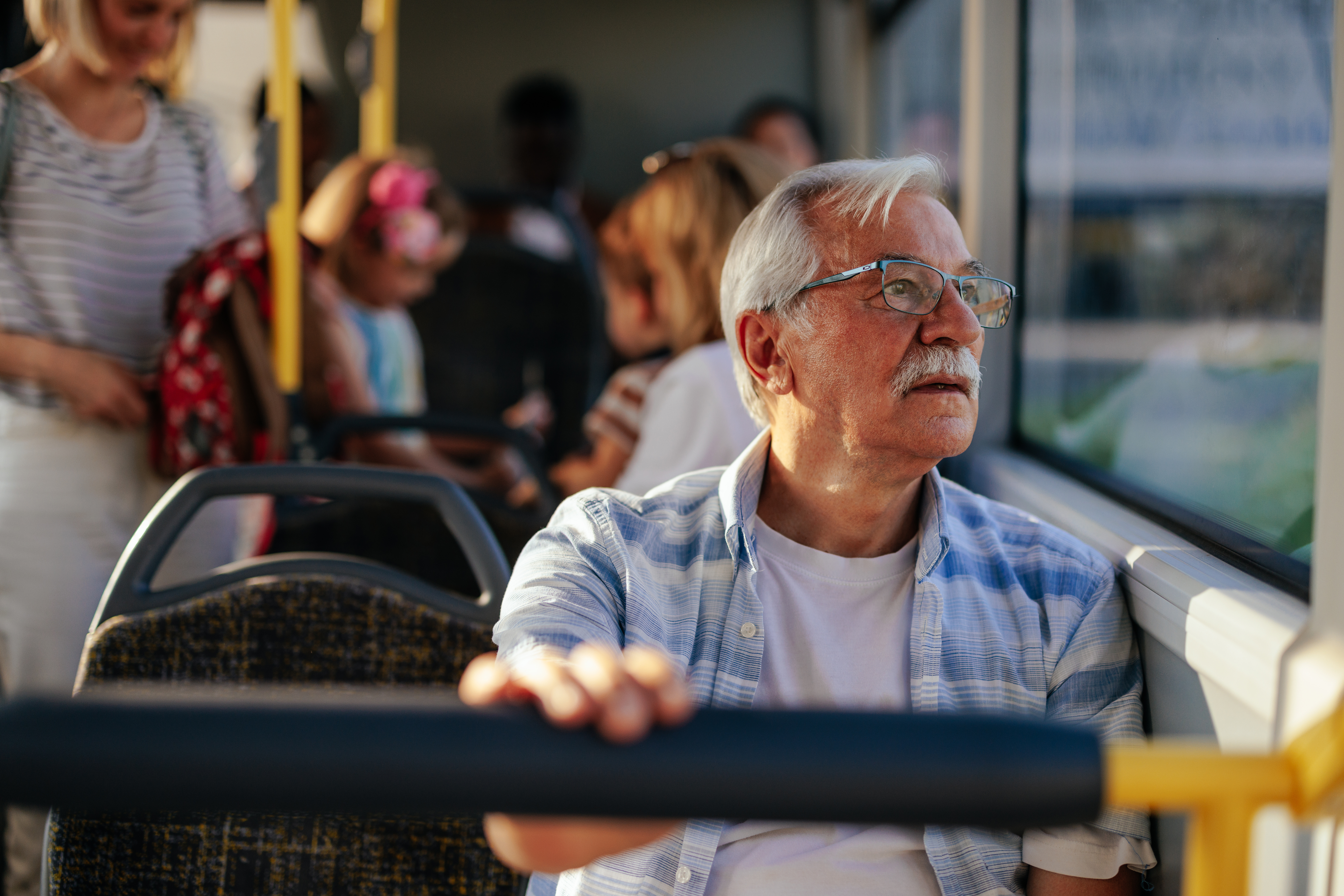
How Vienna encourages the use of public transportation
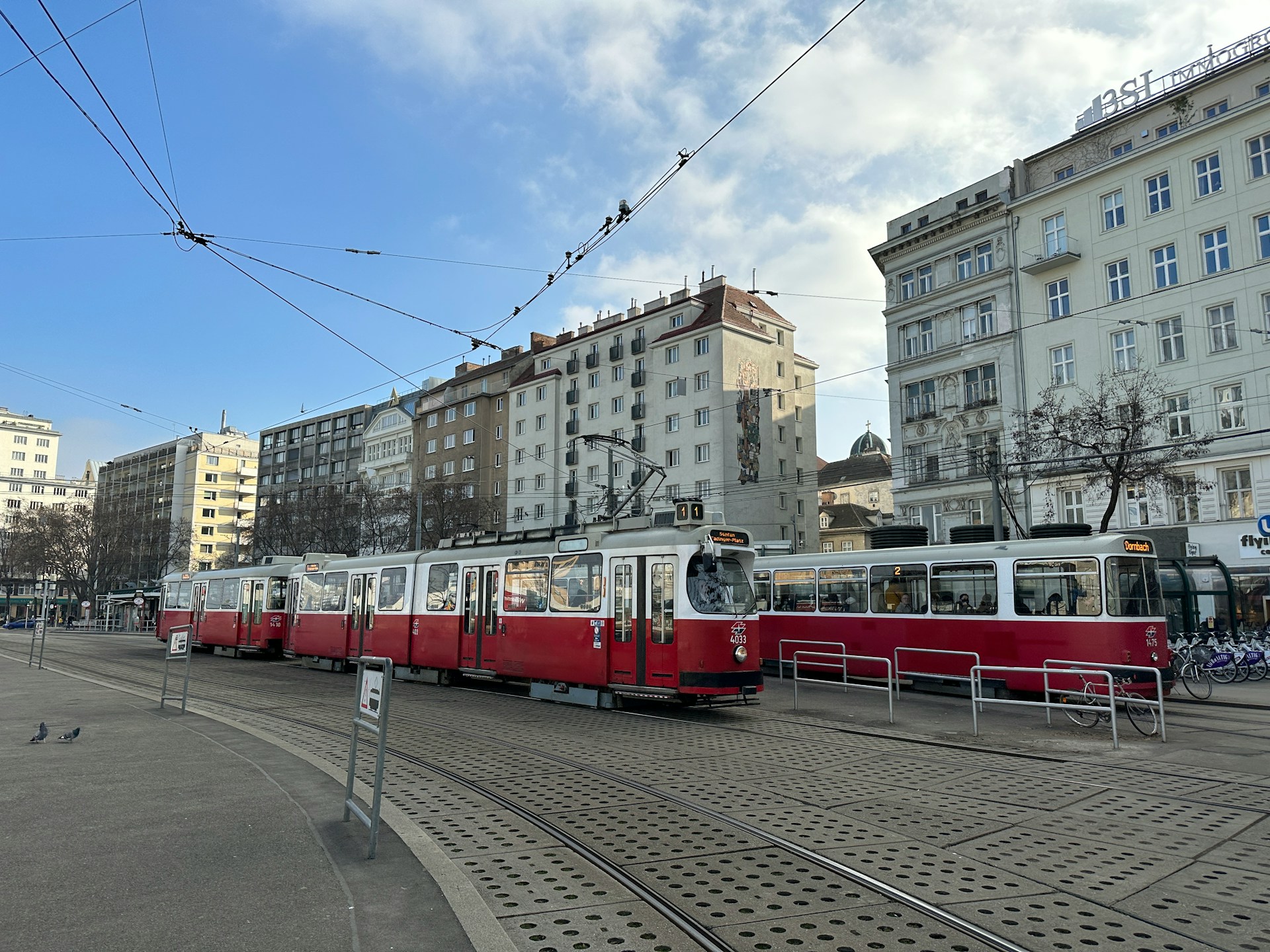
Vienna’s mobility system is centered on public transportation. To encourage its use, the city has limited the construction of urban roads and traffic circulation in residential areas and has expanded pedestrian and bicycle zones through various transportation plans.
As a result of these policies, Vienna has developed a metro network spanning more than 80 km, with five lines that will expand with two new lines by 2030. It also has a tram network, in operation since 1865, with 225 km of track, making it the sixth longest in the world. These services are characterized by being accessible to all citizens at most stations and by operating an extensive nighttime service.
The public transportation service is completed by a bus network with more than 120 lines that cover areas not reached by the metro or tram.
Single tickets and annual passes
The public transportation network is managed by the municipal company Wiener Linien, which is also responsible for setting ticket prices. The public transport ticketing system is simple and varied. There is a single ticket that is valid for the metro, buses, and trams, with different usage options. The simplest ticket costs €3.20 and is valid for 80 minutes. There are also 24 hour and 7 day tickets, as the 48 and 72 hour tickets have been discontinued this year.
In addition, there is an annual pass that allows residents to use public transportation from the moment they purchase it for a full year. This year, the price of the pass has increased to €461, which equals €1.26 per day for unlimited travel across the entire public transport network. With these prices, Vienna continues to offer more affordable public transportation compared to other European capitals.
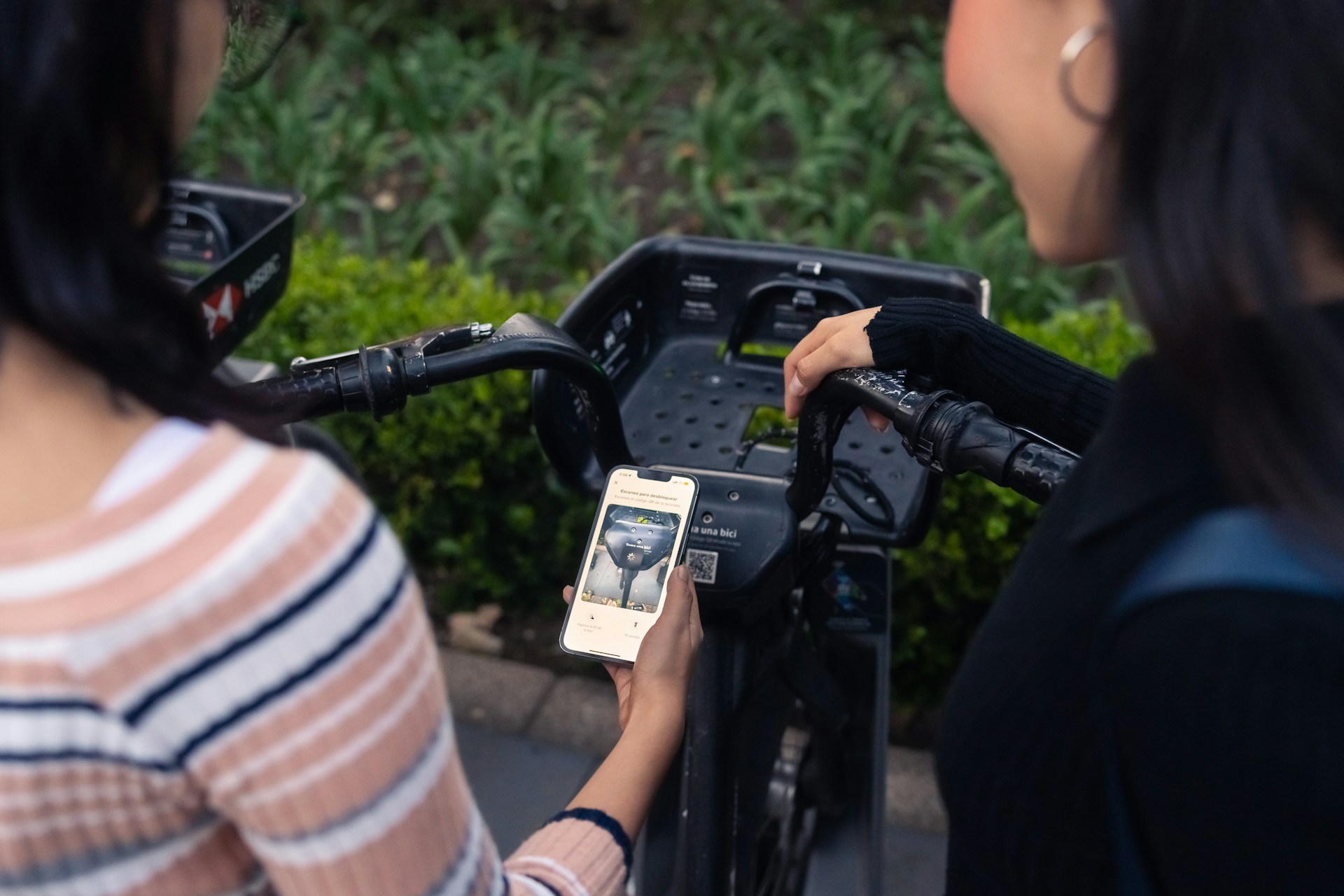
Users can manage their public transport use through the free WienMobil app, which includes different transport providers: bicycle, car sharing, taxi, tram, metro, and more, making it easy to get around the city. Through the app, users can buy tickets, plan routes, and stay informed about any service disruptions.
Bicycle use as a mode of transportation
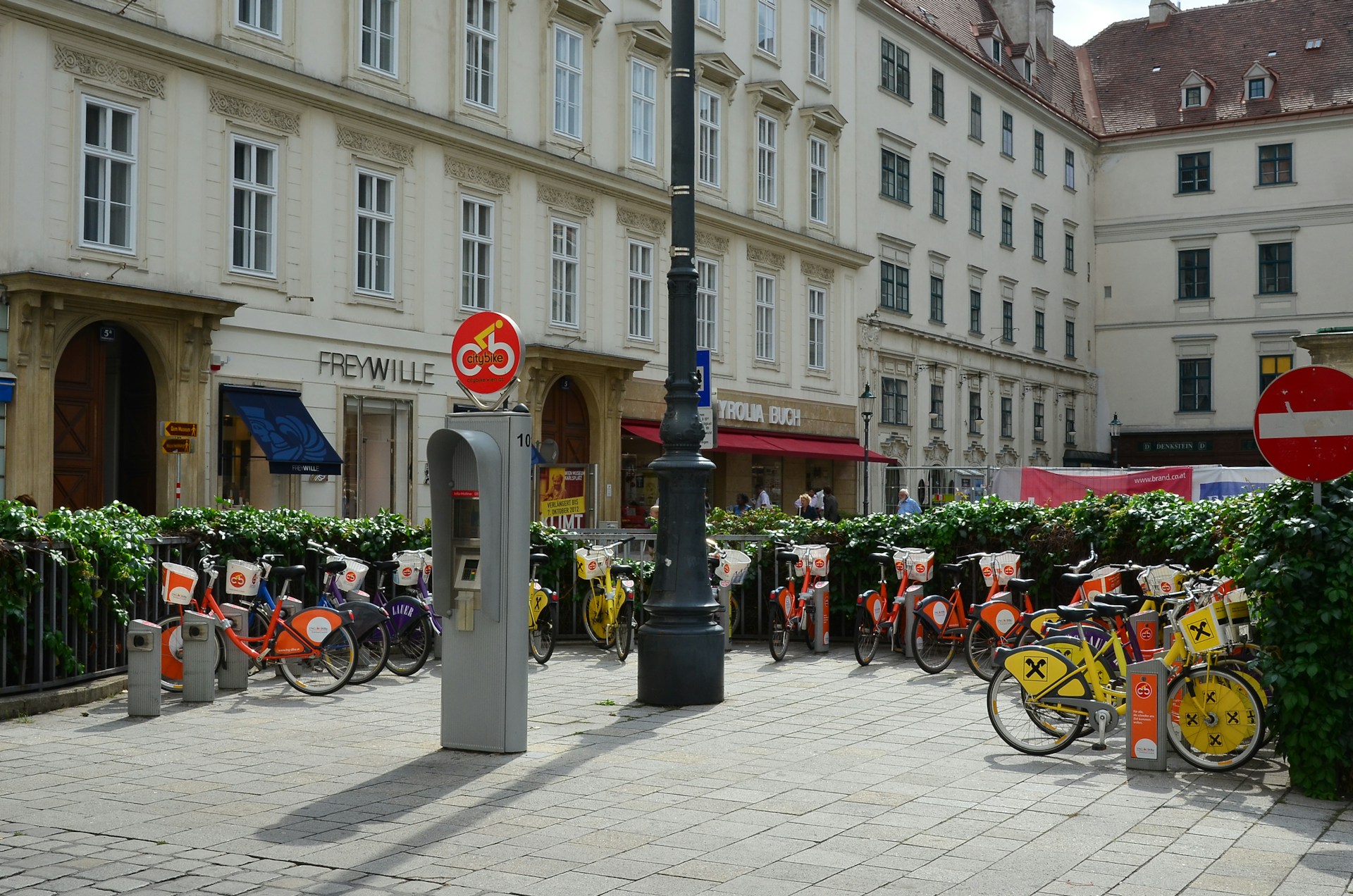
To achieve the goal of removing private cars from the streets, Vienna has promoted the use of bicycles. The city has operated a bike-sharing system for over 15 years, with GPS-enabled bikes that make it easy for users to locate and return them. In total, over 3,000 bicycles are available 24 hours a day at 240 stations across the city’s 23 districts. These bikes are equipped with seven gears and electronic locks. The service costs a maximum of €19 per day, making it more affordable than other ways to get around the city.
To allow families with children to travel comfortably, some bicycles come with child seats. There are also cargo bikes that can carry up to 350 kg.
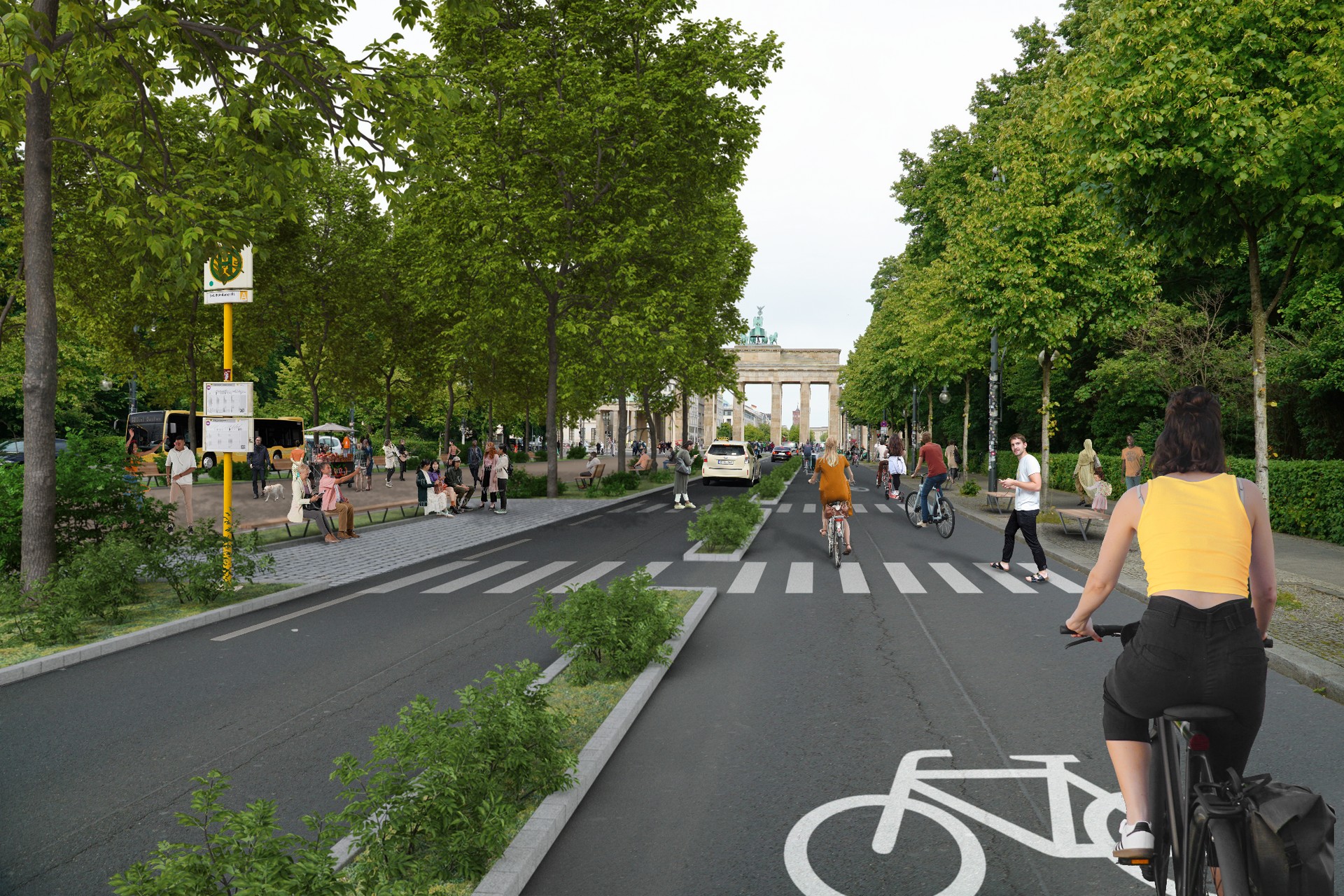
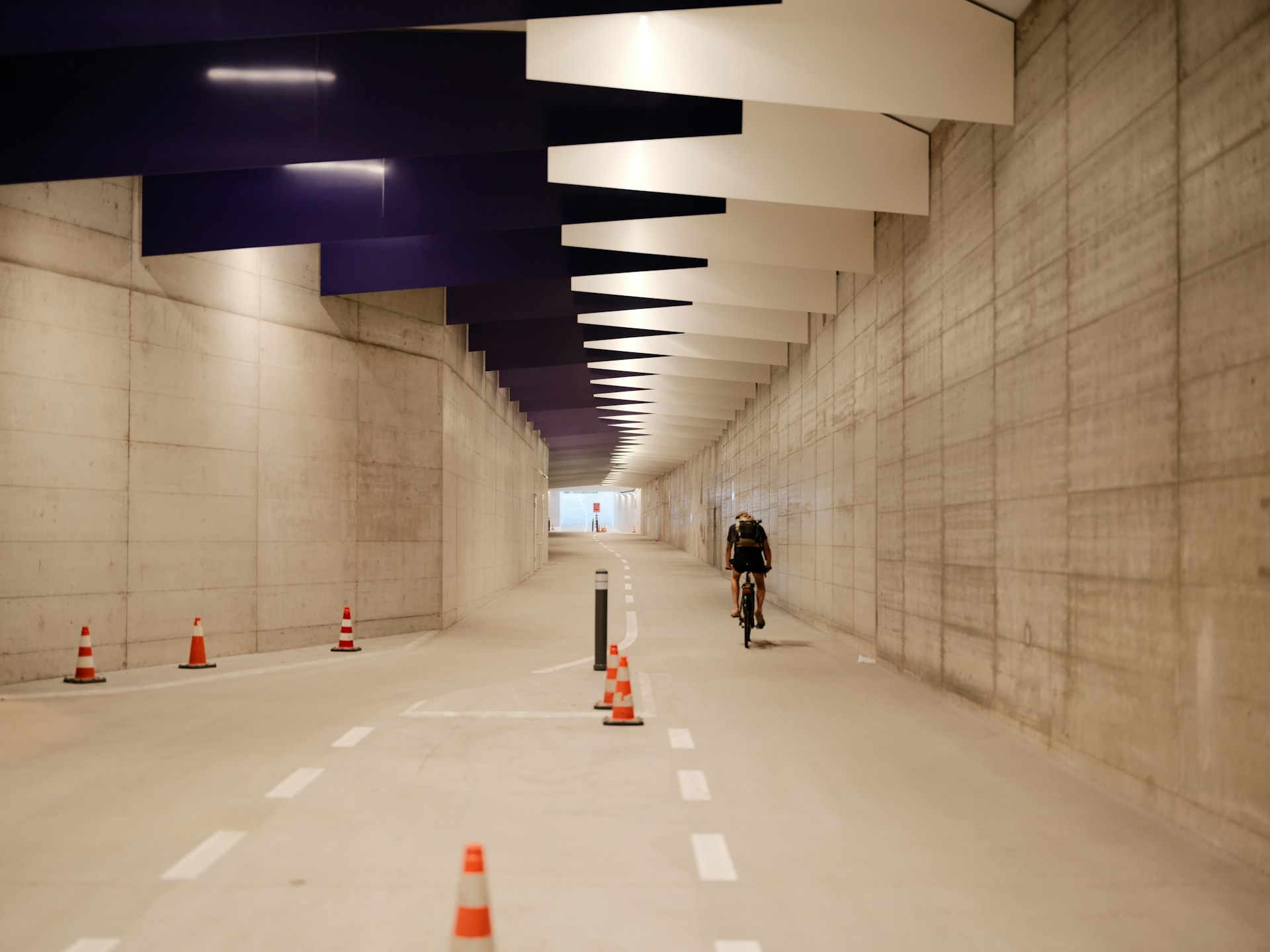
To encourage bicycle use for daily travel, the city has expanded the bike lane network to over 1,700 km, including segregated bike lanes, bike lanes on the road, and shared paths for pedestrians and cyclists.
Biking and walking routes
Vienna’s smart transportation design also aims to enhance the city’s livability, making it a more enjoyable place for residents. Walking routes are encouraged through natural trails that showcase the city’s attractions and promote active mobility.
Streets have been created for pedestrians to walk in a pleasant environment, with more green spaces and no cars, serving as a refuge for residents. School streets have also been promoted, allowing children to walk more safely, as car traffic is prohibited 30 minutes before and after the start and end of classes.
To further improve pedestrian mobility, smart traffic lights have been installed. These lights use cameras to detect approaching pedestrians and activate automatically, allowing them to cross without waiting or interruptions.
By integrating multiple modes of transport into a unified system and managing them through an app, Vienna’s public transportation has become both efficient and sustainable.
Images | Andy Wang, Anton, Mahdi Samadzad